Attimo – craft wines in a can

Canned Wines: Innovation, Sustainability, and Quality

The perception of canned wine as a cheap and low-quality option is long outdated. Today, canned wines represent one of the most innovative and sustainable developments in the wine industry. Thanks to advancements in production technology and a focus on quality, canned wines offer a modern, sophisticated experience that perfectly aligns with the needs of today’s consumers.

Sustainability with a Modern Twist

Choosing cans for wine packaging significantly reduces the environmental footprint. Aluminum cans are lighter than traditional glass bottles, making transportation more efficient and eco-friendly. Additionally, cans are fully recyclable, further minimizing environmental impact. For winemakers who prioritize sustainability, canned wine is a logical and forward-thinking choice.

Practical and Versatile

Canned wine offers convenience without compromising on quality. The portion sizes are ideal for on-the-go enjoyment, picnics, festivals, or any occasion where a bottle is less practical. The design of the cans makes them easy to carry and store. Furthermore, the airtight seal protects the wine from oxidation, ensuring optimal freshness and flavor.

Quality First

The notion that canned wine equates to poor quality is a thing of the past. Increasingly, renowned winemakers, such as Attimo Craft Winery, demonstrate that premium grapes and meticulous winemaking can thrive in alternative packaging. Innovative techniques ensure that the wines retain their character and finesse, whether it’s a refreshing rosé, a complex red wine, or a mineral-driven white wine.

A Future-Oriented Choice

Canned wines are not just a trend but also a sustainable step toward the future. They make wine more accessible to a younger and broader audience, align with modern lifestyles, and play a crucial role in promoting environmentally conscious consumption.

In summary, canned wines show that innovation and tradition can go hand in hand. They prove that great wine is not confined to a glass bottle but is about craftsmanship, respect for the environment, and creating unique tasting experiences.


Tasting Notes

SOLEI (White Wine, 250ml Can)

  • Appearance: Clear, medium lemon.
  • Nose: Medium intensity, with aromas of ripe lemon, green apple, and subtle floral notes. A touch of honey and minerality adds complexity.
  • Palate: Dry, medium body, with refreshing acidity. Flavors of citrus, green apple, and a hint of almond are well-integrated.
  • Finish: Medium length with a pleasant mineral finish.
  • Conclusion: An elegant white wine that perfectly balances freshness and ripe fruit aromas.

ROSATO (Rosé Wine, 200ml Can)

  • Appearance: Clear, pale salmon pink.
  • Nose: Medium aromatic, with notes of strawberry, watermelon, and a hint of rose petals. Delicate citrus nuances add freshness.
  • Palate: Dry, light-bodied, with vibrant acidity. Red berry flavors and subtle spiciness are prominent, with a refreshing finish.
  • Finish: Short to medium, with a crisp and fruity finale.
  • Conclusion: A light and refreshing rosé, ideal for summer picnics or light meals.

REFOSCO (Red Wine, 250ml Can)

  • Appearance: Clear, medium ruby.
  • Nose: Medium intensity, with aromas of ripe black cherry, plum, and a touch of black pepper. A hint of violets adds elegance.
  • Palate: Dry, medium to full-bodied, with firm, ripe tannins and vibrant acidity. Flavors of dark fruit, a touch of chocolate, and spice are well-balanced.
  • Finish: Medium to long, with a lingering peppery note.
  • Conclusion: A complex red wine that pairs well with hearty dishes or can be lightly chilled for warm evenings.

Attimo Craft Winery’s canned wines combine convenience with high-quality aromas and flavors. They exemplify innovation in the wine industry, offering a diverse range of taste profiles for various occasions.

Tagged : /

81e Saint-Vincent Tournante in Ladoix-Serrigny

SAINT-VINCENT TOURNANTE

Elk jaar aan het einde van de maand januari brengt Bourgondië hulde aan Saint Vincent, de beschermheilige van wijnboeren. Saint Vincent verschijnt voor het eerst in de Middeleeuwen met de oprichting van onderlinge hulpverenigingen die bedoeld zijn om zieke of gewonde boeren te helpen die niet in staat zijn om zelf voor de wijnstokken te zorgen.

In 1938 blies de Confrérie des Chevaliers du Tastevin het oude gebruik nieuw leven in en veranderde het in een feestelijk evenement, met een processie, religieuze dienst, de inauguratie van gepensioneerde wijnboeren en wijnproeverijen. Het feest werd al snel een belangrijk evenement in de wijnbouwkalender van de regio en behoudt nog steeds zijn belangrijkste waarden gebaseerd op gezelligheid en een gemeenschappelijke gemeenschapsgeest. Elk jaar trekt het duizenden bezoekers.

Aankondiging van de Locatie voor de Volgende Saint-Vincent Tournante

Bij de afsluiting van de traditionele inauguratieceremonie van de ‘vieux vignerons’ van Morey-Saint-Denis en Chambolle-Musigny, kondigde de Grand Maître van de Confrérie des Chevaliers du Tastevin, Jean-François Curie, de locatie aan voor de volgende Saint-Vincent Tournante. Veertig jaar na het organiseren van het evenement in 1984, zal het dorp Ladoix-Serrigny in de Côte de Beaune de eenentachtigste editie organiseren. Het organiserend comité staat te popelen en is al bezig met de voorbereidingen voor het volgende festival dat zal plaatsvinden op 25 en 26 januari 2025.

LADOIX AOC

Ladoix is een dorp in de Côte de Beaune, en meer specifiek, in het dorp Ladoix-Serrigny. De voornaamste druivensoorten zijn daar Chardonnay en Pinot Noir. Ladoix deelt het voorrecht met Aloxe-Corton en Pernand-Vergelesses om de thuisbasis te zijn van de prestigieuze Grand Crus Corton en Corton-Charlemagne. De wijngaarden profiteren van een gematigd klimaat met enige continentale invloed. De wijngaard, die honderd hectare beslaat, produceert prachtige witte wijnen bovenaan de helling, op een klei-kalkstenen bodem.

Verder naar beneden, op middelhoogte, zijn de rode wijnen vol en krachtig dankzij de kleikalkstenen bodem. De rode wijnen van onderaan de wijngaard zijn soepel en fruitig. De wijnstokken van Ladoix zijn naar het zuiden/zuidoosten gericht op een hoogte van 230 meter. De appellation bestaat uit elf Premier Cru-classificaties.

DE SAINT-VINCENT POSTER RETROSPECTIEF

Bezoekers kunnen een tentoonstelling van posters voor eerdere Saint Vincent Tournantes bekijken in het Château du Clos de Vougeot tot 31 maart 2024. De tentoonstelling gaat terug naar tweeënvijftig voorgaande festivals, van 1971 tot heden, aan de hand van de officiële posters die zijn ontworpen en gemaakt om dit belangrijke wijnbouwevenement te promoten.

De complete collectie originele posters is te zien in de Grote Cisterciënzer Kelder, en toegang is inbegrepen bij uw bezoek aan het Château du Clos de Vougeot.

Voor meer informatie: www.closdevougeot.fr/nl/

Tagged :

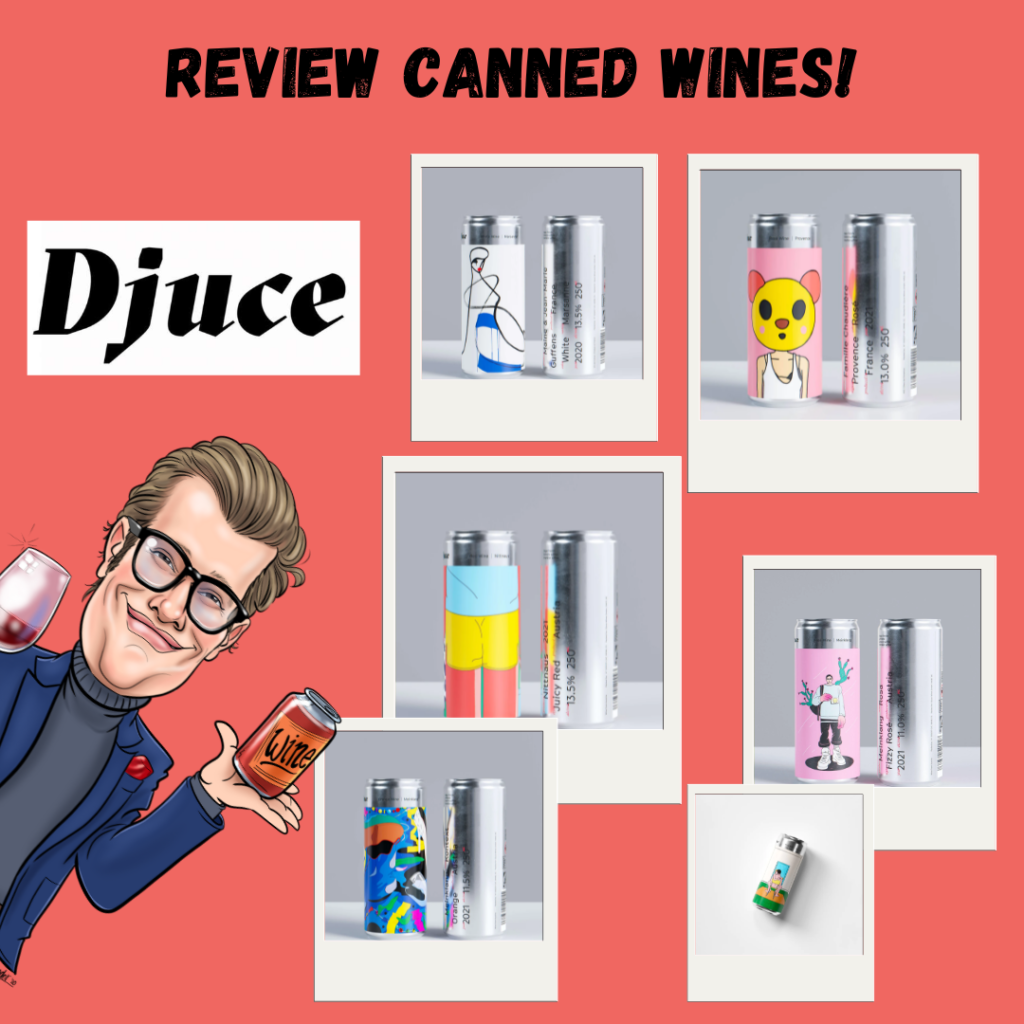
Review canned wines of Djuce

Een tijdje terug deed ik een review voor Djuce op mijn instagram: hieronder een samenvatting!

Wijn 1

🍷🌧️ Een eigentijdse rode wijn die de zintuigen betovert. Flirterig en gedurfd, deze wijn brengt je in de sfeer van elkaars hand vasthouden tijdens een verkwikkende regenbui of het razendsnelle avontuur van het spelen van Sonic the Hedgehog op de legendarische Sega Mega Drive.

🍷 Type: Rood

🍇 Druivensoort: Blaufränkish/St.Laurent

📆 Oogstjaar: 2021

🌱 Producent: Nittnaus

🌍 Land: Oostenrijk

📍 Regio: Burgenland

💧 Inhoud: 250 ml

Deze verrukkelijke rode wijn van Nittnaus biedt een waar genot voor de zintuigen. Met een lichte body betovert hij je mond met sappige smaken van zwarte bessen, rijpe frambozen en een vleugje peper. De zuurbalans is perfect in harmonie, waardoor de wijn levendig en verfrissend blijft. De afdronk is langdurig en betovert met zijn subtiele kruidige nuances. Deze speelse wijn is een blend van de Blaufränkish en St.Laurent druiven, die met zorg zijn geteeld in de pittoreske regio Burgenland, Oostenrijk.

Burgenland, gelegen in het oosten van Oostenrijk, is een prachtige wijnregio die bekend staat om zijn uitstekende klimaat en vruchtbare bodems. Het gebied is een paradijs voor wijnbouw, met glooiende heuvels en schilderachtige wijngaarden die zich uitstrekken tot aan de horizon.

Wijn 2

Laat je betoveren door deze opwindende, bruisende en fantasierijke wijn! ✨🍓🍊🍋

🍷 Type: Fizzy Rosé 🥂

🍇 Druivensoort: Zweigelt 🍇 / Blaufränkisch 🍇 / St Laurent 🍇

📆 Oogstjaar: 2021

🌱 Producent: Meinklang

🌍 Land: Oostenrijk

📍 Regio: Burgenland

💧 Inhoud: 250 ml

Deze bruisende rosé wijn is een waar feest voor de zintuigen. Met zijn natuurlijke stijl en verrukkelijke smaak van sappige aardbeien 🍓, pittige bloedsinaasappels 🍊 en verfrissende citroenen 🍋, brengt hij een sprankelende vreugde in je glas. 🎉✨

De kenmerkende druivensoorten van de regio: Zweigelt 🍇, Blaufränkisch 🍇 en St Laurent 🍇. Samen creëren ze een harmonieus samenspel van fruitige aroma’s en een levendige sprankeling. 🎶🍷

Elk slokje van deze wijn neemt je mee op een reis vol vrolijkheid en verbeeldingskracht. Het is als het proeven van de zomer ☀️, waarbij je jezelf waant op een zonovergoten terras, omringd door lachende vrienden en sprankelende gesprekken. 🌴🌞🍹

Wijn 3

🌸🍷 Een klassieke roséwijn met een moderne twist, perfect voor de avontuurlijke wine lovers van nu. Laat je betoveren door de subtiele aroma’s en verrassende smaken van deze prachtige wijn. 🌟🍇

🍷 Rosé

🏞️ Famille Chaudière

📆 2021

🌍 Frankrijk

📍 AOC Côtes de Provence

🍇 60% Cinsault – 30% Grenache – 10% Rolle

💧 250 ml

Deze prachtige roséwijn van Famille Chaudière brengt je naar een zonovergoten terras ☀️, waar je geniet van de verfrissende tonen van grapefruit 🍊, sappige rode bessen 🍓 en delicate witte bloemen 🌼. Maar dat is nog niet alles! Ontdek ook de opwindende smaken van vers rood fruit (framboos, aardbei), tikje streenfuit, vleugje rabarber 🥧, bittertje van grapefruit 🍊 en tijm 🌿 die deze wijn uniek maken ✨🍓🍊🍋 .

Famille Chaudière, gevestigd in het betoverende AOC Côtes de Provence in Frankrijk 🇫🇷, staat bekend om hun vakmanschap en moderne benadering van wijnmaken. Dit is de ultieme roséwijnervaring voor de moderne levensgenieter.

Wijn 4

🍇🌱 Meinklang, de wijnmakerij, creëert hun betoverende oranje wijn met toewijding en vakmanschap. De druivensoorten Welschriesling, Pinot Gris en Grüner Veltliner worden biologisch geteeld in de wijngaarden van Burgenland, Oostenrijk. De druiven ondergaan een speciale behandeling waarbij ze met schil en al worden gefermenteerd, resulterend in een karakteristieke 🧡 oranje kleur en een rijke textuur. Het gebruik van wilde gisten en zorgvuldige vinificatie en rijping zorgen voor een verleidelijke oranje wijn met 🌴🍊 tropisch fruit, sinaasappelschil en 🌼 witte bloemen als natuurlijke expressie.

🍷 Type: Oranje wijn 🍊🍷

🍇 Druivensoort: Welschriesling 🍇 / Pinot Gris 🍇 / Grüner Veltliner 🍇

📆 Oogstjaar: 2021

🌱 Producent: Meinklang @meinklang_farm

🌍 Land: Oostenrijk

📍 Regio: Burgenland

💧 Inhoud: 250 ml

Even een stukje wegdromen🍷🌇 De moderne levensgenieter neemt een moment voor zichzelf, hoog boven de bruisende stad. Hij schenkt een glas Meinklang oranje wijn in, met de smaken van tropisch fruit, sinaasappelschil en witte bloemen. Terwijl hij geniet van elke slok, voelt hij de spanning van zijn schouders glijden. Het moment van ontspanning is cruciaal voor zijn welzijn, een kostbaar geschenk dat hij zichzelf gunt. Proost op het leven en de kleine geneugten! 🥂🌍🌟

Wijn 5

Ontdek de smaak van de Marsanne-druif, een witte druivensoort afkomstig uit de prachtige Rhône-vallei in Frankrijk. Als een van de belangrijkste druivenrassen in deze regio, staat de Marsanne-druif bekend om zijn gouden kleur en rijke aroma’s van perzik, peer en honing.

Deze druivensoort🍇resulteert in wijnen met een volle body💪 en een zachte zuurgraad🍋. Vaak wordt de Marsanne geblend met andere druiven, zoals Roussanne🍇, om een complexer smaakprofiel te creëren. Marsanne-wijnen bieden fruitige tonen, subtiele kruidigheid🌿 en een lange afdronk. Ze gedijen goed in warme klimaten☀️ en worden wereldwijd verbouwd, hoewel ze voornamelijk te vinden zijn in de Rhône-vallei🗻 en andere wijnregio’s in Frankrijk. Deze elegante🎻 en verfijnde wijnervaring is geliefd bij wijnliefhebbers.

Geniet van deze verrassend volle wijn met een aangename zuurbalans, aroma’s van rijpe citroen🍋 met een vleugje schil, fris geel appeltje🍏 en een subtiele hint van bijenwas🍯 .

🍷 Type: Wit

🍇 Druivensoort: Marsanne

📆 Oogstjaar: 2020

🌱 Producent: Maine and Jean-Marie Guffens

🌍 Land: Frankrijk

📍 Regio: Rhône

💧 Inhoud: 250 ml

Tagged : /

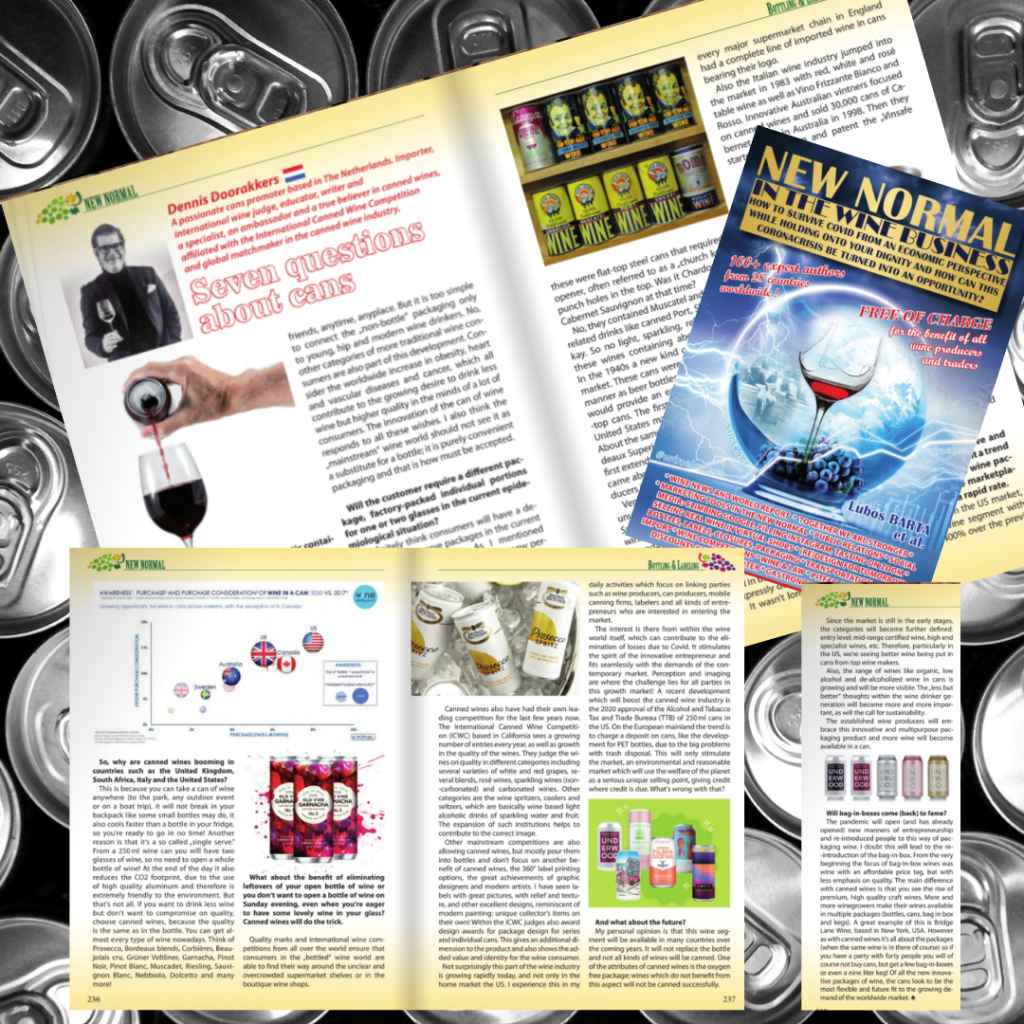
𝙉𝙀𝙒 𝙉𝙊𝙍𝙈𝘼𝙇 𝙄𝙉 𝙏𝙃𝙀 𝙒𝙄𝙉𝙀 𝘽𝙐𝙎𝙄𝙉𝙀𝙎𝙎 – SOMMELIER Magazine (GastroPress) – co-author

Some time ago I was asked by Lubos Bárta (Chief editor E-SOMMELIER Magazine (GastroPress Ltd.), if I wanted to participate in an international publication. As the topic is so important I publish my part again – for the whole publication click on this link.

”𝙉𝙀𝙒 𝙉𝙊𝙍𝙈𝘼𝙇 𝙄𝙉 𝙏𝙃𝙀 𝙒𝙄𝙉𝙀 𝘽𝙐𝙎𝙄𝙉𝙀𝙎𝙎 (𝙤𝙧 𝙃𝙤𝙬 𝙏𝙤 𝙎𝙪𝙧𝙫𝙞𝙫𝙚 𝘾𝙤𝙫𝙞𝙙 𝙁𝙧𝙤𝙢 𝘼𝙣 𝙀𝙘𝙤𝙣𝙤𝙢𝙞𝙘 𝙋𝙚𝙧𝙨𝙥𝙚𝙘𝙩𝙞𝙫𝙚 𝙒𝙝𝙞𝙡𝙚 𝙃𝙤𝙡𝙙𝙞𝙣𝙜 𝙊𝙣𝙩𝙤 𝙔𝙤𝙪𝙧 𝘿𝙞𝙜𝙣𝙞𝙩𝙮 𝘼𝙣𝙙 𝙃𝙤𝙬 𝘾𝙖𝙣 𝙏𝙝𝙞𝙨 𝘾𝙤𝙧𝙤𝙣𝙖 𝘾𝙧𝙞𝙨𝙞𝙨 𝘽𝙚 𝙏𝙪𝙧𝙣𝙚𝙙 𝙄𝙣𝙩𝙤 𝘼𝙣 𝙊𝙥𝙥𝙤𝙧𝙩𝙪𝙣𝙞𝙩𝙮)

Will wine be sold in cans or plastic containers in small individual portions?

Yes, certainly without any doubt and this has already been the case for several years in a lot of countries around the world. 

Recent research of the British research firm Wine Intelligence shows that the acceptance of canned wine has grown greatly in the United States, the United Kingdom, Canada and even Sweden. In the current Covid crisis consumers appear to be more open to alternative packaging in wine than ever before. Smaller packages are becoming more popular for multiple reasons. The new generation of wine drinkers is into the experience of drinking quality wine. They want to drink wine with friends, anytime, anyplace. But it is too simple to connect the ‘non-bottle’ packaging only to young, hip and modern wine drinkers. No, other ‘categories’ of more traditional wine consumers are also part of this development. Consider the worldwide increase in obesity, heart and vascular disease and cancer, which all contribute to the growing desire to drink less wine but higher quality in the minds of a lot of consumers. The innovation of the can of wine responds to all these wishes. I also think the ‘mainstream’ wine world should not see it as a substitute for a bottle; it is purely convenient packaging and that how is must be accepted.Geen alternatieve tekst opgegeven voor deze afbeelding

Will the customer require a different package, factory-packed individual portions for one or two glasses in the current epidemiological situation?

I definitely think consumers will have a demand for ‘single serve’ packages in the current epidemiological situation. As I mentioned before this current pandemic opens new perspectives and sometimes forces producers and consumers alternative packaging in wine than ever before.

But is the wine can really that new and contemporary?

Let me take you briefly into the history of wine in a can. The first experiments with canned wine paralleled the introduction of the first beer cans in 1935 in the United States. These were not the ‘tab’ cans that we are used to these days; these were flat-top steel cans that required an opener, often referred to as a “church key,” to punch holes in the top. Was it Chardonnay or Cabernet Sauvignon at that time? No, they contained Muscatel and other wine related drinks like canned Port, Sherry and Tokay. So no light, sparkling, refreshing wines; these wines containing about 20% alcohol. In the 1940s a new kind of can came on the market. These cans were opened in the same manner as beer bottles and it was hoped they would provide an easier transition than flat-top cans. The first wine canned outside the United States may have been from Australia. About the same time a French steel can of Bordeaux Superieur appeared on the market. The first extended marketing of white wine in cans came about in the late 1970s courtesy of producers in Australia. Venezuela and Argentina followed with unusual canned wines based on red wine of Spain with citrus fruit juices added – like the wine spritzers, coolers and seltzers we have nowadays!

Geen alternatieve tekst opgegeven voor deze afbeelding

In 1981 aluminum cans were introduced in England, specifically a French vin de table specially selected for the can. Within one year, a redesigned tall 250 ml can, was introduced and wines were imported in bulk to be canned in England or in cans expressly designed and filled for the producer. It wasn’t long before every major supermarket chain in England had a complete line of imported wine in cans bearing their logo. Also the Italian wine industry jumped into the market in 1983 with red, white and rosé table wine as well as Vino Frizzante Bianco and Rosso. Innovative Australian vintners focused on canned wines and sold 30,000 cans of Cabernet Shiraz in Australia in 1998. Then they started to develop and patent the ‘Vinsafe canning technology,” which assures stability of premium varietal wines and a shelf life of at least five years. Their 250 ml. cans are distributed in Asia, Europe, Canada, New Zealand and Australia. 

But what about today’s perspective and the near future of canned wines? Is it a trend that will pass or will this form of wine packaging get its own place in the marketplace? The market is growing at a rapid rate.

To quote some figures from the US market, it is the fastest growing wine segment with a growth percentage of 400% over the previous 4 four years.

So, why are canned wines booming in countries as the United Kingdom, South Africa, Italy and the United States? This is because you can take a can of wine anywhere (to the park, any outdoor event or on a boat trip), it will not break in your backpack like some small bottles may do, it also cools faster than a bottle in your fridge, so you’re ready to go in no time! Another reason is that it’s a so called “single serve.” From a 250 ml wine can you will have two glasses of wine, so no need to open a whole bottle of wine! At the end of the day it also reduces the CO2 footprint, due to the use of high quality aluminum and therefore is extremely friendly to the environment. But that’s not all. If you want to drink less wine but don’t want to compromise on quality, choose canned wines, because the quality is the same as in the bottle. You can get almost every type of wine nowadays. Think of Prosecco, Bordeaux blends, Corbières, Beaujolais cru, Gruner Veltliner, Grenacha, Pinot Noir, Pinot Blanc, Muscadet, Riesling, Sauvignon Blanc, Nebbiolo, Dolcetto and many more! What about the benefit of eliminating leftovers of your open bottle of wine or you don’t want to open a bottle of wine on Sunday evening, even when you’re eager to have some lovely wine in your glass? Canned wines will do the trick.

Quality marks and international wine competitions from all over the world ensure that consumers in the ‘bottled’ wine world are able to find their way around the unclear and overcrowded supermarket shelves or in the boutique wine shops. 

Canned wines also have had their own leading competition for the last few years now. The International Canned Wine Competition (ICWC) based in California sees a growing number of entries every year, as well as growth in the quality of the wines.

They judge the wines on quality in different categories including several varieties of white and red grapes, several blends, rosé wines, sparkling wines (non-carbonated) and carbonated wines. Other categories are the wine spritzers, coolers and seltzers, which are basically wine based light alcoholic drinks of sparkling water and fruit. Theexpansion of such institutions helps to contribute to the correct image.

Other ‘mainstream’ competitions are also allowing canned wines, but mostly pour them into bottles and don’t focus on another benefit of canned wines, the 360° label printing options, the great achievements of graphic designers and modern artists. I have seen labels with great pictures, with relief and texture, and other excellent designs, reminiscent of modern painting: unique collector’s items on their own! Within the ICWC judges also award design awards for package design for series and individual cans. This gives an additional dimension to the product and also shows the added value and identity for the wine consumer.

Not surprisingly this part of the wine industry is growing rapidly today, and not only in the ‘home market’ the US. I experience this in my daily activities which focus on linking parties such as wine producers, can producers, mobile canning firms, labelers and all kinds of entrepreneurs who are interested in entering the market.

The interest is there from within the wine world itself, which can contribute to the elimination of losses due to Covid. It stimulates the spirit of the innovative entrepreneur and fits seamlessly with the demands of the contemporary market. Perception and imaging are where the challenge lies for all parties in this growth market! A recent development which will boost the canned wine industry is the 2020 approval of the Alcohol and Tobacco Tax and Trade Bureau (TTB) of 250 ml cans in the US. On the European mainland the trend is to charge a deposit on cans, like the development for PET bottles, due to the big problems with trash disposal. This will only stimulate the market, an environmental and reasonable market which will use the welfare of the planet as a serious unique selling point, giving credit where credit is due. What’s wrong with that?

And what about the future?

My personal opinion is that this wine segment will be available in many countries over the coming years. It will not replace the bottle and not all kinds of wines will be canned. One of the attributes of canned wines is the oxygen free package; wines which do not benefit from this aspect will not be canned successfully. 

Since the market is still in the early stages, the categories will become further defined: entry level; mid-range certified wine, high end specialist wines, etc. Therefore, particularly in the US, we’re seeing better wine being put in cans from top wine makers.

Also, the range of wines like organic, low alcohol and de-alcoholized wine in cans is growing and will be more visible. The ‘less but better’ thoughts within the wine drinker generation will become more and more important, as will the call for sustainability.

The established wine producers will embrace this innovative and multipurpose packaging product and more wine will become available in a can.

Will bag-in-boxes come (back) to fame?

The pandemic will open (and has already opened) new manners of entrepreneurship and re-introduced people to this way of packaging wine. I doubt this will lead to the re-introduction of the bag-in-box. From the very beginning the focus of bag-in-box wines was wine with an affordable price tag, but with less emphasis on quality. The main difference with canned wines is that you see the rise of premium, high quality craft wines.Geen alternatieve tekst opgegeven voor deze afbeelding

More and more winegrowers make their wines available in multiple packages (bottles, cans, bag in box and kegs). A great example of this is Bridge Lane Wine, based in New York, USA. However as with canned wines it’s all about the packages (when the same wine is in there of course) so if you have a party with forty people you will of course not buy cans, but get a few bag-in-boxes or even a nine liter keg! Of all the new innovative packages of wine, the cans look to be the most flexible and ‘future fit’ to the growing demand of the worldwide market.


Tagged : /