Tasting French BIO wines (article in Dutch)

Vorige week was ik weer eens op pad in Nederland naar een face-to-face proeverij! Jawel, ze bestaan nog! Geen zoom proeverij met allemaal matte gezichten, mensen die hele andere dingen aan het doen zijn, vreemde outfits, rare bijgeluiden of verschillende glazen in beeld en vooral de vlakke gesprekken over het mooiste product ter wereld.

Nee, dit keer was het weer eens ouderwets praten met wijnboeren, met echte unieke verhalen over hun ‘baby’s’. Dit alles werd georganiseerd door Business France Nederland* en de locatie was gelegen in de landelijke omgeving van Woubrugge, Zuid Holland.

Vooraf moest er worden aangemeld en met twee tijdsloten en maximaal 30 mensen per keer kon alles met aangepaste corona maatregelen van start. Er waren covid sneltesten en eigen spuugbakjes, welke als een soort van bidon om je nek hingen. Ook zorgde de organisatie voor een eigen stokbroodje, om de smaak te neutraliseren, en zat de tas vol met allerlei informatieve stukken, zodat je goed beslagen ten ijs kon komen.

Wie waren er? In totaal 19 Franse wijnbedrijven uit de Franse wijnregio’s Loire, Provence, Rhône, Languedoc-Roussillon, Sud-Ouest en Bordeaux. Samen presenteerden zij meer dan 200 wijnen.

Hieronder een impressie van twee wijnhuizen, waar ik wijnen van heb geproefd.

Domaine de Beyssac

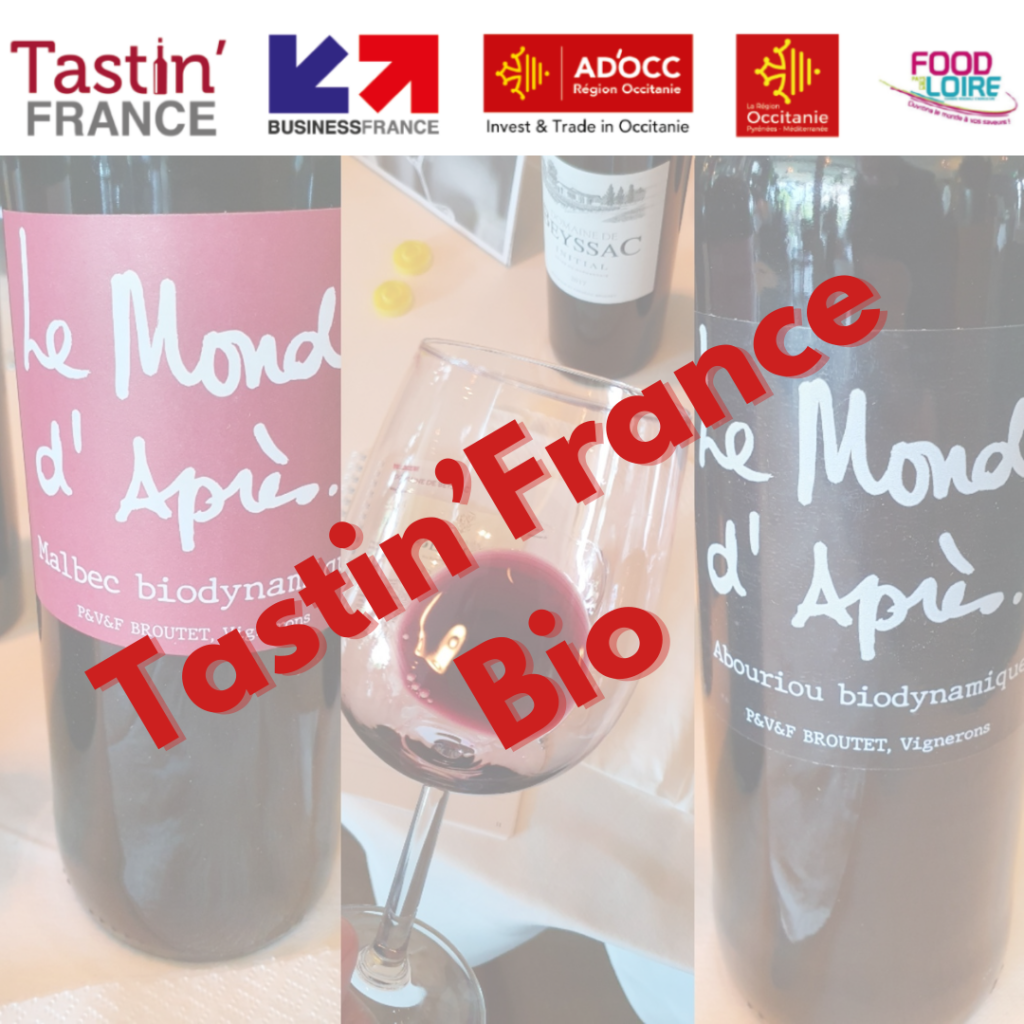
Het familiedomein van 20 hectare ligt in Marmande, regio Sud Ouest. Men verbouwt er Merlot, Malbec en Abouriou en produceert op de biodynamische manier. Het respect dat men heeft voor de bodem en de wijnstokken maakt het mogelijk om wijnen te maken die levendig en trouw zijn aan het terroir. De pandemie heeft ervoor gezorgd dat men, naast de ‘normale’ lijn aan wijnen, ook wat anders wilde maken, puur, uniek, eigen en post covid.

Pauline Broutet, de wijnboerin en wijnmaakster

De oogst gebeurt handmatig en de druiven worden ontsteeld, gesorteerd en in de wijnmakerij niet gekneusd. De natuurlijke alcoholische gisting gebeurt bij 26°C in roestvrijstalen vaten door inheemse gisten en er wordt slecht zeer matig overpompt. De malolactische gisting gebeurt op natuurlijk wijze en na een periode van 10 maanden in roestvrijstalen vaten is de wijn klaar om in de fles te gaan. De wijnen zijn volledig biodynamisch zonder toevoegingen en zijn dan ook ongefilterd zodat de wijn al zijn smaakkwaliteiten behoudt.

Biodynamique– Malbec & Abouriou

Domaine de Beyssac Le Monde d’Après Abouriou – AOP Côtes du Marmandais 2020

Deze wijn is 100% biodynamisch en is een mono cepage van de authentieke inheemse druif, Abouriou.

Donker rood van kleur met een vrolijke uitstraling, krachtige aanzet, kers, framboos, zwarte bes, tikje braam, lichte kruidigheid uit de regio, balans, gelaagdheid en mooie afdronk.  

Domaine de Beyssac Le Monde d’Après Malbec – AOP Côtes du Marmandais – 2020

Deze wijn is 100% biodynamisch en is een mono cepage van de Malbec druif.

Donkerder van kleur dan Abouriou. Tevens krachtig, maar vooral veel donker rood fruit. Bosbessen, zwarte kers, donkere braam, rijk, fris, jammy, balans, easy going, authentiek en een lange afdronk.  

la Bargemone

La Commanderie de la Bargemone is gelegen in het hart van de Provence en werd in de 13e eeuw gesticht door de Orde van de Tempeliers. Dit traditionele Provençaalse wijnbedrijf beschikt over 120 hectare aan wijnstokken in de appellation Coteaux d ́Aix en Provence en is biologisch gecertificeerd. Het Domaine produceert alle drie de kleuren wijn, maar het grootste deel van de productie is rosé. Een wijngaard in de biologische landbouw vereist strenge controles gedurende het hele jaar, zowel in de wijngaard als in de kelder. Dankzij deze controles zijn de rosés biologisch gecertificeerd. Men oogst ’s nachts om alle versheid van de druiven te behouden.

Er worden verschillende druivensoorten geteeld: Cabernet Sauvignon, Syrah, Counoise, Grenache, Vermentino, Sauvignon Blanc. Deze diversiteit aan druivenrassen geven de wijnen een grote mate van aromatische originaliteit en opmerkelijke consistentie. In september 2019 is het landgoed overgenomen met het doel om het nieuw leven in te blazen, met behoud van de knowhow en het prestige die Bargemone al genoot.

De ”range” aan rose wijnen

De wijnmaker wist te melden dat de oogst van 2020 alles behalve normaal verliep. Ondank dat de knoppen van de druiven eerder begonnen te bloeien, was de oogst twee weken later dan normaal, waardoor de druiven meer tijd kregen om te rijpen en om de smaken te ontwikkelen.

Cuvée La Bargemone Rosé 2020 –  AOC Coteaux d’Aix-en-Provence   

Deze ‘Organic’ wijn is samengesteld uit de druiven Grenache, Syrah en Cinsault.

Licht roze van kleur met een uitgesproken neus, tikje tropisch met in de kern klein zwart en vooral rood fruit. Fris, vers, framboos, aardbei, munt, mooie zuurbalans en fijne kruidige afdronk.

90 points Decanter

Cuvée Commanderie de la Bargemone Rosé 2020 – AOC Coteaux d’Aix-en-Provence

De blend van deze rosé is wat complexer dan de eerste. De druiven zijn Grenache, Cinsault, Cabernet Sauvignon, Syrah en Sauvignon Blanc. Waar de Cabernet Sauvignon de structuur, tannines en body toevoegt, geeft de Sauvignon Blanc meer hogere zuren en evenwicht in de blend.

Zalmroze in het glas met meer citrusfruit in de neus, even als verfijnder rood en tropisch fruit. Verse aardbeien, tikje framboos, lichte nectarine en ook in de achtergrond een vleugje van bloedsinaasappel. Ingetogen kruidigheid, vers vol met een lange finale.

 91 points Decanter

La Bargemone Cuvée Collection Rosé 2020 – AOC Coteaux d’Aix-en-Provence

Deze laatste rosé is een samenstelling van Cabernet Sauvignon, Syrah en Counoise. Deze laatste druif is een van de oudste druiven van Frankrijk en wordt momenteel ook in de Châteauneuf-du-Pape gebruikt. Net als de Cabernet Sauvignon rijpt de druif laat, maar voegt het kruidigheid en een bloemige toon aan de blend.

De kleur is licht roze, maar doet denken aan pioenrozen in het voorjaar. Kleine rode besjes, aardbeien, frambozen, iets van donkere bessen, rijk, rond, mooie fruit/zuurbalans, witte bloemen, provinciale kruidenmix, complexiteit, evenwichtig, mooie zachte afdronk welke lang blijft hangen.

De wijngaarden in het hart van de Provence

* Business France is het Franse Agentschap ter bevordering van de internationale groei van de Franse economie . Business France adviseert en begeleidt Franse bedrijven bij hun exportactiviteiten in het buitenland en promoot Frankrijk in economische zin. Business France coördineert en stimuleert het VIE internationaal internshipprogramma. Business France is in 2015 ontstaan uit de samenvoeging van UBIFRANCE en het Franse Agentschap voor internationale investeringen. Business France telt 1.500 medewerkers in Frankrijk in 70 landen en beschikt over een netwerk van partners in zowel de publieke als de prive sector.

Rough Day Rosé – Thracian Valley, Bulgaria

With whom do i have the pleasure of speaking?

Robert Hayk, CEO & Co-Founder of G&B Importers, was born in Armenia and raised in Soviet Russia. Having always dreamed of living in the United States, he immigrated in 1997.  Robert attended Georgetown University to study Government & Finance and then spent 15 years in the world of banking and investments, laying out the foundation for pursuing his true passion of owning his own business.

Nice to meet you Robert, what is your background in wine?

It was in the 90s, during his time working for the US Embassy in Bulgaria, that Robert developed his love and appreciation for Bulgaria, its agricultural industry, and wine in particular. There the seed for Grapes & Barley was planted, as Robert began contemplating the possibility of creating a company that could take advantage of the fertile soils of Bulgaria and the untapped potential of its wine industry and history. G&B is now the largest U.S. importer of Bulgarian wines, distributing its own brands and private labels created for retailers like Total Wine & More and Walmart in 35 states.

Your company produces the Rough Day Rosé in a can, how would you describe your wine in a can?

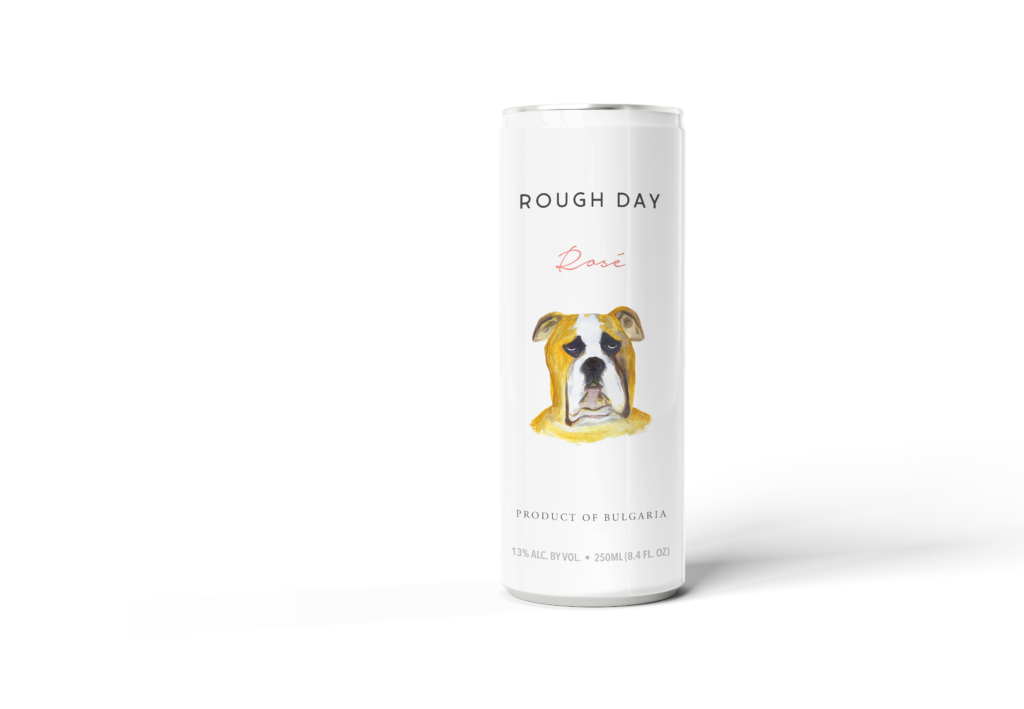
Rough Day Rosé is a delicately fruity rosé of 100% Gamza grape with aromas and flavors of strawberry, cherry, and rose petals. Gamza is a native grape from the northern region of Bulgaria, the Danube Plain. The rosé is dry, yet full of fruit and refreshing to drink straight out of the can. It’s easy to open and easy to enjoy.

All great charicaristics of the wines, but why are you in the canned wines industry?

There are so many reasons to get into canned wines. Cans are arguably the most sustainable beverage packaging option we have, since aluminum is already one of the most recycled materials. Not to mention the fact it’s thinner and weighs significantly less than glass, allowing us to ship more wine on fewer containers and trucks. It’s also less prone to breakage, preventing waste during transport and making it more portable for consumers as well. It’s also incredibly convenient. There’s no need for a cork screw or even a wine glass, so combine that with the lighter weight and you can take them almost anywhere. We also love how it’s sized for a single person, giving consumers the opportunity to experiment more and lower their consumption without a lot of waste. And lastly, from a business and marketing perspective, cans offer a lot of creativity for branding with the full 360 degree space, and because consumers can drink straight out of the can, anyone who drinks your wine is acting as a marketing vehicle, whether they’re drinking it on social media, at the beach, or at a concert.

How do you see the future of canned wines?

I definitely think cans are here to stay. The market for canned wines is growing rapidly in the US, but the technology still has some catching up to do. You’re already starting to see premium wines being put in cans, but I think we’ll start to see can liners that last longer, allowing the industry to expand further into more reds and age worthy wines in cans. I think once the technology is there, any stigmas against canned wines will easy be overpowered by all the benefits I mentioned.

Do you wish to add something to this interview?

We really believe cans have the power to help demystify and democratize wine. By reducing the level of snobbery often associated with wine, we can open up this beautiful product to so many more people. Wine has played such a large part throughout human history and culture––an accompaniment to celebrations and rituals, etc. Rather than feeling like cans are moving away from tradition, we actually feel like it helps bring us all back to the simple enjoyment of a delicious and natural product.

RICH, a luxury, made convenient.

In these series of interviews I will interview many enthusiastic people who are involved in the canned wine business.

With whom do I have the pleasure of speaking?

Andrea Holz, Head of Sales and Operations.

What is your background in wine?

I have started in the canned wine industry with RICH when I was 18 years old after finishing my secondary school specialising in Economics and Finance. I achieved my Business bachelor’s degree from Munich and New York City. Five and a half years later I am still going with a passion, thrive and determination greater than ever especially after we were able to expand with RICH into a number of new markets and continuing to expand our global footprint substantially. We are thrilled to be sponsoring the upcoming National Film Awards in London with our company. I am now responsible for leading the sales operations department with a focus on the UK market. My role includes overseeing all of the business activities and for driving sales efforts in order to enhance the business’ position with consumers and to solidify the position of the business in the canned wine market.

How would you describe your wine in a can?

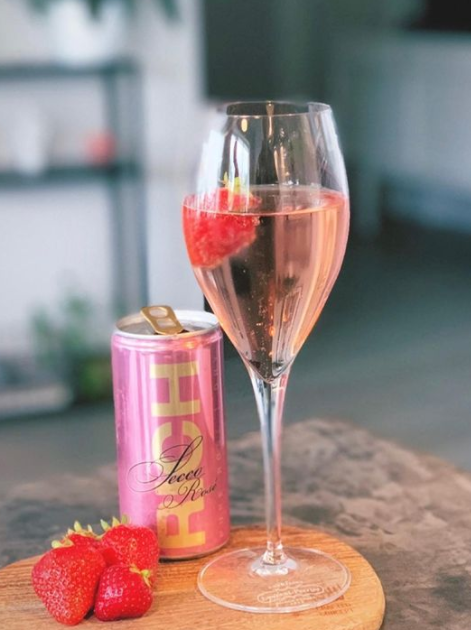
Short but sweet? RICH is a luxury, made convenient. Our sustainable canned vegan secco provides luxurious flavour. A premium sparkling Italian wine delivers on taste as well as lifestyle making it the ideal go-to drink for our customers as the perfect treat at the end of the day or at your next event without compromising on quality.

Why are you in the canned wines industry?

I never really planned to be in the canned wine industry and what many people don’t know is that I am also working in Supply Chain for a Technology Company for the past two years but my heart does beat for RICH day and night! I cannot imagine not being part of the RICH family and continuing to disrupt the global canned wine market. And why I am in the canned wine industry in particular.. so a major advantage of cans is a reduced carbon footprint – aluminum has far higher recycling rates than glass, and the carbon effect of shipping lighter containers is significant. We at RICH thrive to produce and consume as sustainable as possible hence this is personally a very important aspect for me.

Another aspect is that I recognize huge potential for the canned wine industry as consumers are becoming more aware of how high the quality can remain in aluminum and the taste is even better than from a bottle in my opinion. As an example, the advantage of canned wine is faster chilling. This makes cans a good choice for picnics, concerts in the park and drinking by the pool, where glass is most likely prohibited.

How do you see the future of canned wines?

Well I can’t wait for the day when Prosecco in particular RICH Prosecco will overtake Champagne! (She said with a big smile on her face).

Over the past few years, there has been a rise in the popularity of Prosecco, especially canned secco. With years of record-breaking sales, it is believed that Prosecco is well on its way to overtaking champagne as the most popular choice of sparkling wine. While often compared to Champagne, Prosecco wines are made with a different set of grapes and an entirely different winemaking method. It is usually produced in a dry, brut style but its fruit flavours give it a sweeter flavour that makes it an easier drink.

When it comes to food pairing, RICH Prosecco is versatile and tastes well with a wide range of dishes from different cuisines. Not many wines can be served before and also work well with the main course, but RICH Prosecco does that perfectly. Because of its sweet aromatics and bubbles, the drink matches well with spicy dishes and Asian cuisine.

Once again, given the sustainability aspect, I think that canned secco is the way to go.

Drink RICH. The most delicious, vegan and sustainable premium secco in a can.  And thank you for being here today Dennis! It was a pleasure. Stay happy, healthy and sparkly.

A tasting of Italian wines (part one)

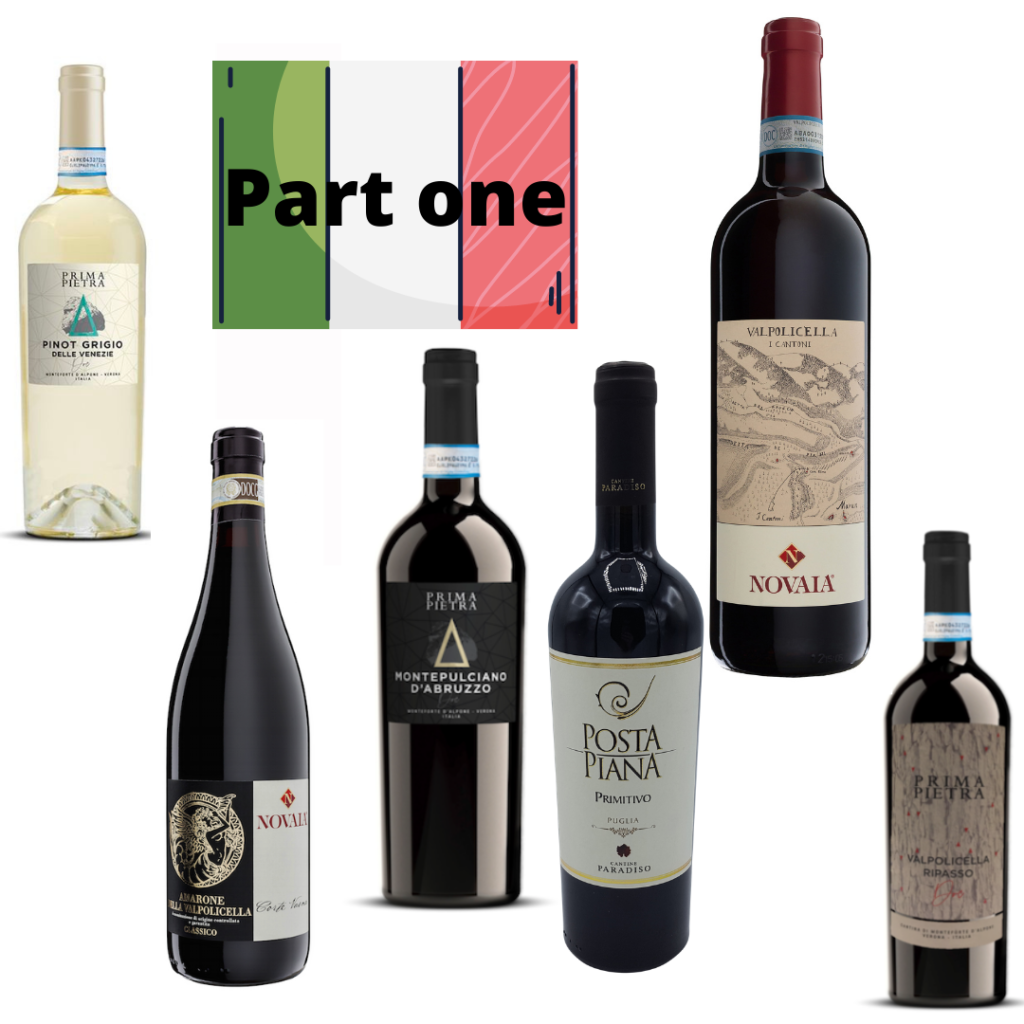
Last month I tasted various Italian wines with the tasting panel of Voerman Wijnen for the import next fall. Lots of wines from Veneto, in particular Valpolicella this time. But also one Primitivo from the very south, Puglia. Below an impression of part one.

Azienda Agricola Novaia We need to go back to the 15th century, at that time the Vaona family made their presence. Overlooking the the Marano Valley in the Valpolicella Classica area, the old manor house is still standing strong. With an ancient stone carved cellar (Tinaia in Italian) used for the ageing of Ripasso, Superiore, Amarone and Recioto wines it is unique. Within the special aging cellar, wines are aged in medium toasted barrels from French and Slavonian oak. Besides the Tinaia they also have a ‘’drying’’ cellar for Amarone and Recioto grapes, called the Fruttaio. This family owned winery has an annual production of approximately 50,000 bottles of which they export seventy percent abroad.

Valpolicella Classico superiore 2019
Deep ruby ​​red, cherries, red berries, pepper, cocoa, minerals, ripe fruit, tight mouthfeel, structure, spicy acidity.

Amarone della Valpolicella ‘Corte Vaone’ 2015 Deep garnet red, bay leaf, liquorice, silky tannin, soft, mighty, powerful, layering in aromas, robust, black cherries, dried fruit, raisins, currants, dark chocolate, sweet tobacco, beautiful acid balance, nice sweetness, long finish.

Home - Cantina di Monteforte

Cantina di Monteforte Founded in 1952 as a cooperate named ‘Cantina Sociale di Monteforte d’Alpone’, the company has grown from a small cooperative, in the main historical denominations of the province of Veron, of a few members to a highly professional conjoin wine firm with 400 grape growers. Nowadays they have 1.200 ha. of vineyards to control and produce over 4 million bottles of wine on a yearly base. Over the last decades they have invested in new technology like state-of-the-art bottling plants, new wine label lines, vineyards techniques and many more innovative solutions to make the process better and to ensure the quality of their wines. As they have a wide range of wines, I tasted some of their Prima Pietra Line, which is translated as ”1st stone”, which links to the foundation in 1952.

Pinot Grigio Delle Venezie ‘Prima Pietra Line’ 2020 Dark lemon yellow, citrus fruit, tropical fruit, slightly nutty, juicy, playful acidity, round body, fresh / full finish, classic bitter aftertaste.

Montepulciano D’Abruzzo ‘Prima Pietra Line’ 2020 Deep ruby ​​red, intense nose, fresh, cherries, blackberries, light spiciness, ripe, full, supple, forest fruit, leather, bay leaf, cocoa, liquorice, fine acids, ripe tannins, individual character, long finish.

Valpolicella Ripasso ‘Prima Pietra Line’ 2018 Ruby red, pronounced nose, cherry, round, black currant, blueberry, tobacco, pleasant acidity, complex, remains youthful, long finish.

Paradiso - 1954 Primitivo Magnum | Exclusive Winery

Cantina Paradiso When the Second World War finished, the year that came the 1950s were very poor for the farmers in southern parts of Italy. Grandfather Angelo Paradiso, one of the many ordinary farmers in Puglia, decides to seek refuge in viticulture at that time. He founded the Cantine Paradiso winery in 1954. Today his winery is best known for its generous “jammy” red wines made from Primitivo, Negroamaro and Nero di Troia.

Posta Piana Primitivo 2019 Cantina Paradiso – Puglia
Opaque purple, very fragrant nose, jam-like red fruit, cherry, blackberry, cranberry, red plum, ripe, abundant, clove, sweet tobacco, balanced, ripe and round tannins.

Cantine Paradiso Posta Piana Primitivo 2019 | Wijnhandel Basbaan
Stay tuned for part two! 

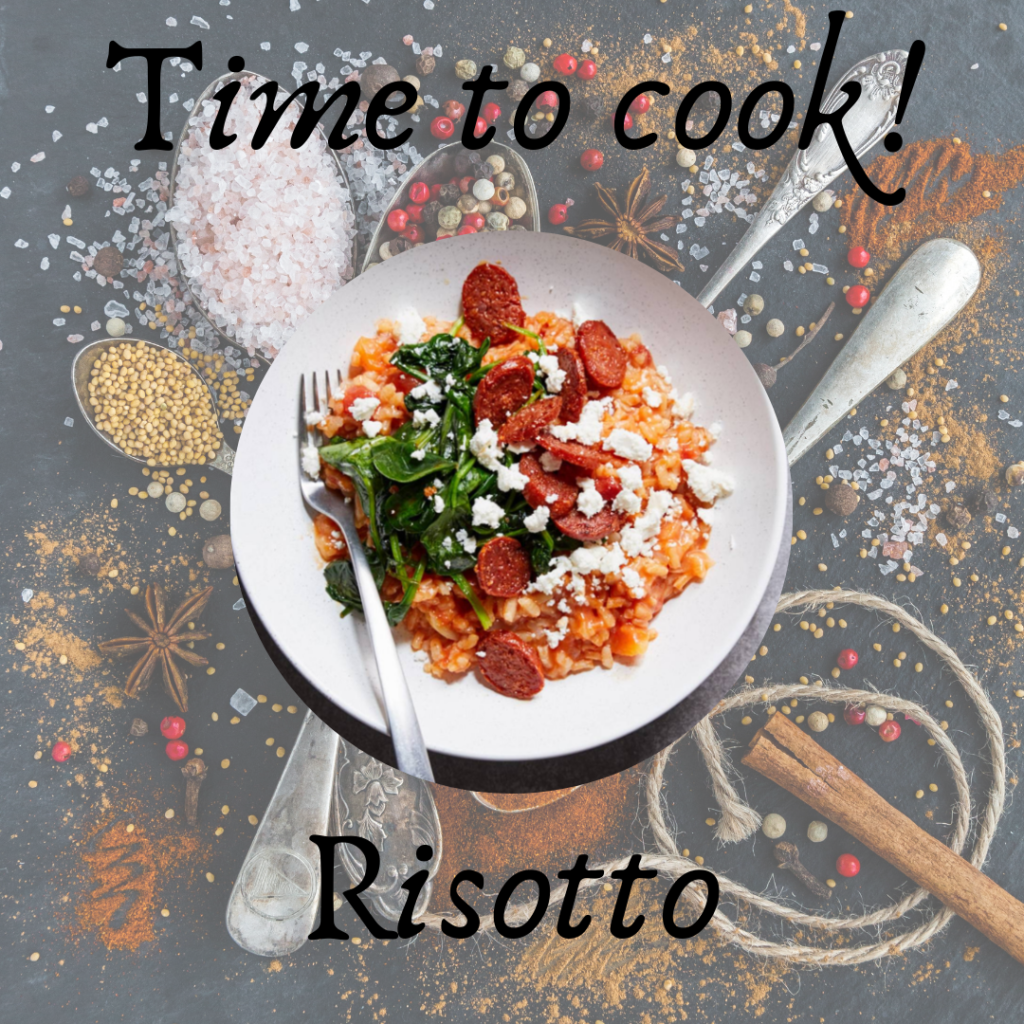
Tomatenrisotto met chorizo, spinazie en feta (DUTCH)

Risotto, wie kent het niet! De variaties zijn bijna ontelbaar. Er zijn verschillende rijst variëteiten welke je kunt gebruiken. De bekendste is misschien wel de Arborio rijst. Een grote korrel die tijdens de bereiding van de risotto tot wel vijf keer zijn gewicht in bouillon kan absorberen, zonder kapot te koken. Voor dit recept gebruikt ik ook de Arborio rijst.

Welke wijn past goed bij Tomatenrisotto met chorizo, spinazie en feta?

Gezien de zuren van de tomaten, het zout van de feta en de pittigheid van de chorizo zou ik wit overslaan. Een frisse rode wijn zowel voldoende zuren, voldoende fruit maar toch ook een bite past hier uitstekend bij. Denk aan een gelaagde Cru de Beaujolais of Nieuw Zeelandse Pinot Noir met pit. Of blijf je liever in Italiaanse sferen? Mijn keuze? Een Valpolicella Classico 2019 van Azienda Agricola Novaia.

Een mooie diep robijnrode kleur met zowel in de neus als in de mond aroma’s van kersen, rode bessen, klein pepertje, snuifje cacao, rijp fruit, strak mondgevoel, mooie zuurbalans en pittig zuurtje in de afdronk.

”Ciao e buon appetito!”

Ingrediënten

  • 2 uien
  • 2 tenen knoflook
  • 25 g ongezouten roomboter
  • 300 g Arborio risottorijst
  • 400 g tomatenblokjes in blik
  • 1 liter hete kippenbouillon
  • 150 g verse Chorizo
  • 600 g spinazie
  • 150 g feta

Bereiding

Snipper de uien en snijd de knoflook fijn. Verhit de boter in een pan met dikke bodem op middelhoog vuur. Voeg de ui toe en fruit 3 min. Voeg de knoflook toe en bak 1 min. mee. Voeg de risottorijst toe en bak al roerend 3 min. mee tot de korrels glazig zijn. Voeg de tomatenblokjes toe en roer tot het vocht bijna is opgenomen. Voeg telkens een scheut hete bouillon toe en blijf roeren tot deze is opgenomen. Herhaal dit tot de rijst gaar is. Dit duurt ca. 25 min.

Verwijder ondertussen het vel van de chorizo en snijd de worst in dunne plakjes. Verhit een hapjespan zonder olie of boter en bak de chorizo 5 min. op middelhoog vuur. Neem de chorizo met een schuimspaan uit de pan en laat uitlekker op keukenpapier. Laat het bakvet in de pan zitten, voeg de spinazie in delen toe en laat al roerend slinken.

Verkruimel de Feta. Neem de risotto van het vuur en roer 1⁄3 van de Feta erdoor. Breng op smaak met peper en eventueel zout. Verdeel de risotto over diepe borden en verdeel de spinazie en chorizo erover.

Bestrooi met de rest van de Feta. Buon Appetito!

Bron: Albert Heijn

Ready-to-drink category will soon overtake wine in the US

Source: thedrinksbusiness.com

Intro in Dutch, article in English

Alcoholische ‘’Ready-to-drink products’’ ook wel afgekort RTD genoemd schieten als padenstoelen uit de grond. Van rum/cola, tot voda/jus de oranje en natuurlijk wijn of op druivensap gebaseerde drankjes in een blikje niet te vergeten. Maar de echte RTD drinker zoekt hippe labels, laag in alcohol, vrolijk en snel te drinken met vrienden, altijd en overal!

Het aanbod is enorm van cocktails, mixdrankjes en andere hippe ‘Hard Seltzer’ of ‘Spritzers’ op basis van fruit zoals frambozen, limoen en (soms) met een tikje wijn erin! In de Verenigde Staten lijkt deze categorie zelf groter te worden dan de wijn!

Daar wil ik graag meer over weten, binnenkort volgt er meer over RTD!

Hieronder enkele quotes uit een interessant artikel, link boven aan.

”Forecasters predict ready-to-drink products will soon outrun wine in the United States, reveals new IWSR Drinks Market Analysis report. Not only did RTDs post extraordinary double-digit growth in 2020, up by +26.4%, it was the only alcohol category to grow at all during the Covid crisis, resonating with consumers across all demographics.”

”In fact, the category is so red-hot right now that RTD volume is projected to increase by almost +27% this year, driven largely by stupendous growth in the US, which holds nearly half (44%) of global RTD volume. Here’s where it gets interesting… Stateside, where hard seltzers have exploded by +130%, RTD volume is already larger than the nation’s total spirits category. Yep, total spirits category.””

A new report by IWSR Drinks Market Analysis suggests the US will soon be consuming more RTDs than wine.

Should US winemakers be worried?

“Given the growth of this trend and the need to stay relevant, innovation within the wine industry is starting to quicken pace in regard to non-traditional wine options,” said Brandy Rand, COO of the Americas at IWSR Drinks Market Analysis. “Several winemakers have already invested in the ready-to-drink space. Within the last several months alone, several major brands have introduced wine spritzers.”’

Japan is the second biggest market for RTDs with a 22% share, followed by Australia, Canada, and China.

Valle d’Aosta Consortium in charge of protection Doc

Source: ansa.it

The association of Valle d’Aosta winemakers have given an exploratory mandate to their Board of Directors for the establishment of the Consortium for the protection of Valle d’Aosta DOC wines. “It is a very important step for our viticulture and the quality wines we produce – explains Andrea Barmaz, president of Vival – and it will be the task of the management to continue in a systematic and timely manner to provide members with all the elements to be able to evaluate all the implications make a final decision quickly “.

Read the whole press release at ansa.it

Zeena – a sip of freedom – Terra Alta, Catalonia

In these series of interviews I will interview many enthusiastic people who are involved in the canned wine business.

To whom do I have the pleasure of speaking?

Sana Khouja, Founder & CEO of Mindful Drinkers. 

What is your background in wine?

My love for the world of wine goes back a long way. For four years, I worked at Perinet, playing a pivotal role. It was there that I soaked up the wine culture and everything that surrounds it.
At the end of 2019, Mindful Drinkers was born and with it, Zeena. Zeena was created out of a desire to revolutionize the wine industry. Packaging wine in cans opens up possibilities to reach new audiences who can enjoy it free and on the go.

How would you describe your wine in a can?

Zeena is fully transparent in its ingredients and the production process, prioritizing the quality of the products, making a conscious selection of the grapes that originate the wines. We canned single varietals of the best Spanish varieties to educate the new consumer about the extraordinary national raw material, working under a firm commitment to R&D, working closely with the scientific experts of the Wine Technology Center VITEC. Our first choice has been the organically grown Grenache from Terra Alta (Catalonia), with which we have launched two young wines with vegan certification, devoid of additives and added sugars. They are Zeena Blanco, based on 2020 Garnacha Blanca, with an elegant and bright golden color, clean aroma with floral and citrus tones, dry and fresh in the mouth, with a light body; and Zeena Tinto, made from 2020 Garnacha Tinta, with purple color of medium brightness, clean aroma, with notes of strawberry and cherry, and a fresh palate with very subtle tannins. Zeena Rosé, also made from Garnacha Tinta, will soon be released, with a delicate salmon-pink tone, fruity and floral aroma, and lactic notes of red fruit.

Why are you in the canned wines industry?

Under the claim ‘a sip of freedom’, Zeena’s objective is not to fight against bottled wine but to push wine towards new ways and moments of consumption that the bottle cannot reach. Disruptive and global, with significant environmental awareness, it does not stick to specific targets but is based on attitudes and responds to new trends in the sector that point to substantial growth of young and organic wines in pick & go formats. Rebellious, young, engaging, honest and dreamy, Zeena is, therefore, a positive change that encourages consumers to overcome any complex so that they can enjoy wine wherever and whenever they want.  

How do you see the future of canned wines?

Wine in cans is the future; we intend to bring wine to new moments of consumption where it has no place now, breaking with certain stereotypes rooted in the wine culture. Zeena is not for the exclusive few.

Zeena is for everyone. It’s for the perfect imperfects.

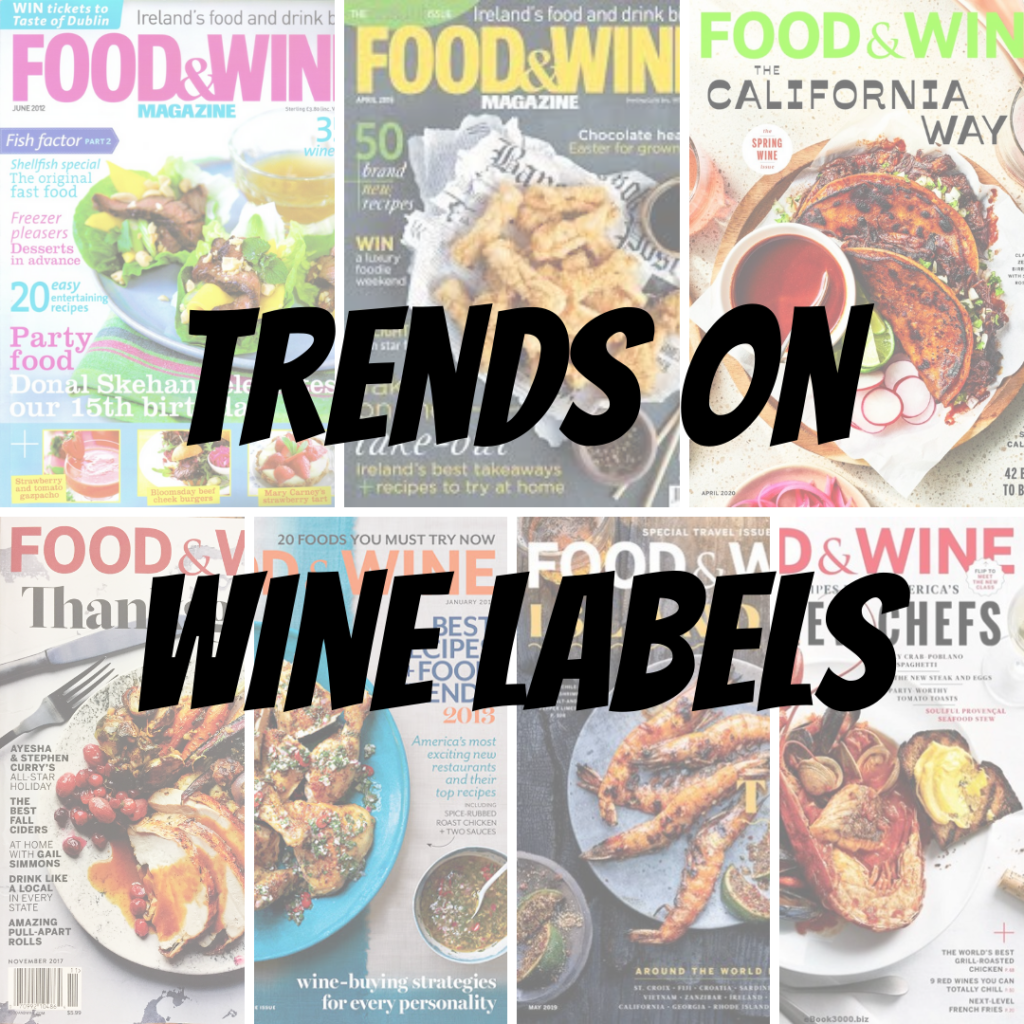
‘’A Field Guide to the Latest Trends in Wine-Label Design’’(DUTCH)

Zo omschrijft het Amerikaanse maandblad Food & Wine het boek ’99 Bottles of Wine’ van auteur David Schuemann.

Food&Wine is een Amerikaans kwaliteitsmaandblad (1978) en bevat recepten, kooktips, reisinformatie, restaurantrecensies, chef-koks interviews en combinaties van wijnen en seizoensgebonden/vakantie-inhoud. Maar terug naar de labels van flessen wijn, want wijnetiketten zijn al lang geen plaatjes van stoffige kastelen of pentekeningen van wijngaarden.

In het boek staan 99 voorbeelden van bijzondere etiketten en mooie wijnen.

Wat zijn de trends?

Volgens de schrijver meer met de hand getekend, minimaal opgezet, spetterend, broeiend, provocerend, heidens en vooral klaar voor Instagram. Uit wetenschappelijk onderzoek blijkt dat vrouwelijke wijndrinkers sneller overgaan tot een etiket met dieren erop en mannelijke wijnconsumenten sneller geneigd zijn om zich te laten verleiden tot klassieke etiketten.

Ik nam de proef op de som en ging naar Nederlands grootste supermarkt en keek mijn ogen uit! Het reusltaat zie je hieronder.

Nieuwsgiering naar het boek? Koop het via Amazon, klik hier.
Source: Food&Wine

Cava DO limits production for second year

Source: The Regulatory Board of CAVA

Intro in Dutch, article in English.

De ‘Regulatory Council of the Cava DO’ heeft wederom besloten om voor het op twee navolgende jaar de productie aan banden te leggen. Op deze manier wil men interen op het ‘overschot’ veroorzaakt door de covid periode. Tevens is het een maatregel om de prijzen per kg druiven weer terug te brengen naar een ‘marktconform’ niveau.

Article in English

”The Regulatory Council of the Cava DO has approved placing temporary limits on production for the second year in a row to help rebalance the market.”

source; https://www.cava.wine/

”For the next harvest, growers have been authorized to harvest 11,000 kilos of grapes per hectare throughout the Cava region, with the total figure 1,000 kilos more than in last year’s campaign. The decision was adopted by a majority of the 12 members who make up the full Council. The purpose of the measure was to make progress in correcting the surplus in the sector caused by Covid-19 and the excess number of hectares planted in the DO, said Javier Pagés, president of the Council.”

”The circumstances needed to restore the 12,000 kilos per hectare were “not present yet”, he said. Pagés also made a new appeal to the unity and the responsibility of all the agents in the sector to achieve a “self-regulated market”, highlighting the goal to lay the foundations for restoring the prices paid for grapes. The Council said Pagés wanted to “expressly defend the winegrowers”, and was convinced that fair production prices had to be paid to ensure the sustainability of the sector. Accordingly, “the entire value chain of the DO, and every public authority, must act responsibly to guarantee its orderly and sustainable growth”, said Pagés. ”

source; cava.wine

”With over 70% of international sales, Cava claims to be the Spanish DO with the most exports. Its 6,800+ winegrowers manage over 38,000 hectares of vineyards. with its 370 member wineries present in more than 100 countries.”

source; cava.wine


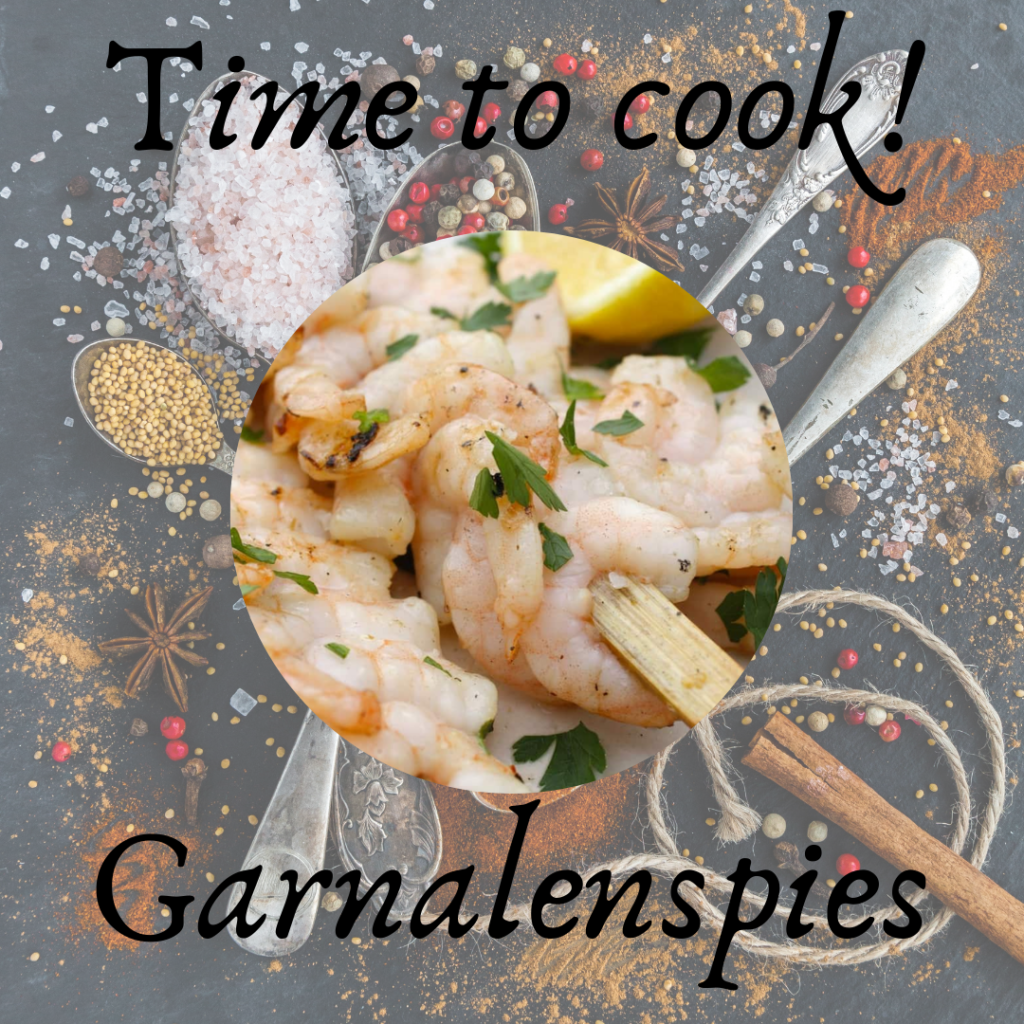
Garnalenspiesjes voor de BBQ (DUTCH)

Garnalen, ze zijn er in alle soorten en maten. Van kleine Hollandse garnalen voor in de garnalen cocktail tot aan de  grote tijgergarnaal, reuzen-tijgergarnaal of gamba.

Voor dit recept gebruikte ik ongeveer 500gr tot 700gr verse gamba’s, goed verkrijgbaar op de markt of anders bij de grotere supermarkten.

Welke wijn past goed bij deze garnalenspiesjes met een lichte knoflook dressing?

Op een mooie zomerse dag zou ik gaan voor een fris glas rosé bij de BBQ, maar je kan natuurlijk ook wat klassieker gaan voor een Petit Chablis of een Picpoul de Pinet uit de Languedoc? Deze laatste wijn had ik erbij en smaakte voortreffelijk samen!

Picpoul de Pinet ‘Carte Noire’   2020     Cave de L’Ormarine

Citroengeel, licht geparfumeerd, fris, witte bloesem, peer, mineralen, fris, mooi droog, fijne zuren, lichte tinteling van citroenen, tropisch fruit, grapefruit, licht ziltig, levendig zuurtje in de afdronk.

Ingrediënten (voor 12 spiesen)

  • 2 teentjes knoflook
  • 25gr boter
  • rasp en sap van 1/2 citroen
  • 15gr platte peterselie, gehakt
  • snufje gemalen chili
  • zeezout
  • 12 houtenstokjes/saté prikkers

Bereiding

Snijd de knoflook in dunne plakjes. Pak een steelpan en smelt hier de boter in. Voeg de plakjes knoflook toe en fruit deze een minuutje in de boter. Doe daarna de citroenrasp, helft van het citroensap, driekwart van de peterselie en de gemalen chili erbij. Roer door en laat nog een minuutje zacht pruttelen. Breng op smaak met zeezout en laat iets afkoelen.

Leg de garnalenspiezen in een platte schaal en schenk hier de marinade over. Laat dit een uur of 2 intrekken terwijl de schaal afgedekt in de koelkast staat en grill ze daarna op de BBQ. Garnalen hebben maar heel kort nodig, anders worden ze taai. Een paar minuten per kant is voldoende. Serveer op een grote schaal, sprenkel de resterende citroensap erover.

Bestrooi met het laatste beetje peterselie, eet smakelijk!

Bron van het recept: Fransesca Kookt!

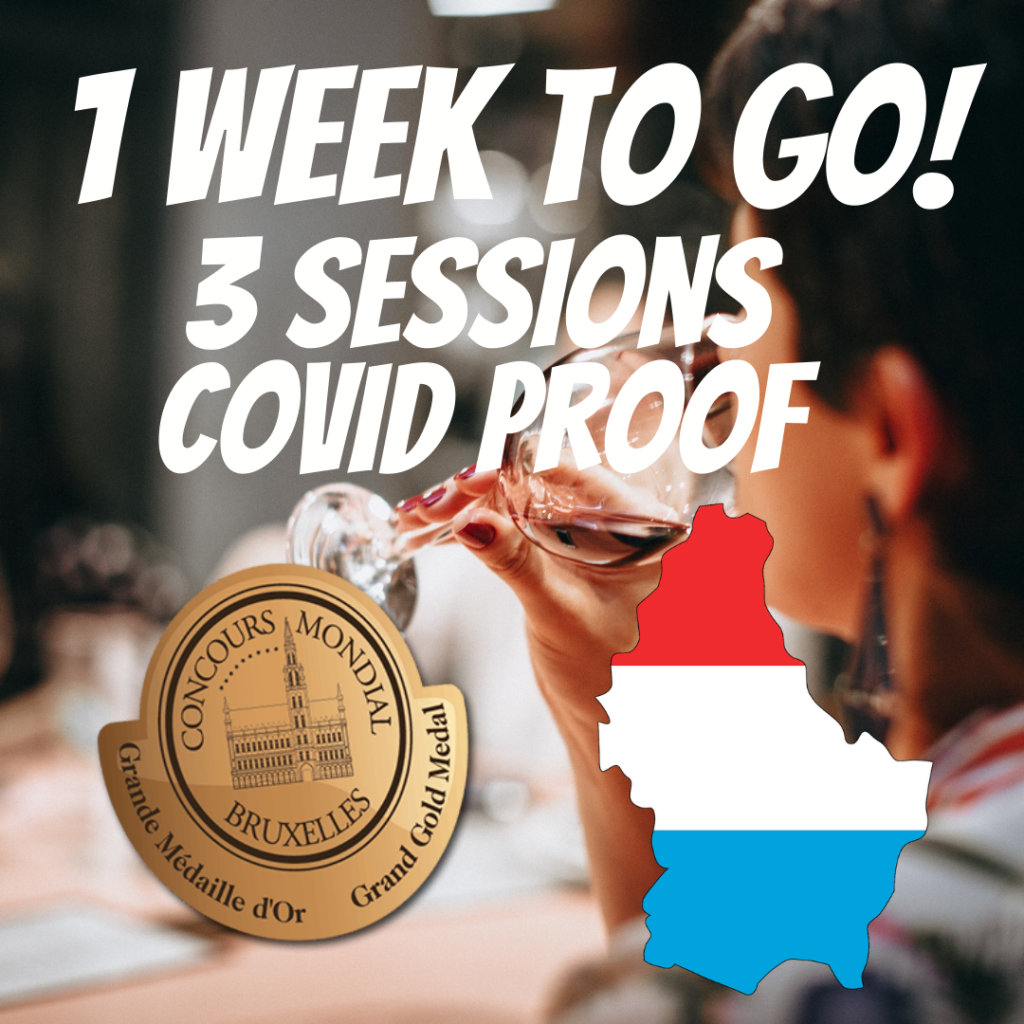
ONE WEEK TO GO for 2021 Concours Mondial de Bruxelles in Grand Duchy of Luxembourg

Uncertainty surrounding the future development of the current health crisis has prompted the organizing committee of the Concours Mondial de Bruxelles to postpone the event originally slated to take place in Yinchuan (Ningxia) until 2022. The decision was reached by mutual agreement with the competition’s Chinese partner.

Source; Concours Mondial de Bruxelles

Next week the 2021 edition will start in the Grand Duchy of Luxembourg. The completion will be organized with special covid proof protocols, as all the tasting session will be divided into smaller group. Normally there is one large session of several days. Now they organized it in three slots of three days each.

I’m very proud to announce that I’m invited again as a member of the panel of judges. A special thanks to the organization for making this all possible and for the confidence in me again, much appreciated!

Luxembourg, a small country with great wines

The hillside vineyards of Luxembourg stretch over a 42-kilometre strip along the Moselle, facing Germany. The fact that Luxembourg’s Moselle Valley, the Grand Duchy’s main wine region, is one of the country’s leading tourist destinations is no accident. Luxembourg’s Moselle wine route, and its spectacular vineyard landscapes lining the banks of the Moselle, make this a unique location and wine tourism hotspot. From Schengen in the South to Wasserbillig in the North, nearly 340 winegrowers farm approximately 1,280 hectares of vines, 90% of them planted to grape varieties used to make white wines. The judges will be able to discover Luxembourg’s vinous treasures during visits that will fully comply with the requisite safety measures.

About the competition

The Concours Mondial de Bruxelles is an international competition with over 9,000 wines entered by producers which are subsequently tasted and judged by a panel of experts. Our seasoned judges taste the wines with a single-minded objective and that is to select wines of irreproachable quality, irrespective of their label or the prestige of their appellation. The Concours is one of the largest international events of its kind. After Switzerland in 2019 and the Czech Republic in 2020, the tastings will be held in Luxembourg in 2021.

Source: concours mondial

The merits of canned wines, a lot of innovative entrepreneurs in South Africa!

As Lorraine Immelman, Founder and CEO of the Michelangelo International Wine & Spirits Awards invited me to be a part of the panel of judges at this wonderful competition. She asked me about the canned wines market and the growth within South Africa in particular, see my summary here.

As the world of wine got to know more and more about canned wine though wine innovative entrepreneurs, all over the world, over the last couple of decades, the product itself is not new at all.

The history of canned wines

First type of canned wines

The first experiments with canned wine paralleled the introduction of the first beer cans in 1935 in the United States. These were not the ‘tab’ cans that we are used to these days; these were flat-top steel cans that required an opener, often referred to as a “church key,” to punch holes in the top.

Was it Chardonnay or Cabernet Sauvignon at that time? No, they contained Muscatel and other wine related drinks like canned Port, Sherry and Tokay. So no light, sparkling, refreshing wines; these wines containing about 20% alcohol. In the 1940s a new kind of can came on the market. These cans were opened in the same manner as beer bottles and it was hoped they would provide an easier transition than flat-top cans. The first wine canned outside the United States may have been from Australia. About the same time a French steel can of Bordeaux Supérieur appeared on the market. The first extended marketing of white wine in cans came about in the late 1970s courtesy of producers in Australia. The canned wine market is growing at a rapid rate. To quote some figures from the US market, it is the fastest growing wine segment with a growth percentage of 400% over the previous 4 years.

But why is it so booming? Why is specifically this segment ‘’going viral’’?

So, why are canned wines booming in countries as the United Kingdom, Italy, the United States and also in South Africa? The answer is simple, the influence of the new age adult beverage consumer, the millennial generation!

With overtaking the babyboomers by excessive figures in consumption and sales at the moment in all kinds of adult beverages, there are a few things that are unique in their consuming pattern from a general perspective. The millennials don’t go for a product, they want a whole experience! They want brands to be reconcilable with a true story behind it, so they can discover new things, interact & connect with friends and see ‘marketing with meaning’ really works. Within the traditional wine industry marketing is top down driven and brand are ‘premium’ of high in value due to name and price level. But what if this is all subject to change? At the end of the day the cans will not replace the bottles, but for any occasion another packages is usable and practical. The number of upcoming and exiting wine in a can in South Africa has made a tremendous expansion. Just look at brands like Ben Wren, Lubanzi, Hun, Vinette, Black Elephant Vintners, Spier, Soft Smooth Range from Perdeberg, Uncanny, CanCan, Marras, Bruce Jack, Robertson Winery and many many more!

But why? The merits of canned wines

But let’s go back to the ‘’why’’ question of canned wines. This is because you can take a can of wine anywhere (to the park, any outdoor event or on a boat trip), it will not break in your backpack like some small bottles may do, it also cools faster than a bottle in your fridge, so you’re ready to go in no time! Another reason is thatit’s a so called “single serve.” From a 250 ml wine can you will have two glasses of wine, so no f high quality aluminum and therefore is
extremely friendly to the environment. But that’s not all!

If you want to drink less wine but don’t want to compromise on quality, choose canned wines, because the quality is the same as in the bottle. You can get almost every type of wine nowadays. Think of Prosecco, Bordeaux blends, Corbières, Beaujolais cru, Gruner Veltliner, Grenacha, Pinot Noir, Pinot Blanc, Muscadet, Riesling, Sauvignon Blanc, Pinotage, Cabernet Sauvignon, Nebbiolo, Dolcetto and many other varieties and Last but not least what about the benefit of eliminating leftovers of your open bottle of wine or you don’t want to open a bottle of wine on Sunday evening, even when you’re eager to have some lovely wine in your glass? Canned wines will do the trick!

But what are the risks of canning your wine vs bottling it?

Ultimately all wine could be put in a can, but the question must be, does every wine is suitable for in a can? As the aluminum sector has made an enormous growth with innovation of the can as a packages, the possibilities of canning different kinds of wines has grown too. The coatings used are taste and odors free and when people think to smell of taste iron, it is 99% a mindfuck than that this is really true. But one of the strengths is also the development potential, the oxygen free package. As the cans are 100% free of oxygen, grapes and wine types which do not benefit from this aspect, will not be canned successfully. However the market is ‘framed’ at fresh, drinkable wines, like sparkling rose and fresh still wines both white red, there is a demand for more developed, matured wines. Recent research shows that red wines from various grape varieties age well in a can and the influence of wood, lees or higher tannins are also no problem when canning the wines. Though it needs to be said that in the essence, a can is not the right package to age your wine and the majority of the canned wine consumers do not want to age their wines, they want it to be RTD, ready to drink!

And if you can your wine, do you need to take precautions?

Framing a brand and telling a true story is one key aspect of having a successful canned wine brand, but It all begins with good grapes and reliable suppliers of the cans themselves, as well as good hygiene at the canning process. I have spoken to entrepreneurs in the canned wines business who had to throw away liters of product due to the fact that the canning was not done under the right temperature, incorrect gas was uses or because the canning line was just dirty. Another safeguard you want to have is really think about your grape variety and wine style. Because when you use a grape that doesn’t like to be stuck in a can (no oxygen) , even when the quality of the grapes is high, then you go beyond your goal and your canned wine will be less than expected. So a good plan, laboratory testing and sample testing really works in the beginning. So to summarize a few the benefits or this form of packaging;

  • No waste of (leftover) wine
  • Can be used mobile in the park, on the stand, on the boat, to festivals or other outdoor activities
  • Cools faster than a bottle or a bag-in-box
  • 99% unbreakable
  • Reduce the carbon footprint of transport, packaging and other materials
  • 360° label for advertising
  • Durable and recyclable aluminum packaging (environmental friendly mindset)
  • Match the need for “Single serve”
  • Fits the trend “Less but better”
  • Connect with the growing desire to drink less
  • Fits a healthier lifestyle
  • Fits the needs of a new group of wine drinkers – ‘’millennial generation’’
  • There is no need to use up the entire bottle
  • No more hassle with corkscrews
  • No stress choice per unit (white now, red later)
  • Great interchangeability with other drinks
  • Low-threshold image

‘Rose all day’

With the beautiful weather and the relaxation around covid-19 here in The Netherlands, it is time again to enjoy a nice glass of rosé!
Especially for this, I tasted various rosé wines, below you can read my tasting experiences.

Domaine Houchart

Jérôme Quiot represents a family that has been making wine since 1748. Quality and continuity are paramount to him. No expense or effort is spared by Quiot to get the best out of its vineyards. This rosé comes from The ‘Sainte Victoire’ appellation located east of Aix-en-Provence, at the foot of the Sainte Victoire mountain with a terroir of red clay, pebble, sand and lime.

Sainte Victoire rosé 2019

Tasting notes
Bright salmon pink, elegant, raspberries, strawberries, beautifully dry, fresh red fruit, light minerals, long finish. What do you eat with it? Try fresh salads and as an aperitif, with savory pies with bacon and cheese!

QEF rosé 2020

QEF ROSÉ 2019 - Bosch Wijnkopers

Tasting notes
Light cheerful pink in color (photo is not very reprehensive). Fresh, small red fruit with a light fresh spiciness. Dry and soft with the characteristic aromas of candies, strawberries and raspberries.

The wine has a light spiciness of fresh mint leaves and in the final the wine shows its cheerfulness and freshness. A small Provence rosé all over!

A hell of a rosé, made of Cabernet Sauvignon and Syrah, a slip-on with talent!
What do you eat with it? Nice wine for a summer drink, BBQ or tapas dish.

Domaine Gavoty

The Gavoty domaine is one of the top ten in Provence. You notice this not only in the quality of the wine, but also in the price. The domaine effortlessly sells its wine in the region to restaurateurs and passers-by. Wine of this impeccable level cannot be cheap.

La Cigale rosé 2020

This rosé is a variety of Carignan, Cinsault and Grenache Noir and has a bright light pink color, which is typical of the Provence! The wine has a slightly spicy scent and scents of small fresh red fruit come to the surface without turning your glass around.

Gavoty La Cigale Rosé | Vivino

Tastings notes Fresh fields of mint and baskets full of raspberries and freshly harvested strawberries are subtle in the taste. Elegant and sturdy with a suitable acidity give this slip-on an extraordinary price / quality ratio with the signature we are used to from Domaine Gavoty. Pure craftsmanship and class, Sante!

This rose is a multi talent, delicious on the terrace with a drink, but also with Provencal dishes with garlic, rosemary or basil.

Grand Classique Rosé 2020

2018 Gavoty Grand Classique Rose, Domaine Gavoty, Cotes de Provence  (Bottle) - Jeroboams

With a production of only 45.000 Gavoty always ensures that the quality is consistent, pure craftsmanship!

Tasting notes Bright pale pink with small red fruit, slightly spicy. An elegant wine, thirst-quenching with raspberries, strawberries and little candy ‘fruit drops’ with mint in the finish.

Cuvée Clarendon Rosé 2020

The “Clarendon” cuvée is the superlative rosé made by the Domaine Gavoty. In everything the wine is more powerful and lasts longer than the “Grand Classique”, the simpler edition of Gavoty, but still a standard for Provence rosé in itself.

Gavoty Cuvée Clarendon Côtes de Provence Rosé | Vivino

Tasting notes Orange-pink color. Wild raspberries, concentrated strawberries. Layering, fresh, soft red fruit, elegant, mint wit a great finish! Really a gastronomic wine, try some Asian cuisine with it.

Sales by Voerman Wijnen

MILLENNIAL wine drinkers emerging in MEXICO

According to Wine Intelligence Mexico is an interesting market with more millennial wine drinkers than other countries.

As the Mexican wine market continues to evolve, there is a growing opportunity for a broader range of wines, particularly with Millennial wine drinkers.

”As recently as 2016, typical Mexican wine consumers were aged around 40; today, 59% of wine consumers are now under the age of 35. This is significant because in many wine markets, the average age of consumers is climbing, reflecting ageing populations as a whole. In Mexico, an opportunity is fast opening up for wine producers and brands to connect with this emerging wine drinker group. Millennials in Mexico are enjoying building their knowledge and experience in wine, with 83% stating they have a strong interest in wine, whilst also enjoying exploring grape varieties and countries of origin’

But what kind of wines are the Mexican Millennials interested in?

”The main beneficiaries of this are producers of sweeter or more fragrant whites made from Moscato, Torrontes and Verdelho; and among reds, Tempranillo. From a source country perspective, domestically produced continues to dominate the market, and drinkers are increasingly turning away from wine from Argentina and Chile, and towards Italy and California.”

So this is most definitely a market for canned wines, spritzers, hard seltzer and millennial driven wine in general.

Source: Wine Intelligence

Wine Intelligence offers a broad range of research, insights and strategy services which help wine business make better and more profitable business decisions. Quotes are from CEO Lulie Halstead.

SAVE THE DATE Tastin’ France Bio – (DUTCH)

Business France organiseert op donderdag 24 juni een proeverij met (gecertificeerde) biologische en biodynamische wijnen van een twintigtal Franse producenten uit verschillende regio’s.


Deze proeverij is uitsluitend voor wijn- en horecaprofessionals. Voor meer informatie:

Business France, Michèle Lainé
+33 (0)1 73 07 26 23
michele.laine@businessfrance.fr

Gelet op de covid pandemie werkt de organisatie met een speciaal protocol, deze vindt u hier

Aanmelden: https://www.businessfrance-events.nl

United Kingdom: Bourgogne confirms its return to growth in 2020

Press release from the Bourgogne Wine Board

Source: Bourgogne Wine Board

Key figures 2020 for Bourgogne wines in the UK
The leading market by volume for Bourgogne wines
The second-biggest market in terms of revenue for Bourgogne wines

Exports: 16.36 million bottles (up 9.6% over 2019), worth €164 million (up 12.4%)
of which by volume :

► Still white wines: 82%
► Still red/rosé wines: 14%
► Crémant de Bourgogne: 4%

In 2020, Bourgogne wines accounted for 12% of the total volume of French AOC wine exported to the UK for 16% of the revenue.

As we wait for the new rules related to Brexit to be introduced, the UK increased its wine imports in 2020, up 8.3% by volume and 1.2% in terms of revenue compared to 2019. This was particularly beneficial for French wines, which reclaimed market share and were up 6.6% by volume and 0.7% in terms of revenue compared to 2019. 

  •  2020: An excellent year for Bourgogne wines after a strong performance in 2019

In 2020, Bourgogne wines confirmed their return to this market after two years of decline (see graph on the complete press release downloadable below):
► Up 9.6% by volume compared to 2019 (an increase of 1.4 million bottles)
► Up 12.4% in terms of revenue (up €18 million)

In 2020, Bourgogne enjoyed the second-best growth for any French AOC winegrowing region in terms of revenue. Among these regions, Bourgogne showed the greatest increase in revenue, up €13.6 million compared to 2019.

Bourgogne also showed the second-best growth by volume for French white-AOC-producing regions, up 1.02 million bottles.

For the full report click here

Source: Bourgogne Wine Board

Volcano and Spanish wine!

Wines from the heart of the volcano

A journey though unknown Spain,

explore the black lands of volcanic origin.

If you read Volcano and Spain in one phrase, most people think about the Canary Islands near the Moroccan coast. But not this time. In the heart of the Volcanic Massif of Campo de Calatrava, at an altitude between 750 and 850 meters above sea level, near the cultural city of Almagro we find the Finca Encomienda de Cervera estate.

Surrounded by the ‘black lands’ of volcanic origin (D.O. Vino de la Tierra de Castilla y León) some will thing they are in one of the scenes of Lord of The Rings in the dark kingdom of Mordor. But no strange creatures or wizards here or is it? Because making fine wines in this area seems like magic, doesn’t it?

The Encomienda de Cervera estate was established around the eighteenth century around 1.758 and currently has a total of more than one thousand hectares of land.  The vineyards are around 45 hectares and the olive trees around 100 hectares. This area has a unique terroir of volcanic earth, red and chalky, stony earth, which is all due to the la Hoya de Cervera volcano. Which was designated a National Monument in 1993. The mountainous, with several drainage basins has a peculiar microclimate, with cool nights providing relief from the baking heat of the daytime. The Volcano is dorming more than 2.000 years.

Since these ancient times, the Tempranillo has been the dominant grape, and still is, nowadays other grape varieties have also been planted on the vineyards such as Cabernet Sauvignon, Syrah, Petit Verdot and Graciano. This last grape is also used in the gran reserve of the Rioja, which gives incredible finesse and ensures that the blend gets ready to drink there. Within the vineyard the determination of the best slopes and altitudes for each grape variety is given a lot of attention. By following their own in-depth soil survey, the most suitable soil for each variety is selected from the volcanic and stony soils.

The location of the vineyards are divided from North to South in a so-called ‘trellis formation’. All over the vineyards humidity sensors are installed to control the drip irrigation system at different levels in the vineyard. In the winery (originated from 1927) has been totally restored since and equipped with modern techniques to support for fermentation process. Despite of this they are also still using concrete tanks to do malolactic fermentation.

Important to note is that the wines and extra virgin olive oil are made with a higher concentration in Polyphenols, due to the characterizes of the soil, grapes and the way of fermentation used in the winery.

In the winery (originated from 1927) has been totally restored since and equipped with modern techniques to support for fermentation process. Despite of this they are also still using concrete tanks to do malolactic fermentation. Important to note is that the wines and extra virgin olive oil are made with a higher concentration in Polyphenols, due to the characterizes of the soil, grapes and the way of fermentation used in the winery.

The wines

For my tasting I tasted a couple of wines and I was so lucky to receive a sample of the olive oil produced by olive tree on these Vulcanic lands.

Horten Tempranillo 2018

I first tasted the ‘’reference volcanic wine’’ made of 100% Tempranillo and the wine was matured three months in oaks barrels and after bottling the wine aged in bottles for twelve months.

TASTING NOTES:

The wine has a lively intense garnet color with subtitle purples reflections. The nose is powerful fresh with lots of fruit, herbs and some refined  hints of wood. On the palate the wine has a good body with aromas like red berry, red cherry and plum. All which are well balanced with the smooth tannins and the present acidity. Also hint of menthol with a twist of vanilla and toast are present in the long an pleasant finish.

1758 POLYPHENOLS COUPAGE III (2015)

This wine is made from an blend of Cabernet Sauvignon, Tempranillo and Syrah. The grapes are harvested from the best locations in the vineyard, on the slopes of the Volcano Maar de Cervera. The volcanic soil contributes to the mineral expression and refreshing acidity in the wine. Just look at this bottle, what a great cap!

TASTING NOTES:

The wine has a deep intense ruby red color and although it is a 2015 vintage, there is no indication of fading of the color. This shows that this blend is made of grapes with thick skins. The noise is powerful, loaded with ripe fruit and herbs from the Mediterranean with also a recognizable and distinctive aroma of menthol and minerals. The wine is complex and balanced with drying tannins with ripe fruity flavors as plum, red and blue berries, brambles, wet stones and a bit spiciness like basil, rosemary and Thyme in the long lasting finish.

The olive oil

At Encomienda de Cervera they were so kind to send me also a sample of their Vulcanic olive oil, which is made from old olive trees which cover an area of ​​100 ha. This particular olive oil is a blend from five different olives varieties.

After harvesting the Alfafara, Arbequina, Arroniz, Changlot Real, and Picual olives, the oil is made separately and stored in different steel tanks.

After a while the different oils are blended according to the oleologist’s criteria.

This olive oil won the award EVOOLEUM of the 100 best olive oils in the world!

As a result of this process they produce an intense, aromatic, fruity and balanced “EXTRA VIRGIN OLIVE OIL” a so called EVOO. This blend is mild and has a spicy aftertaste where polyphenols are present in exceptional quantities.