Innovation, science & wine!

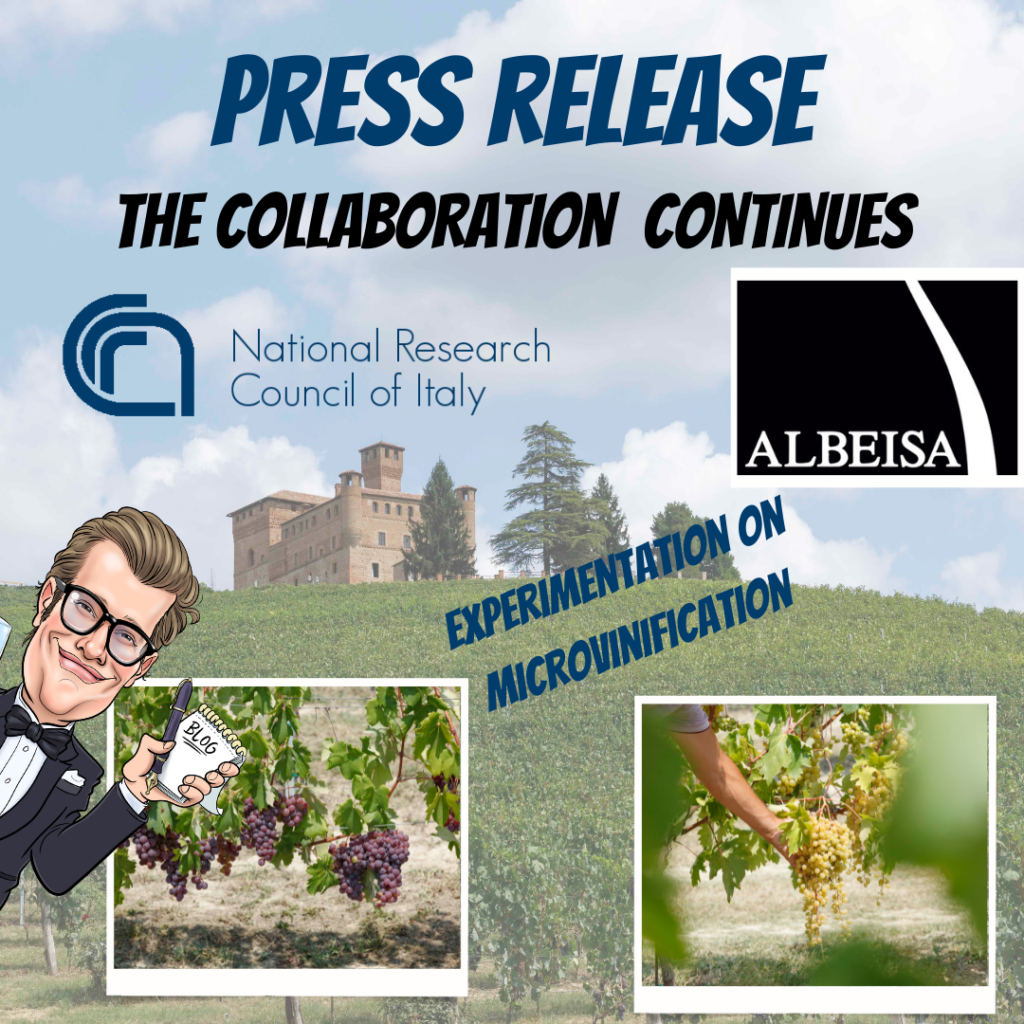
THE COLLABORATION BETWEEN THE ALBEISA CONSORTIUM AND THE GRINZANE CAVOUR AMPELOGRAPHY COLLECTION CONTINUES FOR THE ENHANCEMENT OF RARE VINES

The wines resulting from the experimentation on the microvinification of rare vines were presented to the international press on the occasion of Nebbiolo Prima

Assessing the enological potential and the chemical-physical and sensory characteristics of rare vines found in the area and grown within the collection as well as applying different winemaking techniques to the same vine in order to identify the methods that allow it to best express its potential were the objectives underlying the research project conducted by the researchers at the CNR (the Italian National Research Council), Anna Schneider and Stefano Raimondi, and by Dr. Caudana of the Bonafous experimental winery at the University of Torino; this project was presented on the occasion of Nebbiolo Prima, an international preview event of the new vintages of Barolo, Barbaresco and Roero that have been put on the market, an event promoted by the Albeisa Consortium which was held in Alba from January 27th to 30th.

“An ambitious project of profound scientific interest – says Marina Marcarino, President of Albeisa – which fits into the context of the ever-expanding collaboration between Albeisa and the Grinzane Cavour Ampelography Collection, one of the largest collections of vines that we have the honor of hosting in our territory, and which has precisely the purpose of safeguarding genetic resources that are threatened with disappearance.”

Inside the winery of the Bonafous center, which was designed ad hoc for research, tests have been carried out since 2003 on single-variety vinification of some rare vines present in experimental fields in the Piemonte area. A real laboratory where small quantities of grapes are vinified, usually from 30 to 100 kg, using equipment and techniques similar to those used in large wineries.

“All the vinifications made – explains Alberto Caudanathe person in charge of the project – are subjected to process traceability through an integrated system for data collection and for the management of the flow of vinification. In recent years we have carried out vinifications of whites, vinifications of rosés, vinifications of reds, but also vinifications for partially fermented sweet wines, for sweet passito wines, for sweet wines that were alcohilized and converted into sparkling wines via the classic method. All this work has made it possible to gather extremely valuable information of a biological and genetic nature regarding the cultural characteristics and the enological potential of little-known varieties of vine or innovative technological processes.”

A synergy between the Albeisa Consortium and the Grinzane Cavour Collection which has lasted for years and which sees the reality of the consortium engaged at the forefront in supporting the Collection also through the care of the ancient and rare vines present in this open-air museum as well as through the promotion of the scientific activities that are carried out there.

During the preview, the international press was able to taste the wines resulting from this experimentation, such as the Liseiret 2021 in the sparkling version, the Pignolo Spano 2021 and even a Pignolo Spano 2008 obtained from the a forementioned previous research.

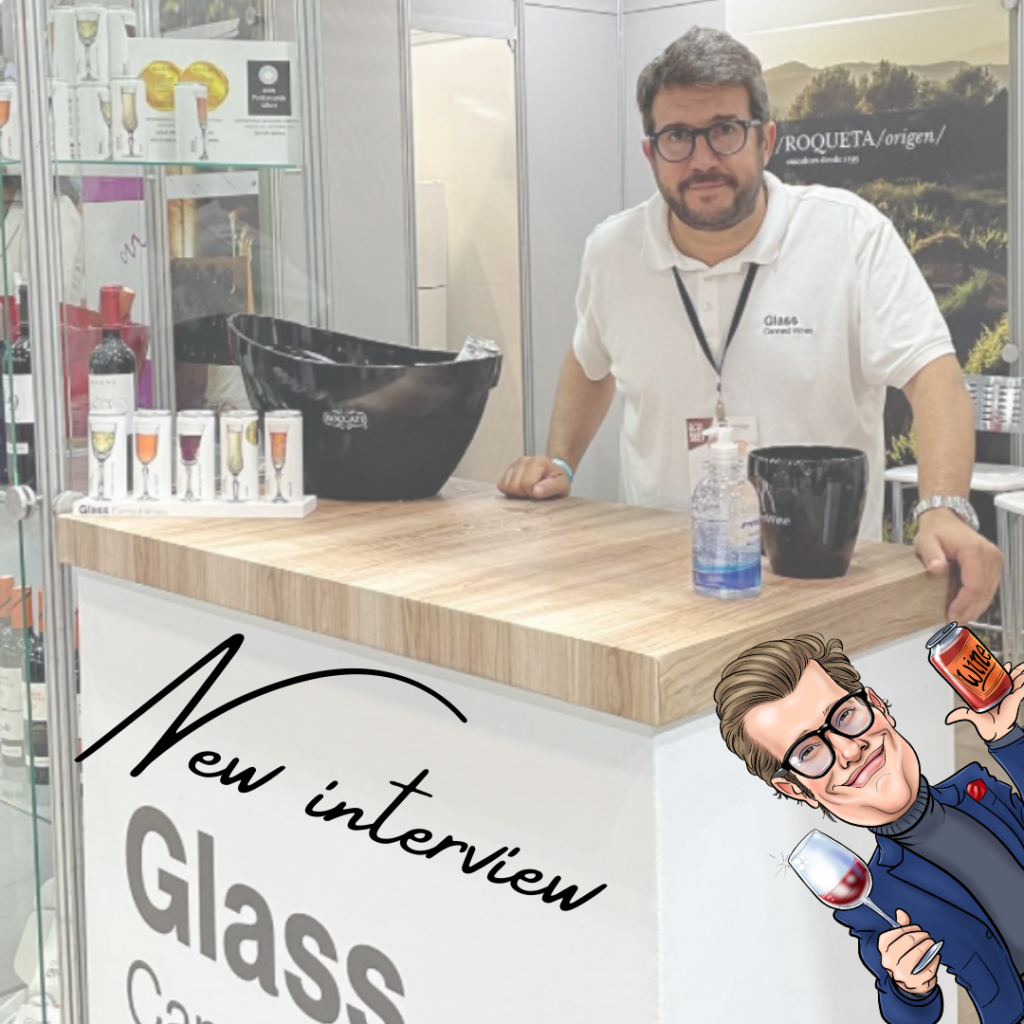
Glass canned wines from Barcelona

With whom do I have the pleasure of speaking?

This is Joan Anton Romero, an enthusiast guy from a small town near Barcelona called SantSadurníd’Anoia, known all over the world to be the cradle of Cava…

Glass quiere popularizar el consumo de vino en lata en Catalunya

What is your background in wine?

As you imagine, my DNA has a lot of wines and cavas on it, like all the children in my hometown when we were young we went to harvest to earn some money for the fun-fair… On my twenties while I’m the University I worked in the production for one of the biggest cavas… And in my late thirties after my Sommelier Master I also worked for a small cava… My last job related with wine was as Marketing&Sales manager of a big PrintingCompany… And after this i begun my adventure!

How would you describe your wine in a can?

My wine in a can are a range of five products, all of them thought under the same philosophy: I want to offer my customers an exquisite product, which I know from the vineyards and I have produced it in a way that everybody who taste it will love it. It’s just what it is, an honest young wine without pretensions, a lovely taste representing all the essence of our territory on every grape what we use.

Puigdemont Roca Create Glass Canned Wines for Aluvinum - World Brand Design  Society

A very nice range of canned wines. The design is done very nice also the name, fantastic! As we go deeper into the discovery of the wines, we find a broad range of flavors and I would say a wine that suits everyone’s needs! I love the Cabernet – Merlot Can. It is very hard to make a nice red from a can, this is well done and convinced when you want just a small portion of wine with your pizza! The other wines are also nice and have their own character from 2 bubbly wine to two uniquely white one!

Why are you in the canned wines industry?

By one side, I have two passions in my life: wines (in all the extension of the word: still, sparkling, etc) and marketing (design, packaging, sales…). This industry for me is the perfect mixt. Imagine that one day you can join your passions and create a way of life, a job… You will do your best because it’s your own life… The things u love! And by another side, for me is hard to understand that in a country like mine, with such a tradition of wineries, people drink more beer than wine. This is because we don’t make enough cathedra of our products, of our terroir, we don’t transmit how we really have to… With humble I’d like to apport my sand grain to this commitment.

Glass Canned Wines on Packaging of the World - Creative Package Design  Gallery

How do you see the future of canned wines?

For me CannedWines are not the future, are the present! A CannedWine is a wine packed in 21st century mindset: recycled, low feet carbon, RTD, mono-doses, always fresh and in perfect conditions… We just have to explain it to people who still don’t know that CW exists, at the end, like happens in beer’s world, the can and the bottle will collaborate to promote wine in the same way.

Home – glasscannedwines

Do you wish to add something to this interview?

I’d like to add that for me is an honor to be interviewed by you, and also to be recognized by two prices in the International Canned Wine Competition with two gold medals in Sparkling White Wine and Packaging. One year and a half ago for me all of this was the best dream ever, and today, after a long way of efforts and work, I am here, talking with you… If you make things with illusion and constancy, you can dream big… And this is only the beginning.

Thanks Joan Anton, the pleasure was all mine!

Valcalepio, de wijnen van il Cipresso!

Een hele nieuwe wereld te ontdekken met de wijnen van il Cipresso.

Emozioni dal Mondo Merlot e Cabernet Insieme 2021

Op uitnodiging van Consorzio Tutela Valcalepio was ik in oktober aanwezig als jurylid tijdens de 17e internationale wijncompetitie ‘Emozioni dal Mondo Merlot e Cabernet Insieme’. Enorm trots en vereerd met deze uitnodiging reisde ik af naar Lombardij, om via Milaan in de Bergamo regio terrecht te komen. De competitive bestaan sinds 2004 en heeft de focus op Bordeaux stijl wijnen van Cabernet Sauvignon, Cabernet Franc en Merlot van over de gehele wereld. Zie mijn artikel over de uitslag van de competitie hier.

Valcalepio DOC

In luwte nabij de heuvels van Bergamo, in de regio van Lombardije, ligt een bijzonder wijngebied, de Valcalepio DOC (sinds 1976). Deze regio wordt ook wel ‘de tuin van Bergamo’ genoemd en heeft vanzelfsprekend een enorme binding met de stad. De wijnsoorten in dit gebied zijn gevarieerd en dit productie gebied kent dan ook de additionele benamingen Bianco, Rosso, Riserva en Moscato Passito. In een Bianco wijn moet 55% tot 80% bestaan uit Chardonnay en/of Pinot Bianco, waarbij er aangevuld mag worden met Pinot Grigio. In het geval van de Rosso en Riserva moet de wijn minimaal 25% tot 60% bestaan uit Cabernet Sauvignon en moet worden aangevuld met Merlot. Waarbij he verschil tussen de Rosso (12,5%) en de Riserva (15%) ook nog enkele procenten in alcohol is maar met name de rijping van minimaal 1 jaar, waarvan drie maanden op houten vat.

Consorzio Tutela Valcalepio

In 1976 werd deze belangenorganisatie opgericht met 22 aangesloten wijnbedrijven en had als doel het bewaken en promoten van de Valcalepio DOC. Momenteel heeft het consortium 80 leden welke voor meer dan 80% van de totale productie uit het gebied zorgen. Tegenwoordig bewaakt en promoot Consorzio Tutela Valcalepio niet alleen de DOC Valcalepio maar ook DOC Terre del Colleoni of Colleoni en de IGT Bergamasca. De huidge directeur van Consorzio Tutela Valcalepio is sinds 1995 de oenoloog Sergio Cantoni die Carlo Zadra en Riccardo Guadalupi opvolgde toen hij vanuit Piemonte in Bergamo aankwam. Met zijn heldere visie heef hij van het Consorzio een solide promotie organisatie gemaakt welke op diverse evenementen actief is.

Il Cipresso

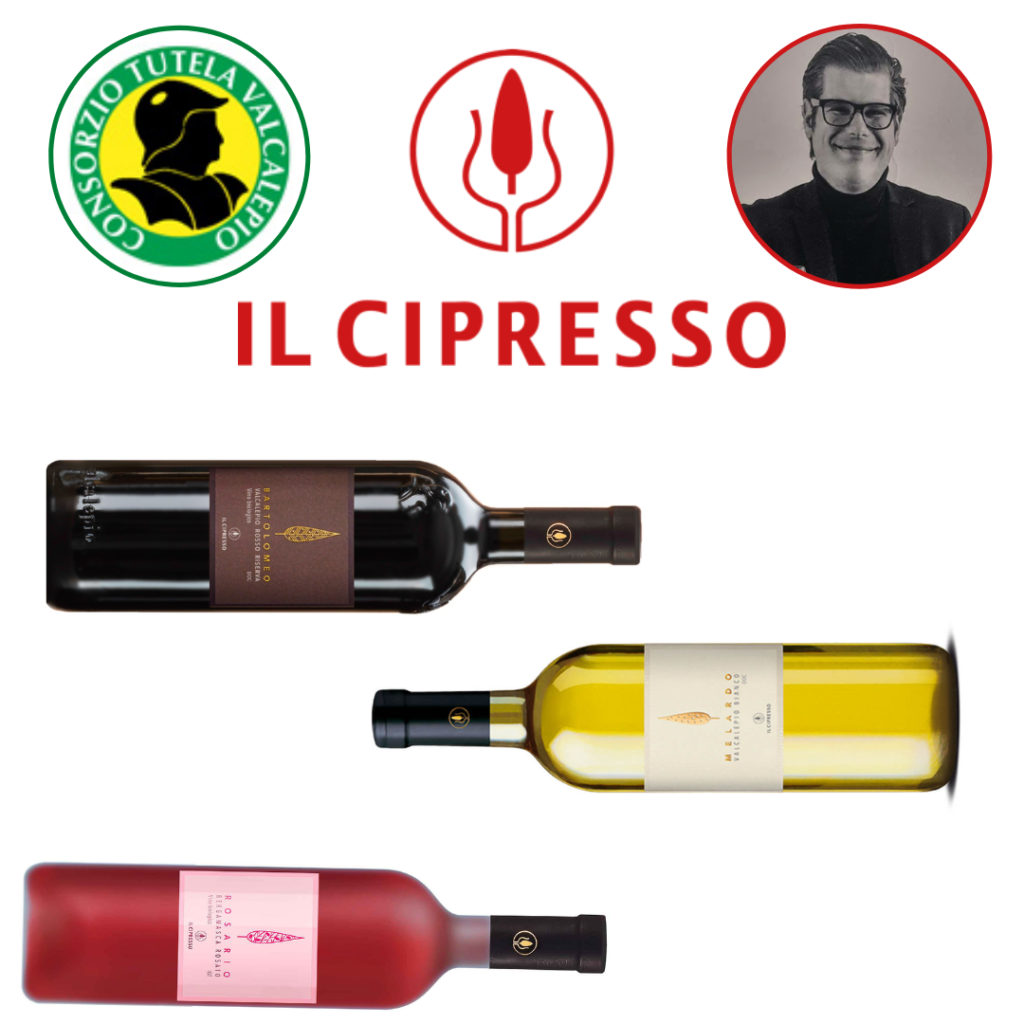
Het familie bedrijf is opgericht in 2003 waarna men direct is doorgegaan met het verbeteren en uitbreiden van de wijngaarden. Bij de start waren er 4 hectare en op dit moment 7.5. Om in te spelen op de ontwikkelingen en omdat men overtuigd is van de gedachten in ‘organic wines’ heeft men sinds de oogst van 2018 alle wijnen voorzien van certificering en hiermee zijn alle wijnen 100% biologisch!! Hieronder een impressie van diverse wijnen.

ROSARIO – Bergamasca Rosato | IGT

De betoverende roze kleur is net een tikje donkerder van kleur dan een Provence rosé, logisch als je weet dat de wijn 100% Merlot is. De fermentatie gebeurd onder temperatuur controle in stalen tanks. De geur van deze wijn is schitterend, waarbij je direct een slok wenst te nemen. In een woord fantastisch! Klein, fris rood fruit schiet uit het glas. In de mond is de wijn sappig met aardbeien, frambozen maar wat de wijn bijzonder maakt is het tikje perzik, fenomenaal!

MELARDO – Valcalepio Bianco | DOC

Deze stro gele wijn is gemaakt van Pinot Bianco, Pinot Grigio en Chardonnay. De druiven worden gevinifieerd in stalen tanks om geen smaak verlies te hebben en de primaire aroma’s van de druif volledig tot zijn recht te laten komen.

De neus is intens met tonen van wit en geel fruit. Naast de frisse fruit smaken van peer en appel heeft de wijn ook een aromatisch karakter met een vleugje amandel en volop topisch fruit zoals ananas, meloen en perzik. De zuren zijn goed in balans met het aanwezige fruit en dit zorgt voor een evenwichtige wijn met een mooie body. In de afdronk zit een klein bittertje van grapefruit wat de wijn echt naar een hoger niveau brengt.  

BARTOLOMEO – Valcalepio Rosso Riserva | DOC |

Deze typische ‘Valcalepio’ wijn is uiteraard gemaakt van de druiven Cabernet Sauvignon en Merlot. De wijn kleur mooi robijn rood in het glas en al direct stijgen er geuren op uit het glas van donker rood fruit in combinatie met een vrolijke kruidigheid. Aroma’s van bramen, aalbessen, pruimen, bosfruit worden afgewisseld met een verfijnde kruidigheid van laurier en zoethout. Dit gehele schouwspel gaat samen met mooie zuren en zachte tannines. Door de rijping van tenminste 30 maanden op eiken houten vaten heeft de wijn ook tonen van toast, kruidnagel en vanille.

PRESS RELEASE

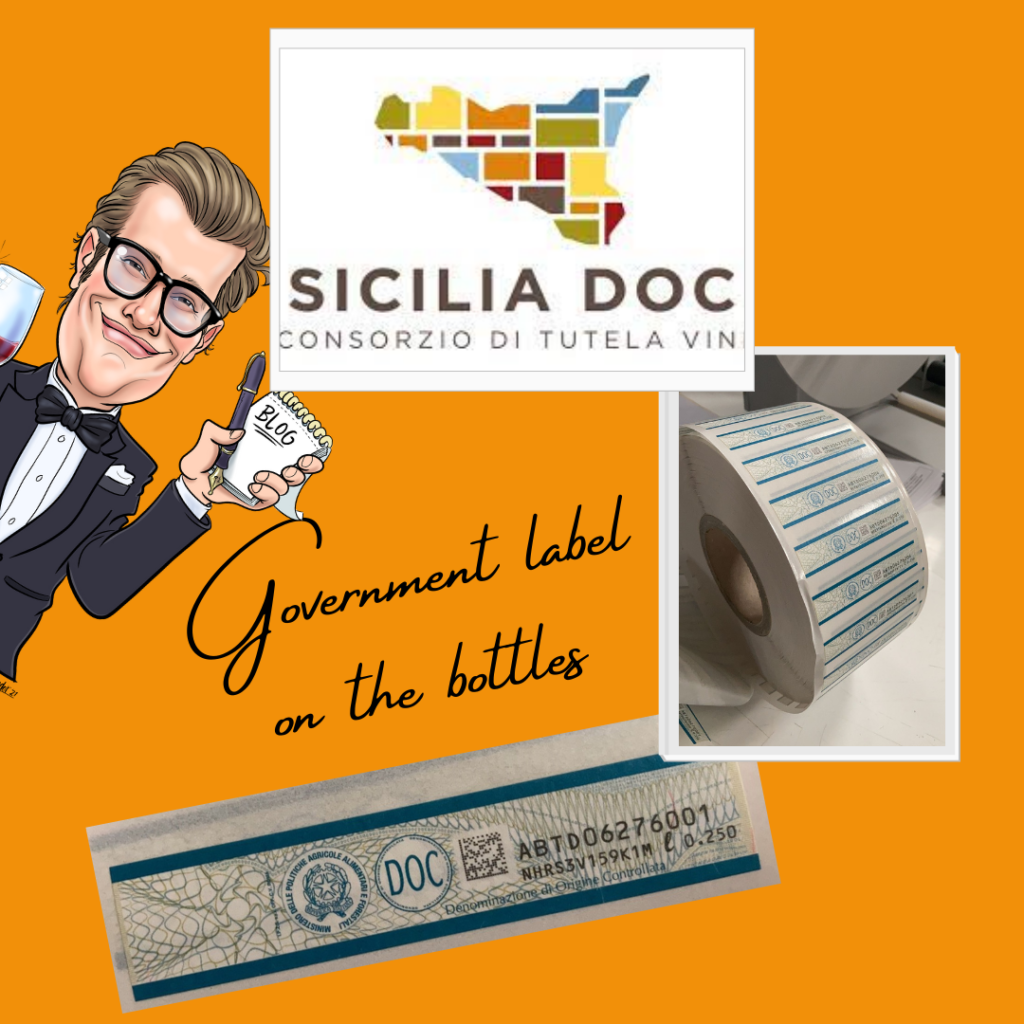
The government label on the bottles becomes reality

A system for guaranteeing authenticity, aimed at the protection of producers and consumers of DOC-branded bottles: it is the system of government labels, which from January 1st, 2022 accompanies the DOC Sicilia wines and traces all the phases of each single bottle life. A path that started some time ago by the Consortium for the Protection of DOC Sicilia Wines, which in 2018 had made the decision to introduce the label issued by the Government Mint. 

Moreover, the State label, which is mandatory only for DOCG denominations (in Sicily the Cerasuolo of Vittoria wine) is now the exclusive asset of the most important Italian DOCs: adopting and attaching the alphanumeric code that characterizes the band means being able to control the entire cycle of grape processing, from the vineyard to the bottle. The steadily increasing production of DOC Sicilia branded bottles sold in Europe and throughout the world, increases the risk of counterfeiting and of the improper use of the name of the Denomination on foreign markets. 

The initiative was strongly supported by the Board of Directors of the Consortium for the Protection of DOC Sicilia Wines chaired by Antonio Rallo. «Enhancement, protection and supervision: these are the key words in reference to the activity of the Consosrtium of DOC Sicilia Wines – affirms the President. – And it is precisely with regard to supervision and protection that the introduction of State labels from January 1st, 2022 represents an important innovation that guarantees the traceability of all our bottles life stages. Moreover, if on the one hand, the continuous growth of DOC Sicilia wines number sold in Europe and around the world rewards the work of the island’s wineries, on the other hand, it requires strengthening supervision. The introduction of the labels contrasts in the best possible way any counterfeits and thus it protects both consumers and producers who respect the rules of DOC Sicilia brands.”  

The new system is managed by the Regional Institute of Wine and Oil, a regional public body with the function of control that is recognized by Accredia (the national validation agency). “DOC Sicilia – declares Gaetano Aprilethe director of the Regional Institute of Wine and Oil, – represents almost 86% of the certified bottled products of Sicily and has about 500 bottlers: these numbers give an idea of how the labels management represents a complex challenge, which our institute is ready to take on. In order to meet the needs of the sector, it will not only be necessary to have a large number of labels available, but fast distribution times will also have to be guaranteed”. 

How the label works 

The system of labels guarantees the complete traceability of each bottle thanks to the anti-counterfeiting measures of the State labels. The labels are printed by the Polygraphic Institute and Government Mint using special watermarks and fluorescent inks, visible and invisible elements that certify the authenticity of the product. The system of applying the label when sealing the bottles makes it impossible to reuse them, with the maximum guarantee of veracity. Each special mark has an alphanumeric code containing a progressive identification number that distinguishes each single bottle placed on the market. In addition, each label on the bottles can be read by all smartphones on which the Trust Your Wine App has been previously installed, which can be downloaded for free from the iOS and Android stores.  

𝗥𝗲𝘀𝘂𝗹𝘁𝘀 𝗼𝗳 𝗔𝗙𝗪𝗖’𝘀 𝗔𝗹𝗹 𝗔𝗺𝗲𝗿𝗶𝗰𝗮𝘀 𝗪𝗶𝗻𝗲 𝗖𝗼𝗺𝗽𝗲𝘁𝗶𝘁𝗶𝗼𝗻 𝟮𝟬𝟮𝟮

On January 15th, AFWC’s All Americas Competition was held at Florida International University Chaplin School of Hospitality & Tourism Management with noted judges such as writer Peg San Filippo, sommelier Jenn Schmitt, educator and reviewer Ray Sholes, restaurateur Angelo Romano, writer Sunny Fraser, sommelier/consultant Ervin Machado, and writer/publishers/vintners Sara and Monty Preiser. All spend hundreds of hours every year evaluating wines and chose the varietals below as Best of Class and Best of Show. 

Unfortunately I couldn’t be there, AGAIN, due to high infection rates and the travel restrictions. But the results are no less impressive! What great wines! A deep bow to Shari and the entire team! Job well done!

Below are the results. 

BEST OF SHOW:

  • Sparkling:  N/V Breathless, Late Disgorged Brut, Russian River ($59)
  • White:  2019 Bee Hunter Semillon, Anderson Valley ($42)
  • Red:  2019 Silver Spur, Aglianico Comanche County, Texas ($59)     
  • Dessert:  2019 Ferrante Vidal Blanc, Ice Wine Grand River Valley, Ohio ($30)   

BEST OF CLASS:

  • Cabernet Franc: 2016 The Winery at SF, North Coast ($40)
  • Cabernet Sauvignon: 2018 Ehret Family, Hillside Reserve, Knights Valley ($115)
  • Chardonnay: 2019 Bee Hunter, Anderson Valley ($60)
  • Dessert: 2019 Ferrante Vidal Blanc, Ice Wine Grand River Valley, Ohio ($30)
  • Other White Single Varietal: 2019 Bee Hunter Semillon, Anderson Valley ($42)
  • Other Red Single Varietal: 2019 Silver Spur, Aglianico, Comanche County, Texas ($59)
  • Petite Sirah: 2019 Bricoleur, Redwood Valley, Fountaingrove District, Sonoma ($55)
  • Pinot Noir: 2019 Papapietro Perry, Pommard Clones, Russian River Valley, Runner up, Best of Show ($80) 
  • Red Blend: 2019 Zina Hyde Cunningham, Redwood Valley, Zin & Petite Sirah ($48)
  • Riesling: 2020 Winery at Black Stone Farms, Arcturos, Dry Riesling ($17)
  • Sparkling: N/V Breathless, Late Disgorged Brut, Russian River ($59)
  • Syrah: 2018 VIE, Canihan Vineyard, Sonoma ($45)
  • White Blend: 2018 ONX Estate, Field Day, Paso Robles, SB, Viognier, & Grenache Blanc($20)
  • Zinfandel: 2020 Ehret Family, Knights Valley, Sonoma ($60)

According to Shari Gherman, certified Somm and president of the AFWC, “Panels of independent judges who taste wine, as these people do, are able to arrive at non-biased conclusions that benefit the consumer and the entire industry.” She went on to cite the Texas winner as an example. “Silver Spur is a small winery in a state not known for top wines, but it won Best of Class for “other red single varietal” AND Best of Show Red. You can bet that it would not have won either but for blind tasting.” 

Chief Judge and Judging Coordinator, Greg Miseyko, level 4 WSET, said: “Once again, our judges’ talent and the integrity of our process has turned up another set of brilliant wines for the public to enjoy.  People should order several of these winning wines directly from the wineries, including a few from the unexpected states.  They will impress your friends.”

Judge Monty Preiser said, “Each of these winners is special, and fairly priced. The consumer should run to find them.”

I’m looking forward to the invitational of January 2023 and fingers crossed that we can cross the ocean for a great competition!