Attimo – craft wines in a can

Canned Wines: Innovation, Sustainability, and Quality

The perception of canned wine as a cheap and low-quality option is long outdated. Today, canned wines represent one of the most innovative and sustainable developments in the wine industry. Thanks to advancements in production technology and a focus on quality, canned wines offer a modern, sophisticated experience that perfectly aligns with the needs of today’s consumers.

Sustainability with a Modern Twist

Choosing cans for wine packaging significantly reduces the environmental footprint. Aluminum cans are lighter than traditional glass bottles, making transportation more efficient and eco-friendly. Additionally, cans are fully recyclable, further minimizing environmental impact. For winemakers who prioritize sustainability, canned wine is a logical and forward-thinking choice.

Practical and Versatile

Canned wine offers convenience without compromising on quality. The portion sizes are ideal for on-the-go enjoyment, picnics, festivals, or any occasion where a bottle is less practical. The design of the cans makes them easy to carry and store. Furthermore, the airtight seal protects the wine from oxidation, ensuring optimal freshness and flavor.

Quality First

The notion that canned wine equates to poor quality is a thing of the past. Increasingly, renowned winemakers, such as Attimo Craft Winery, demonstrate that premium grapes and meticulous winemaking can thrive in alternative packaging. Innovative techniques ensure that the wines retain their character and finesse, whether it’s a refreshing rosé, a complex red wine, or a mineral-driven white wine.

A Future-Oriented Choice

Canned wines are not just a trend but also a sustainable step toward the future. They make wine more accessible to a younger and broader audience, align with modern lifestyles, and play a crucial role in promoting environmentally conscious consumption.

In summary, canned wines show that innovation and tradition can go hand in hand. They prove that great wine is not confined to a glass bottle but is about craftsmanship, respect for the environment, and creating unique tasting experiences.


Tasting Notes

SOLEI (White Wine, 250ml Can)

  • Appearance: Clear, medium lemon.
  • Nose: Medium intensity, with aromas of ripe lemon, green apple, and subtle floral notes. A touch of honey and minerality adds complexity.
  • Palate: Dry, medium body, with refreshing acidity. Flavors of citrus, green apple, and a hint of almond are well-integrated.
  • Finish: Medium length with a pleasant mineral finish.
  • Conclusion: An elegant white wine that perfectly balances freshness and ripe fruit aromas.

ROSATO (Rosé Wine, 200ml Can)

  • Appearance: Clear, pale salmon pink.
  • Nose: Medium aromatic, with notes of strawberry, watermelon, and a hint of rose petals. Delicate citrus nuances add freshness.
  • Palate: Dry, light-bodied, with vibrant acidity. Red berry flavors and subtle spiciness are prominent, with a refreshing finish.
  • Finish: Short to medium, with a crisp and fruity finale.
  • Conclusion: A light and refreshing rosé, ideal for summer picnics or light meals.

REFOSCO (Red Wine, 250ml Can)

  • Appearance: Clear, medium ruby.
  • Nose: Medium intensity, with aromas of ripe black cherry, plum, and a touch of black pepper. A hint of violets adds elegance.
  • Palate: Dry, medium to full-bodied, with firm, ripe tannins and vibrant acidity. Flavors of dark fruit, a touch of chocolate, and spice are well-balanced.
  • Finish: Medium to long, with a lingering peppery note.
  • Conclusion: A complex red wine that pairs well with hearty dishes or can be lightly chilled for warm evenings.

Attimo Craft Winery’s canned wines combine convenience with high-quality aromas and flavors. They exemplify innovation in the wine industry, offering a diverse range of taste profiles for various occasions.

Tagged : /

Wijnranken rillen in 2024 – Nederlandse oogst stort in!

In 2024 hebben Nederlandse wijngaarden een forse klap gekregen: de wijnproductie daalde met meer dan 56%, van ruim 1,7 miljoen flessen in 2023 naar slechts 750.000 flessen. Oorzaak? Een combinatie van grillige windvorst in het voorjaar en een kletsnatte zomer die het groeiseizoen flink verstoorde.

Met name de nachtvorst in april — een zogeheten ‘windvorst’, waarbij koude lucht door de wind op druifhoogte blies — bleek funest. Veel wijnstokken raakten juist daar beschadigd waar de jonge scheuten zich ontwikkelden. Vooral de cabernetrassen, bedoeld voor rode wijn, kregen het zwaar te verduren. In meerdere wijngaarden waren verschrompelde bladeren en misvormde trossen het trieste resultaat.

Witte druivenrassen bleken veerkrachtiger onder deze omstandigheden. Niet voor niets bestond maar liefst 78% van de Nederlandse wijnproductie in 2024 uit witte wijn. Rassen als Souvignier gris en Johanniter, populair in de Achterhoek vanwege hun schimmelresistentie en vroeg rijpende karakter, presteerden nog redelijk. In Limburg hielden klassiekers als Pinot Blanc en Chardonnay zich kranig — ook al moest menig wijnboer flink selecteren op kwaliteit.

In totaal brachten 214 wijngaarden in Nederland samen 5.684 hectoliter wijn op de markt. Maar wat zegt dat nu eigenlijk?

Een vergelijk met Luxemburg, een klein maar gerenommeerd wijnland aan de Moezel, zet het in perspectief. Luxemburg produceert jaarlijks gemiddeld zo’n 120.000 hectoliter wijn – ruim twintig keer zoveel als Nederland. Het Groothertogdom is niet alleen ouder in traditie, maar heeft ook gunstiger klimaat, bodems en internationale afzetmarkten.

Toch is de Nederlandse wijnbouw niet zonder betekenis. Binnen de groep ‘noordelijke opkomende wijnlanden’ is Nederland een opvallende speler. Alleen het Verenigd Koninkrijk is in absolute aantallen beduidend groter – dankzij forse investeringen, een focus op mousserende wijn en een groeiende exportmarkt. Nederland daarentegen blijft kleinschalig, maar boekt vooruitgang in kwaliteit, diversiteit en lokale bekendheid. Een nichemarkt met potentie, al blijft Moeder Natuur onmiskenbaar de grootste factor van succes of misoogst.s.

”Certified Sake Adviser” – de reis gaat verder!

Even ben ik terug in 2021 toen ik afstudeerde voor Sake Adviser via de Sake School of America. Veel ”live” online lessen uit New York als enige Europeaan gingen eraan vooraf. Nachtelijk werk dat was het maar zo ontzettend interessant om zoveel mogelijk te leren over een product, een cultuur en in een gesproken en geschreven taal die je compleet onbekend is. Eindelijk gelukt en met grote regelmaat een lekker glaasje Sake gedronken. De passie voor dit mooie en unieke product blijft en daarom heb ik weer enkele mooie soorten geproefd en er reviews over geschreven. Want in Europa en vooral in Nederland blijft Sake ondergewaardeerd en dat is zo ontzettend jammer.

Sake #1; Morita Owari Otokoyama Daiginjo

Deze sake is afkomstig vanuit de Aichi prefectuur, welke gelegen is in het zuid westen van Japan. Nagoya is de hoofdstad en ook de vierde stad van Japan met zo een 2,3 miljoen inwoners.

De Sake brouwerij van de familie Morita

In 1665 begon de familie Morita met het brouwen van sake op het schiereiland Chita. Later werden miso (gefermenteerde sojabonenpasta) en sojasaus toegevoegd aan het assortiment van de familie. Gedurende de bijna 350 jaar sinds de oprichting is de Morita-familie actief geweest in brouwerijen en fermentatie-traditionele Japanse voedselproductiekunsten.

Deze sake is van het type Daiginjo. Dit betekent letterlijk “grote ginjo” en zoals bij veel sake brouwerijen is dit vaak de meest gewaardeerde botteling van en vertegenwoordigt het toppunt van het vermogen van de brouwmeester. Minimaal 50% van de buitenste rijstlagen moet worden weggepoetst om een sake als daiginjo te classificeren.

Proefnotitie

In de neus zijn er bloemige geuren en een tikje tropisch fruit. In de smaak wederom dat frisse bloemige en een vleugje meloen met een heldere afdronk. Als het gaat om serveren van deze sake kan dit zowel koel als licht opgewarmd en deze sake kan gecombineerd worden met traditionele vis en zee gerechten als sushi, sashimi, zeevruchtensalade of gestoomde of gegrilde witvleesvis.

Een bijzondere vermelding bij deze sake is dat het zuivere water afkomstig is van de Mount Kiso Ontake, de op een na hoogste vulkaan in Japan na de Fuji.

De volgende twee sake’s komen beide uit de Niigata regio en worden gebrouwen door

De Niigata prefectuur

In deze regio, gelegen in het midden van Japan aan de noordkant van de Japanse zee ligt de het gebied waar de op derde na grootste productie van sake vandaan komt. Ook staat men in Niigata bekend om de vele sneeuwval, gemiddeld valt er 140 centimeter sneeuw per jaar. Verder is de prefectuur bekend vanwege de koi (karper vis) en om de tulpenvelden in Niigata. Ook huisvest de regio de grootste kerncentrale ter wereld. Maar terug naar de mooie en zuivere Sake’s!

De 2 Sake’s van de brouwerij van Shirataki

Het begon in 1855 toen Minatoya Tosuke met de productie van sake met zuiver smeltwater in de laaglanden van Echigo Yuzawa starten. Liggend in de uitlopers van een bergketen die Tokio verbindt met de Japanse Zee. De brouwerij maakt verschillende Sake’s van diverse gradaties. Ik proefden er twee.

Sake #2; Shirataki Jozen White Junmai Ginjo.

Zoals de naam al doet vermoeden hebben wij hier te maken met een Junmai = 100% pure rijst Sake. Geen toegevoegde alcohol, maar alleen de alcoholische fermentatie welke hier van toepassing is. De gradatie van ”Seimaibuai” – de mate waarin de rijst is gepolijst betreft hier 60%. De sake is droog en mild in de zuren en wanneer deze licht gekoeld wordt geserveerd komen de aroma’s het beste tot zijn recht.

Proefnotitie

Een mooie zuivere en lichte sake waarbij je als het ware de frisse berglucht kan proeven. Het is alsof je door die diepe sneeuw lagen in Niigata heen loopt. De ruikt en proeft subtiele geuren en aroma’s van bloemen en fruit. Een mooi glas goed uitgebalanceerde sake met inderdaad dat kwaliteitskenmerk van het Niigata-water vanwege de vele sneeuwval in het gebied.

Een ideale introductie voor beginners in de wereld van Japanse sake en ook een alleskunner als het om het combineren van eten gaat. Prachtig!

Sake #3; Shirataki Jozen Sparking sake

Vandaag sluit ik mijn proefsessie af met een uniek type sake. Geen ”stille” maar een mousserende sake!Deze ‘bubbel’ sake is droog gefermenteerd en de Seimaibuai betreft 60%.

Maar hoe wordt mousserende sake gemaakt?

Door dezelfde soort technieken te gebruiken als bij wijn namelijk; door carbonatie – het kunstmatig toevoegen van CO2 aan de sake, via de tankfermentatie zoals bij Prosecco of Sekt of op de manier zoals wij in de wijnwereld de Cava en Champagne kennen, puur via gist en de fermentatie op fles.

Proefnotitie

Mooi glad en romig op de neus als een prima champagne en zowel in de neus als de smaak wat groene appels, peren en wat tropisch fruit zoals lychee en ananas met een heldere droge afdronk waarbij een tikje gist herkenbaar is. Een geweldig alternatief voor een bijzondere borrel met deze bubbel met een geslaagde balans tussen zoet en zuur.

Sherry & Sushi!

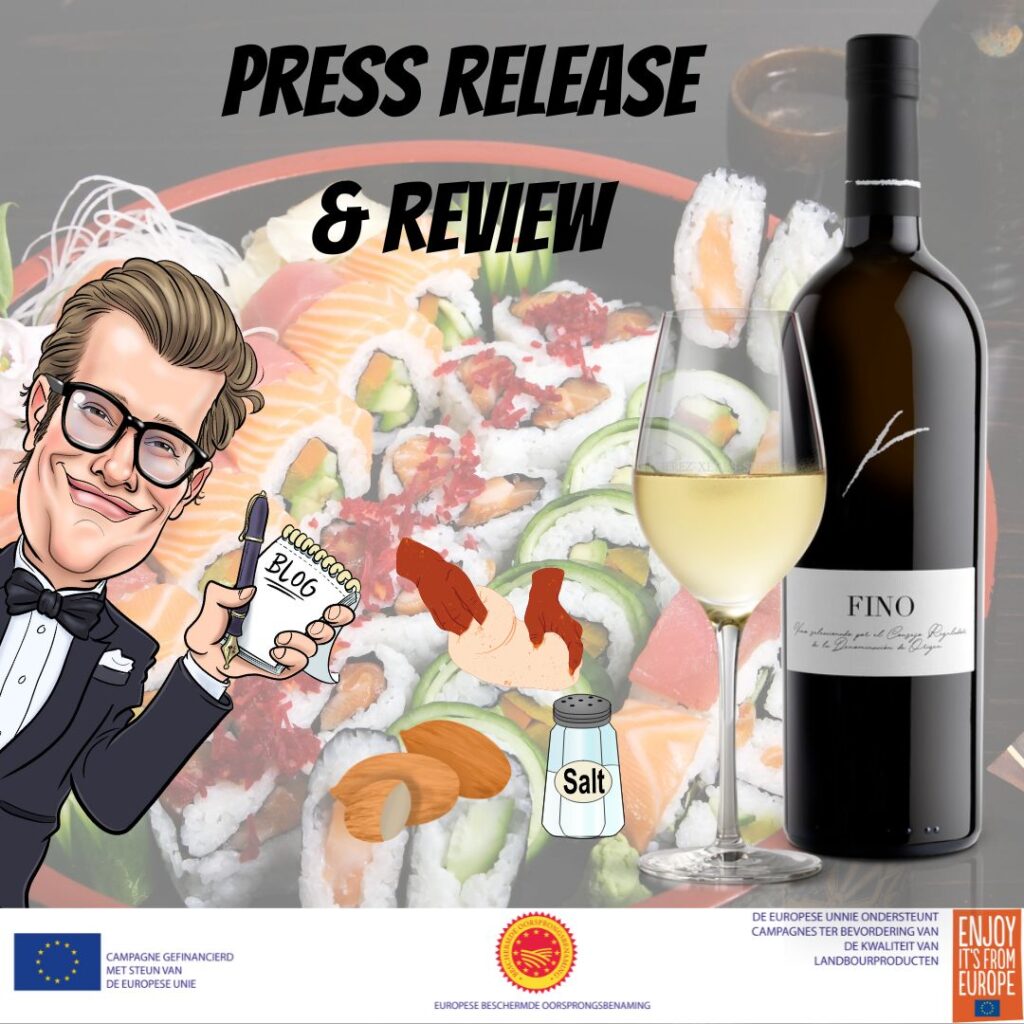
Sherry, steeds meer mensen zijn in de ban geraakt van deze unieke en internationaal bekende Europese wijnen. Sherry wijnen zijn veelzijdig, vol verrassingen en alom gewaardeerd, maar combineren bovenal perfect met gerechten uit de meest uiteenlopende gastronomische culturen, zoals sushi! Vaak wordt sushi vergezeld door een frisse witte wijn of, zoals de Japanse gewoonte is, een biertje of sake, maar heb je er ooit aan gedacht om Fino met sushi te combineren?

Fino Sherry       
Fino staat symbool voor het intense, rijke en genereuze karakter van de wijnen uit Jerez. Deze variant van Sherry wijn wordt gemaakt van Palomino druiven, is bleek goud van kleur en helder door biologische rijping. Vanwege zijn gastronomische veelzijdigheid verdient hij een prominente plaats aan tafel. Deze droge en expressieve witte wijn stimuleert de smaakpapillen op een buitengewone manier en versterkt de smaken van elk begeleidend gerecht, zo ook bij sushi.

Gerijpt onder een laagje gist, dat de sluier van de flor vormt, ontwikkelt de wijn aroma’s van amandelen, vers brooddeeg en wilde kruiden. Fino is een heerlijke droge en lichte witte wijn met een frisse afdronk van amandelen. De zilte smaak van de Sherry versterkt de smaak van de verse vis en harmonieert eveneens met de sojasaus, die ook zoutig is. De lage zuurgraad brengt de rijstazijn in balans en het aroma van groene amandelen in de afdronk van de Fino gaat prachtig samen met de hints van umami in het Yaki Nori geroosterde zeewier en de sojasaus.

Dus stap uit je comfortzone en probeer iets nieuws en spannends door deze internationale Fino te combineren met Sushi!

Sherry Academy
Voor eenieder die meer wil leren over dit unieke product, bestaat de online Sherry Academy. Doormiddel van dit e-learning platform biedt de D.O. Sherry wijnen jong en oud, wijnliefhebbers en professionals de gelegenheid om op elk moment meer te leren over dit enerverende gebied en wijn. In slechts een paar uur leer je basis kennis met onderwerpen zoals de oorsprong, productie en de verschillende stijlen Sherry wijnen. Voor degenen die al beschikken over Sherry kennis is er de mogelijkheid tot een gevorderden cursus welke dieper op de materie in gaat. Maak gemakkelijk en kosteloos een account aan via www.sherryacademy.org en start vandaag nog!

Over de Consejo Regulador
De Raad van Toezicht van de D.O. Vinos de Jerez (Sherry Wijnen), bekend als de zogeheten Consejo Regulador, was de eerste die in 1935 het reglement voor een oorsprongsbenaming publiceerde. Daarom hebben we het over “Jerez-Xérès-Sherry” en “Manzanilla-Sanlúcar de Barrameda” als oudste oorsprongsbenamingen (D.O.) in Spanje. Binnen het Sherry gebied is er nog een ander product, namelijk de “Sherry Azijn”. Deze wordt sinds 1994 eveneens beschermd door een oorsprongsbenaming (P.D.O.). De Raad van Toezicht die deze drie benamingen beschermt, verenigt 1.750 wijnbouwers en een honderdtal wijnhuizen, die gevestigd zijn in de zogenaamde “Marco de Jerez” in de provincie Cádiz. Zij zijn allen verantwoordelijk voor het beheer, de controle en de kwaliteit van alle wijnen. Dit waarborgt de kwaliteit van de betreffende regionale producten ten behoeve van de consumentenmarkt. Het werk van de Consejo Regulador heeft deze D.O.P.’s internationale erkenning gebracht. Het gaat om wijnen met een buitengewone variëteit en een echt karakter, met een zeer lange exporttraditie en merken die in de hele wereld echte Spaanse iconen vertegenwoordigen.

Pre-mixed cocktails 0% alcohol

No or low alcohol is hip and also very sensible. Calories fell and the range of alternatives is growing. Sir is a great player in the field of pre-mix cocktails. James 101!

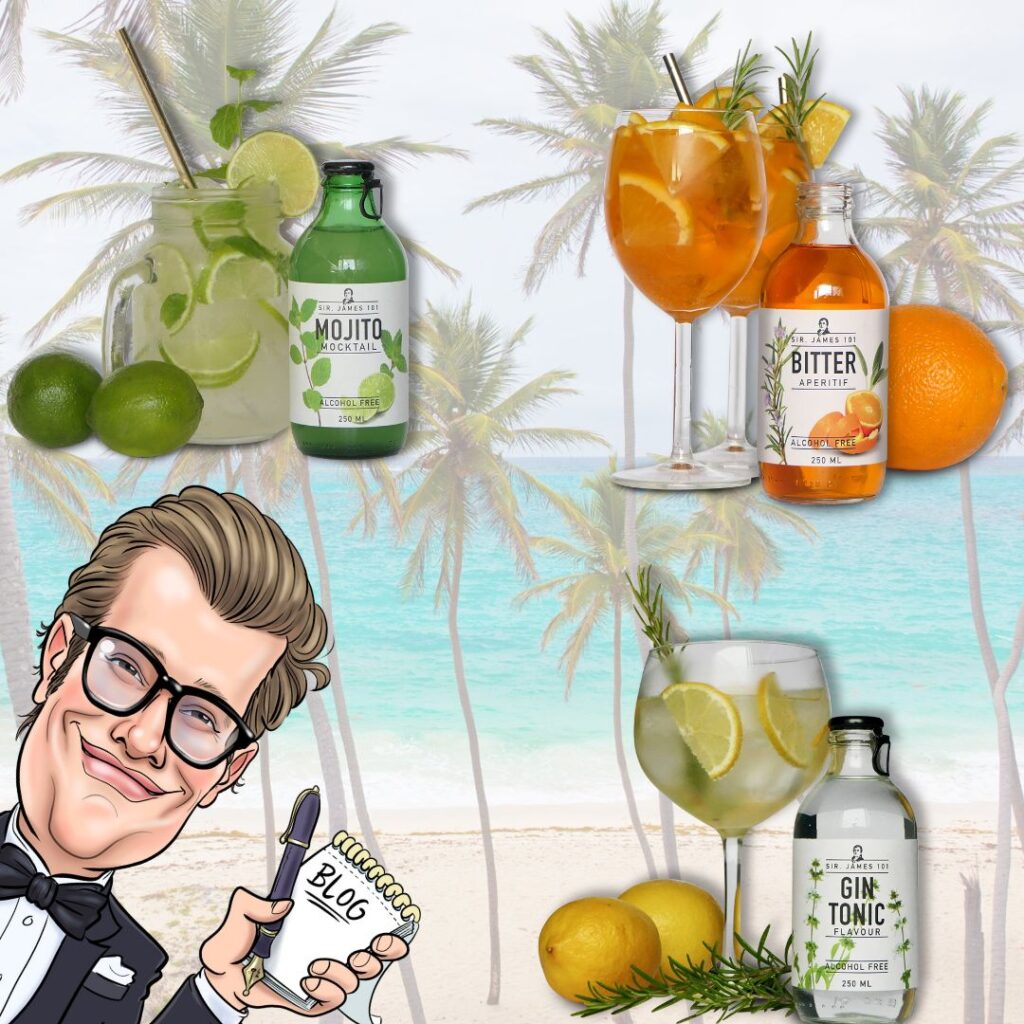
They have a range of (pink) gin and tonic, mojito and bitter Aperitif. I put it to the test and tasted the range of these non alcohol pre-mixed cocktails!

Sir. James 101 carefully creates the recipes for the alcohol free drinks. They are made by using his experience and the finest ingredients to match the expectations of serious nonalcoholic drinks. Sir. James 101 is aiming for the best flavours only and feels flattered by the many positive received comments.

Gin and tonic

Natural flavours and extracts like juniper and lime were used to make this Gin Tonic alcohol free. This has created an attractive aroma of fresh citrus fruit and botanical herbs like juniper and rosemary. A fresh and soft bitter taste with hints of gin-flavours as you may expect. A pleasant sparkling taste provides a good harmony and balanced aftertaste.

Mojito

Natural flavours and extracts of spearmint and lime were used to make the basis of this Mojito. But Sir. James 101 went further than this making it a refined drink. Flavours of the brown sugar which is usually added are clearly recognisable in this drink and the taste is full bodied to equal the rum flavour which is used for Mojito’s with alcohol. The recipe of the Mojito has been created combining many small elements to make it the best alcohol free Mojito you’ve ever tasted.

Bitter Aperitif

Natural flavours and extracts of orange and herbs like rosemary, sage, clove and nutmeg are used to make this drink. This will make you find many flavours while tasting the drink. the aroma is fresh with hints of orange and herbs followed by a fresh bitter taste and a light sparkling finish.
The Bitter Aperitif can be enjoyed like a Spritz drink!

My conclusion? Well made non-alcoholic with a serious character, great alternative if a alcoholic cocktail doesn’t work out for you.

Nederlandse pre-mixed cocktails!

Zoals jullie weten ben ik een groot fan van innovatie en zeker als dit een Nederlands tintje heeft.

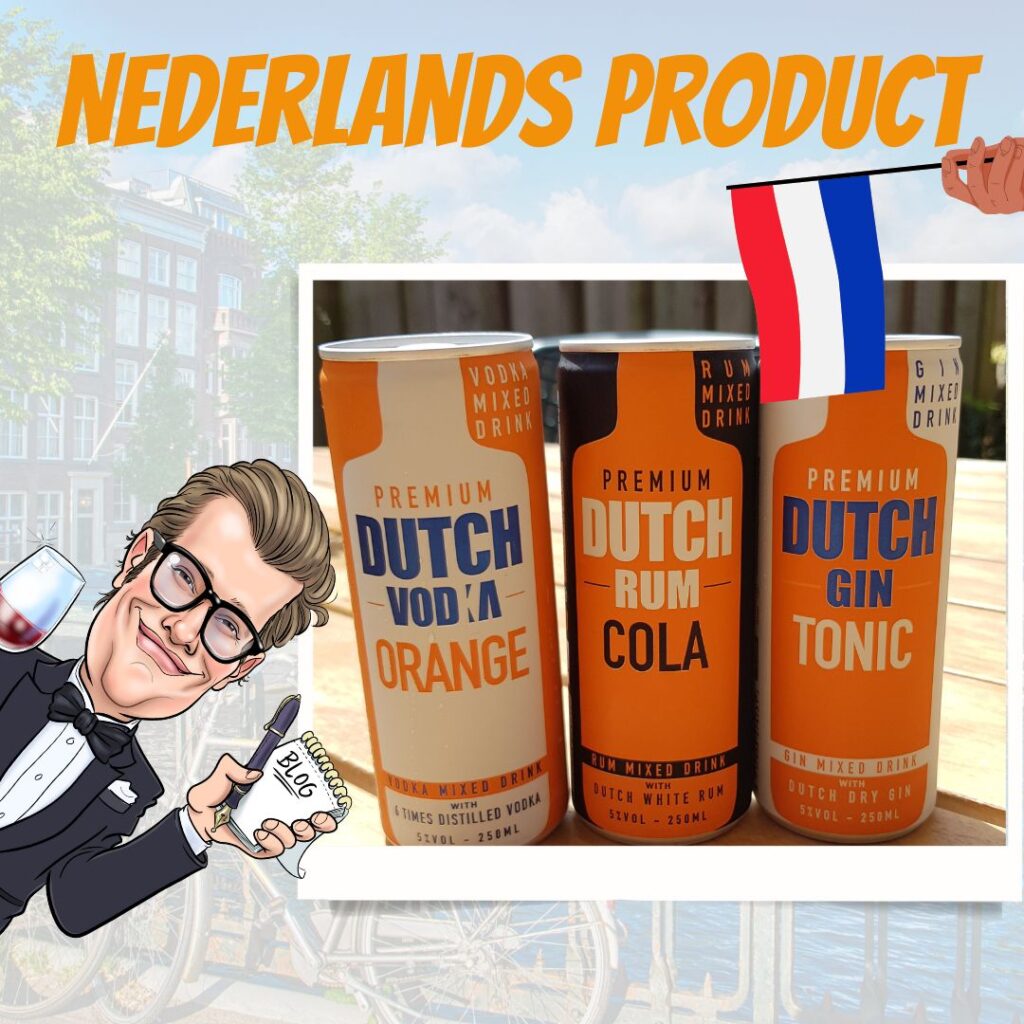
Geweldig om samples te ontvangen van een echt Nederlands assortiment van Ready To Drink – pre-mixed cocktails.

De Vodka, Gin en Rum zijn van originele Nederlandse makelij en het is allemaal begonnen met de Vodka van Nederlandse bodem.

Wat is er belangrijk bij het maken van deze Nederlandse distillaten?

  1. 6 x gedistilleerd (bij de Vodka)
  2. Handgemaakt in kleine batches en gedistilleerd in koperen ketels
  3. Zoet water uit Nederland. Het Nederlandse water staat bekend om een ​​extreem hoge kwaliteit.
  4. 100% puur graan (bij de Vodka), zeer mooi uitgebalanceerde en geeft een premium smaak.
  5. Echt Nederlands ontwerp. Gemaakt door een gerenommeerde Nederlandse ontwerper die de Nederlandse oorsprong toont

Ook worden er geen additionele toevoegingen gedaan (zoals suiker) om een ​​echte en eerlijke wodka en het beste genot te bieden.

De Vodka is los in de fles te koop, maar mijn interesse ligt bij de blikjes Pre-Mixed Cocktails! Men maakt verschillende soorten;

  • Premium Dutch Rum Cola
  • Premium Dutch Vodka Orange
  • Premium Dutch Gin Tonic

Handig, sneller koud, kan overal mee naar toe en nu dus ook van hoge Nederlandse kwaliteit!

Ik heb ze allemaal geproefd en ben overtuigd van dit vakmanschap, een mooi product in handzame verpakking voor alle gemakken voorzien. Ik zeg op naar het strand, cheers!

Voor meer informatie en verkooppunten klik hier

Innovatie – kwaliteit, betaalbaar én duurzaam!

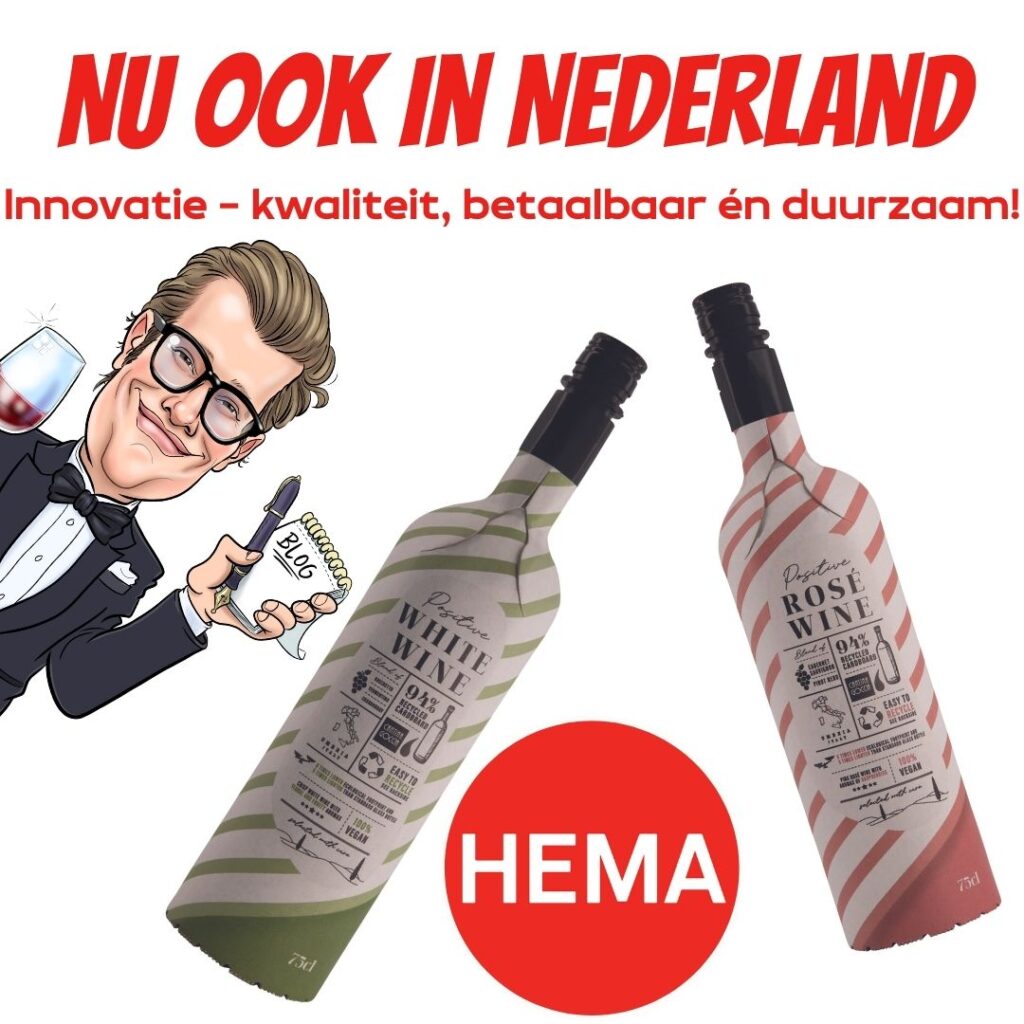
HEMA speelt in op de stijgende vraag naar ‘positieve wijnen met positieve impact’. Dit is wijn van goede kwaliteit, betaalbaar én duurzaam. Om die reden introduceert HEMA letterlijk een ‘Positive’ wijn: een Italiaanse wijn in een kartonnen jasje. Deze nieuwe fles bestaat uit 94% gerecycled karton en is tot wel vijf keer lichter dan een gemiddelde glazen wijnfles. De wijn is verkrijgbaar in een frisse witte en rosé variant.

De komst van deze fles is een win-winsituatie. Doordat de fles wel vijf keer lichter is dan een gemiddelde glazen wijnfles kost het transport ervan minder CO2 en ook de productie hiervan geeft tot wel 6x een lagere uitstoot van CO2. Niet alleen beter voor het milieu, maar ook minder gesjouw met zware wijnflessen én geen ‘walk of shame’ meer naar de glasbak. De kartonnen buitenkant gaat namelijk gewoon bij het oud papier en de plastic binnenzak mag bij het PMD afval. Zo wordt de verpakking opnieuw gerecycled en is de (duurzame) cirkel rond.

Benieuwd hoe je de fles makkelijk uit elkaar haalt en kan weggooien? Bekijk dan hier een korte video.

De wijnen worden geproduceerd door het bekroonde wijnhuis Cantina Goccia, een betoverende plek in de heuvels van Umbrië, het hart van Italië. Dit wijnhuis werkt aan meerdere aspecten om de ecologische voetafdruk van de wijngaarden te verkleinen: géén pesticiden in de wijngaarden en alle druiven worden met de hand geplukt. Na de druivenoogst worden er andere gewassen verbouwd om biodiversiteit op het land te stimuleren. De wijnen zijn ook geschikt voor een veganistisch eetpatroon.

Welke wijn?

De witte wijn bestaat uit de blend van Grechetto, Vermentino en Chardonnay. Deze wijn is fris van smaak en heeft met daarnaast bloemige en fruitige aroma’s.

De rosé is een blend van Cabernet Sauvignon en Pinot Nero (Pinot Noir). Dit resulteert in een rijke rosé kleurig wijn met aroma’s van rode bessen en frambozen.

Benieuwd? Ga dan naar hema.nl en bijna alle HEMA filialen om zelf een fles te bemachtigen!

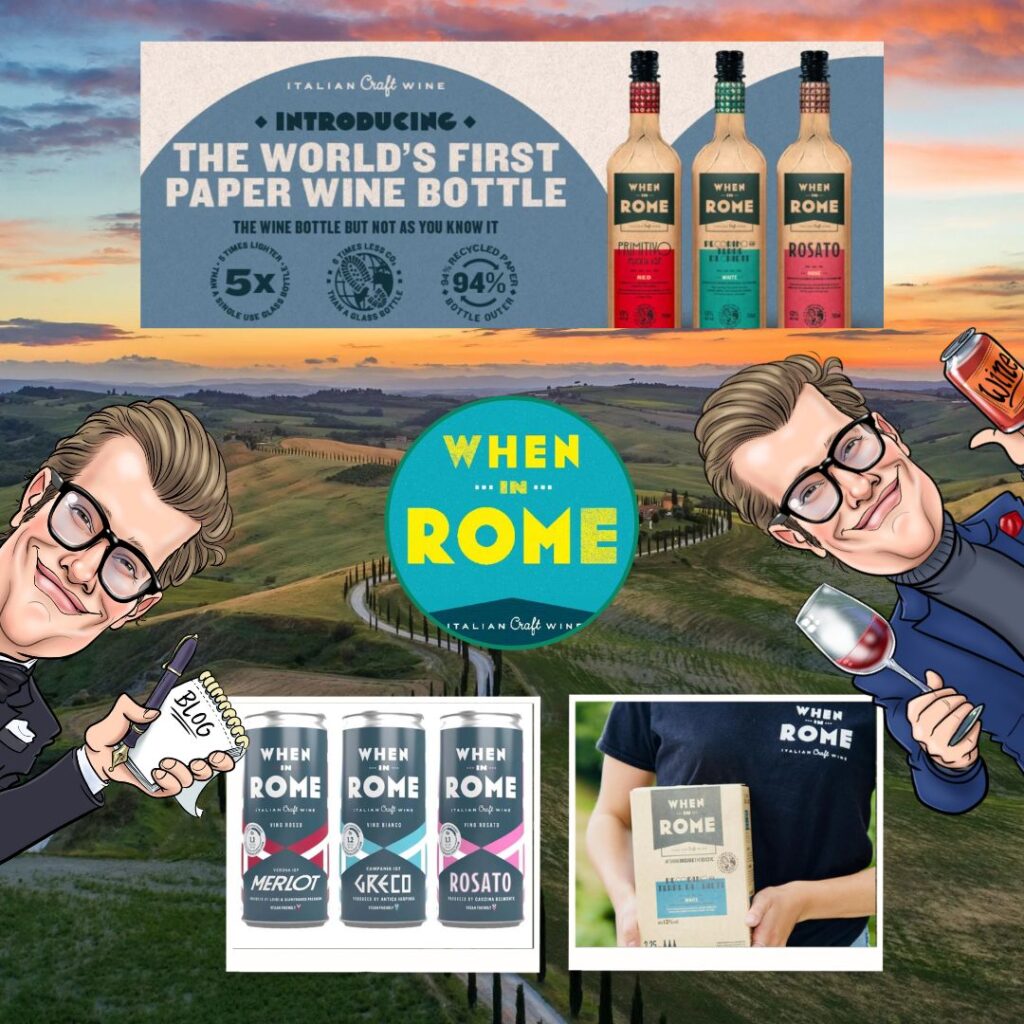
Innovative solutions, WHEN IN ROME!

Innovative solutions, that’s what the wine world will take further. Talks about sustainability are no longer a trend or must have, no, all companies will have to adapt their processes to this. One to a greater extent than the other, but there is no chance of escape. Effective solutions in the vineyard and in the winery will contribute to this.

But you also have to think outside the box when it comes to packaging a product. Why is wine always in a 0.75 glass bottle?
In some counties the Bag-in-Box has failed in the past, too big, leaking tap and especially wrong marketing aimed at the masses with poor quality wines.

There are new developments, as many of you know, I am fully engaged in sustainability and alternative packaging, so time for cans, bag-in-box and new age bottles!

Some time ago I became acquainted with the company ‘When In Rome’.
This UK firm sources its wines from real authentic winegrowers from Italy. Traditional family businesses that realize that things must and above all can be done differently! They are very active on their social media to create an experience. The packaging design, overall branding and website also reflect a new era for wine. As I know their canned wines, see below.

At When in Rome they show where the wines come from and the alternative packaging is pure and only as packaging. Do you fancy 1 to 2 glasses? Or are your friends coming to visit? And don’t you want to waste wine and must the packaging be sustainable? Then you’ve come to the right place!

The wine is the same and can be bought in cans or in small 2.25 liter Bag-in-Box.

And they also have an new innovation, a paper bottle! Amazing!

Nieuw onderzoek; alternatieve gisten gebruiken om sulfieten in wijnen te vervangen

Wijnjournalist Rémy Charest schreef voor daily.sevenfifty.com een mooi onderzoeks artikel waarin hij toelicht wat alternatieve gisten kunnen doen ter vervanging van sulfieten.

Wat is sulfiet?

Sulfiet ook wel Zwaveldioxide (SO2) genoemd werkt in de wijn als antibacterieel en antioxidant middel, het zorgt voor minder schimmelziekten en ander ongedierte in de wijngaard. Maar het heeft ook veel nadelen zoals het aantasten van fruit aroma’s in wijn en ook voor medewerkers in de wijngaard en het wijnbedrijf kan het voor irritatie zorgen bij blootstelling van een grote hoeveelheid. De consument kent het vooral om dat het veel hoofdpijn zou bezorgen, terwijl in het frietje van de fastfoodketen, het rode blikje cola en in het gedroogde fruit van de groentewinkel meer sulfiet per eenheid zit…..

Zonder het hele artikel te citeren deel ik graag met jullie de link klik hier.

Alle rechten en complimenten aan Wijnjournalist Rémy Charest voor daily.sevenfifty.com

Lot 42 – Premium Hard Seltzer

With whom do I have the pleasure of speaking? 

My name is Chris MacDonald, I am Canadian but with Dutch heritage as my grandparents relocated to Prince Edward Island Canada after the war, from Overloon. So lucky situation of having two passports. My business and life partner is Dale Milliken, and he’s Scottish.

Lot 42 is an actual place in rural Canada (on Prince Edward Island) where both my Dutch and Scottish families resettled to when they hit refresh, and the family still lives there today. We also worked with my cousin, a chef from the Island, to pick flavours and ingredients that paired well and are plants indigenous to the island.

What is your background in the adult beverage/rtd industry?  

Dale worked on consumer insights, research, and innovation on Pernod Ricard’s scotch whisky business, and I on was an equity analyst covering European drinks companies, before moving to HEINEKEN to work in investor relations for two years and two years as the right hand and special assistant to the CFO Laurence Debroux. Dale brings marketing and consumer side, I bring finance and operations.

How would you describe your Hard Seltzer range?

Our range is a premium offering for the 25+ consumer. It delivers on taste, is made with premium spirits, and has more complex flavors than your typical hard seltzer

Huckleberry & Ginger, 330ml, 4,5% with 87kCal

A really subtitle and very clear HS, no sugar or any sweetness in the taste. Although I’m not a ginger fan and the ginger is more in top than the Huckleberry, this is without being really overpowering. So for all you ginger fans, this is a unique taste I have never seen in a HS of this quality. Bubbly character is soft for which there is no doubt about this drink, job well done!

Tasting notes

Blueberry & Lemongrass, 330ml, 4,5% with 85kCal

This one is also very subtle. Less coarse in the taste of its predecessor. The Lemongrass ingredient is special. Especially common in Asian cuisine, especially Thai, Indian, Vietnamese and Indonesian cuisine. The plant is known from growing places in India, Africa, Vietnam, Australia and America. The taste is slightly sour and that is exactly what it gives to this HS. The acidity provides the backbone for the fruitiness of the blueberry. More accessible than the ginger variety, but here too Lot 42 shows that this is not just a student drink, but that it can indeed be of very high quality. Surprisingly good taste with character!

Tasting notes

Why are you in the rtd beverage industry? 

RTDs are growing because of their affordability, portability, and convenience. With an RTD you know precisely what is going to be in your can and the exact measure. This compares to bar pours when drinks can be too strong or too weak. The can is durable and light weight making it the perfect vessel for on the go. And as aluminium is infinitely recyclable, it is better for the environment. At Lot 42, we go one step further and are a plastic free business where possible.  

How do you see the future of rtd beverages? 

We see cans continuing to grow and take share from one way glass which has a much higher environmental impact than cans. With major global brands now expanding to add premixed cans to their range, we see a big future for canned RTDs.

Do you wish to add something to this interview?

We are two gay guys who are fortunate enough to live together, work together, and be ourselves. We know how fortunate we are and that so many are not. From day one we have partnered with Rainbow Railroad, a Canadian charity that supports LGBTQIA people to relocate when it is not safe for them to be themselves. We donate a share of our profits to them and help to amplify their message. The story of the brand is all about hitting refresh. Taking steps to have a better pace and place in our daily lives.

Check out our brand manifesto film: https://www.youtube.com/watch?v=qgCDhbYs4_Y

Thanks Chris, much appreciated!

Bericht uit Sicilië! Oogst & ontwikkelingen!

Als er een regio is welke op mijn ‘bucketlist’ staat is het Sicilië. De wonderschone plaatjes van ‘stedelijk’ Palermo en de binnenlanden met alle olijfbomen en wijngaarden, een paradijs!

De afgelopen periode kwam het gebied in het nieuws en helaas niet om de wijn, maar om opzwellingen van moeder aard. Noodweer en bosbranden teisterden het geliefde eiland vol gastronomie. Hoe ging het met de wijnoogst en hoe zal deze zich verhouden tot 2020?

Ik sprak de afgelopen weken sprak ik met diverse Sicilianen en hieronder een weergave voor de 2021 oogst.

Op het moment dat ik dit artikel schrijf zijn de bosbranden achter de rug en is de oogst zo ongeveer overal binnen. Zeker op het westelijke gedeelte van Sicilië. In het Oosten zal men bijna zijn afgerond of de laatste druiven plukken.

Oogsten in Sicilië

Voordat we in gaan op de 2021 oogstberichten eerst even wat informatie over Sicilië.

Sicilië ligt, als grootste eiland van Italië en van de middellandse zee in het meest zuidelijke deel van Italië.  Met een oppervlakte van meet dan 26.000 vierkante kilometer is het ongeveer 45% van de oppervlakte van Nederland. Het klimaat normaal gesproken mediterraan van karakter met een bijzonder stabiele trend over de afgelopen tien jaar. Er staan veel soorten druiven aangeplant op de wijngaarden. Zowel inheemse rassen als Grillo, Zibibbo, Nero d’Avola en Frappato als internationale rassen zoals Chardonnay, Merlot, Cabernet Sauvignon en zelfs Sauvignon Blanc.

Maar wat maakt Siciliaanse wijnen volgens de kenners tot wijnen van hoge kwaliteit?

Rijkdom en diversiteit van het culturele erfgoed (lees de tradities), de biodiversiteit van de unieke regio’s onderling (overal andere unieke eigenschappen) en een continue focus op duurzame productiemethoden.

Even terug naar de oogst van 2020. Dit wijnjaar had een productievolume van 4,46 miljoen hectoliter, wat normaal is gemiddeld genomen over de laatste 5 jaar, maar wel een daling van 11,3% in vergelijking met het gemiddelde van de laatste 10 jaar.

“De oogst van 2020 was kwalitatief erg belangrijk, zoals blijkt uit de elegantie, frisheid en structuur van de wijnen die door onze leden in alle delen van het eiland worden geproduceerd”

Laurent Bernard de la Gatinais, president van Assovini Sicilia

De Siciliaanse wijnbouw heeft het laagste productiegemiddelde van heel Italië, gevolgd door Toscane en Piemonte. Een van de redenen voor de kwantitatieve achteruitgang in de afgelopen 10 jaar is dat er veel meer de nadruk is gelegd op het maximaliseren van de kwaliteit, wat soms zelf samen ging met het herinrichten van wijngaarden voor andere gewassen.

Er is ook een verandering in stijl van de Siciliaanse witte wijnen waarneembaar, die zijn de afgelopen jaren frisser geworden, met een lagere pH (hoe hoger, hoe krachtiger de zure smaak). Dit is een duidelijk kenmerk voor een moderne stijl met een stempel van het nieuwe Sicilië. Het heeft ervoor gezorgd dat de witte wijnen van het eiland steeds meer door de mondiale markt worden gewaardeerd, waardoor meer veelzijdige wijn-spijs combinaties mogelijk zijn, van aperitiefwijn tot ideale combinatie met diverse soorten vis.

Een van de sleutelwoorden voor de toekomst van Siciliaanse wijnboeren, is duurzaamheid.

Sicilië heeft 28,8% van het totale biologische productiegebied van de Italiaanse wijnbouw in handen, gevolgd door Puglia met 16%. Het Siciliaanse biologische wijnbouwgebied vertegenwoordigt 30,9% van alle Siciliaanse wijnbouw. Wat Sicilië van nature tot een duurzaam eiland maakt, is het mediterrane klimaat, dat niet bijzonder is getroffen lijkt te zijn door de klimaatverandering.

De oogst van 2021

Omdat Sicilië werd getroffen door een hittegolf, begon de oogst eerder en waren sommige druiven eerder rijp dan normaal. Gelukkig hadden de bosbranden geen invloed op de wijngaarden. Ook was er in het westen van het eiland aanzienlijk minder regen en de meeste regen viel dan ook in de winter of de lente. De zomer was nagenoeg droog, wat zorgte voor een ideaal rijpingsklimaat voor de duiven. De totale opbrengst cijfers zijn nog niet binnen, maar ook dit jaar lijkt af te streven op wederom minder kwantiteit en meer kwaliteit. Dit komt de aromatische intensiteit en de frisheid ten goede!

Ik kan niet wachten op de eerste 2021 wijn van dit schitterende eiland! 

Sources

Assovini Sicilia the association of Sicilian winemakers

Uva Sapiens – Vineyard and wine consultancy

Nieuwe techniek voor de nachtmerrie van ”MOG”

De oogsttechnologie is de afgelopen halve eeuw drastisch veranderd. Een behoorlijk deel van de mondiale wijnbedrijven werken met geavanceerde machines, welke door de wijngaarden rijden en de druiventrossen ‘losschudden’. Efficiënt, handig maar er is altijd 1 probleem, de MOG.

winetitles.com.au

MOG? Dat staat voor ‘matter other than grapes’ denk aan takjes, steeltjes, bladeren en alles wat geen druiven zijn en wat normaal wel meekomt tijdens het machinaal oogsten. In Australië heeft men dit probleem beetgepakt en is hiervoor collectief naar een oplossing gaan zoeken, tijdens een studie met praktijk onderzoek kwam men op mooie oplossingsrichtingen!

Waarom zijn deze takjes, steeltjes en bladeren een probleem voor de wijnmaker? Laten we de vraag omdraaien! Wat zouden de belangrijkste voordelen zijn van MOG-vrije oogsten?

De MOG zit, ondanks het zorgvuldige sorteerproces, niet meer tussen de druiven, waardoor de wijnkwaliteit een verbetering doormaakt.

Deze grote wijnbedrijven transporten enorm veel ladingen druiven, waardoor bij een MOG vrije lading de kosten voor het transport aanzienlijk zullen dalen.

In de wijnmakerij zorgt MOG vrije oogst voor een optimale doorvoer in de wijnmakerij en hiermee voor efficiency.

winetitles.com.au

Voor de complete verslag en studie klik hier

Source: winetitles.com.au

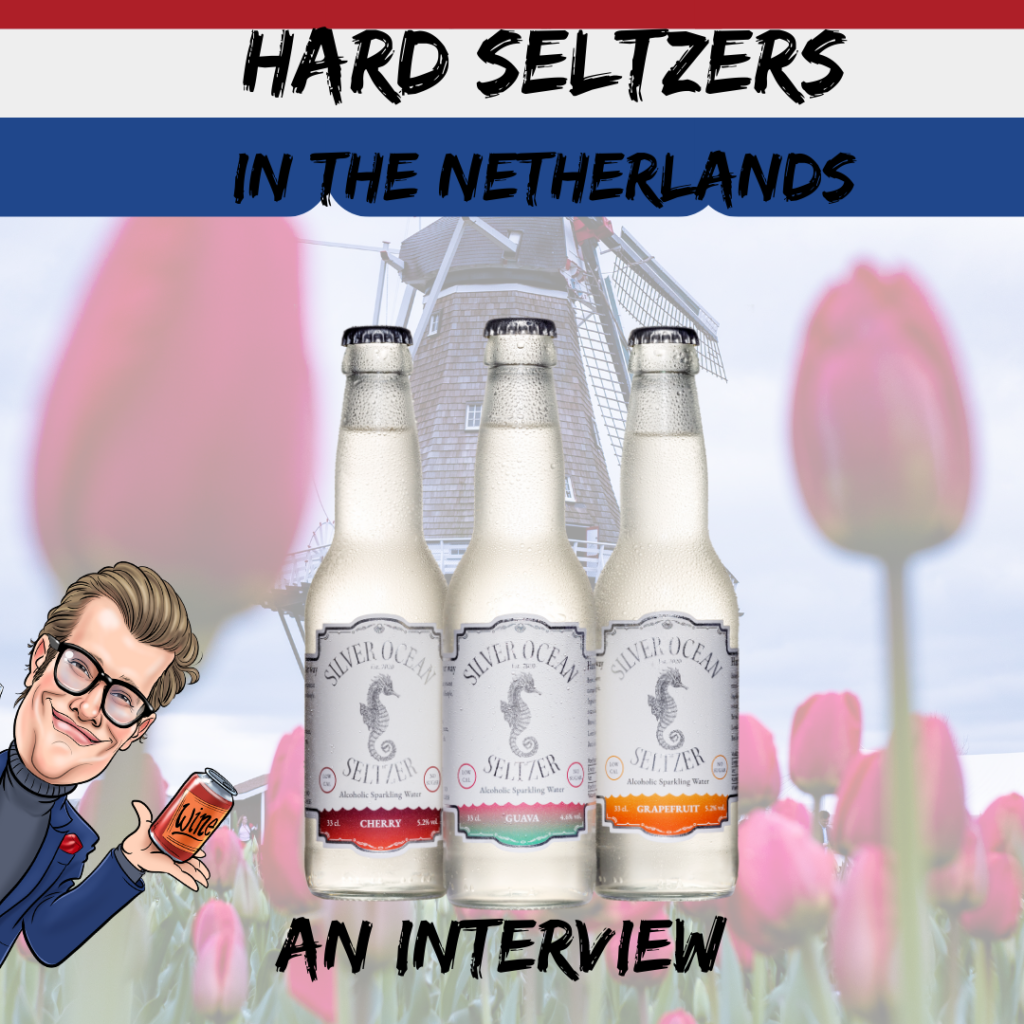
Silver Ocean Seltzer, lifestyle in a bottle!

The Hard Seltzers are booming, Ready to Drink category is going sky high and at this moment it looks like there is no stop too it.

Within the European market the market share of these fruity adult beverages is becoming more and more. Most of the available data is from the US market. As ‘State Side’ is the largest market has a Compound annual growth rate (CAGR) of 128% a year, this will also be the case in Europe as a ‘early adopter’.

So it was time for me to get in touch with several brands and investigate this ‘millennials’ market and do some ‘research’, well actually by tasting all of them!

A drink for the conscious consumer and with a vision for the future.

We mainly know Hard Seltzers in cans, from the supermarket or can be ordered online. But at Silver Ocean, 3 young men took a different approach.
All three sporty and busy with balance in life, good food but also enjoying a (calorie-filled) beer….there had to be another way!?

After a lot of tasting and experimenting with recipes, they started with a small batch and with success.
But these three men don’t just want to sell a Hard Selter, they like to see it in a broader perspective, making a positive impact on the world.

With whom do I have the pleasure of speaking?

With Lesley Daris. One of the three co-founders of Silver Ocean Seltzer.       

Groepsfoto-2.0-1536x1265.jpg

Great to speak to you Lesley, what is your background in the adult beverage/rtd industry?

All of us have no prior (professional) experience within this industry. Our experience is more first hand, from the other side of the bar. We’ve always been interested in good concepts and products though.

Silver Ocean Seltzer_logo Shopify.png

How would you describe your Hard Seltzer range? 

Silver Ocean Seltzer is a premium craft seltzer, Made the right way; Artisanally brewed with champagne yeast and cane sugar. This results in a refreshing, light and crisp drink with a cohesive taste profile. I would say it’s quite different from most of the premixed drinks within the Hard Seltzer category.

Tasting notes Dennis

All Seltzers are really very pure! A purity that I have not yet encountered with others. The fruit flavors are refined and match the surface without being disturbing.

With the cherry flavor it looks like you just bit into a small cherry, pure and pleasant.

The grapefruit is what you would expect from a grapefruit, but again modest, refined and beautifully fresh.

The range of three also includes a special flavor, namely Guava!

The Guava originates from Central America and tastes fruity and slightly floral, like a cross between a strawberry and a pear. And that’s exactly how this Guava tastes, great, special, unique and incredibly fresh.

Yes I noticed Silver Ocean is bottled and not canned, could you explain your vision on this?

We are really presenting it as a premium brand for the conscious consumer. This is all due to the fact that we can’t keep up with the big brewers in terms of quantity, so we don’t, we focus on absolute quality. Most Hard Seltzers available in The Netherlands, the marketing is aimed at students: it is sold in supermarkets and packaged in a can. That is not our way of working. We consciously go for a premium positioning, think of a subtle refreshing taste, bottled in a beautiful bottle and linked to a social purpose. That’s why we focus on the higher segment of the hospitality industry.

That’s a great vision and strategy, why are you in the ready-to-drink beverage (rtd) industry?

To raise the bar and build a premium brand with well thought about quality products. 

Thanks clear, but how do you see the future of rtd beverages?

I see the category expanding, although shifting more towards the low and no alcohol side. I foresee many crossovers between categories and brands. For example Fever Tree moving into the Hard Seltzer category and the rise of RTD Spritzers. As a whole this boosts the whole rtd category forward in terms of quality and innovation.    

And that’s exactly what this category needs and you guys are doing a great job! Do you wish to add something to this interview?

Just a little bit of own marketing…….If you’re looking for a good Hard Seltzer with a great additional social cause, check out Silver Ocean Seltzer!

Cheers on that Lesley and again thanks for your time and I will following you guys with great pleasure in the future!

Viper – Hard Seltzer

The Hard Seltzers are booming, Ready to Drink category is going sky high and at this moment it looks like there is no stop too it.

Within the European market the market share of these fruity adult beverages is becoming more and more. Most of the available data is from the US market. As ‘State Side’ is the largest market has a Compound annual growth rate (CAGR) of 128% a year, this will also be the case in Europe as a ‘early adopter’.

So it was time for me to get in touch with several brands and investigate this ‘millennials’ market and do some ‘research’, well actually by tasting all of them!

With whom do I have the pleasure of speaking?

Yara Pelzer, brand manager Viper Hard Seltzer and Kornuit in the Netherlands.

Great to meet you Yara and wonderful you want to participate in an interview, what is your background in the adult beverage/rtd industry?

For the past two years I have been working at Koninklijke Grolsch (part of Asahi Europe & International). After some time at other drink-related companies, this is my first time working for alcoholic beverages. I started as brand manager for the local Dutch lager brand Kornuit, and when the international introduction of Viper came along, I had the opportunity to launch Viper Hard Seltzer in the Netherlands.  

That all sound very cool, let’s go direct to the product, how would you describe your Hard Seltzer range?

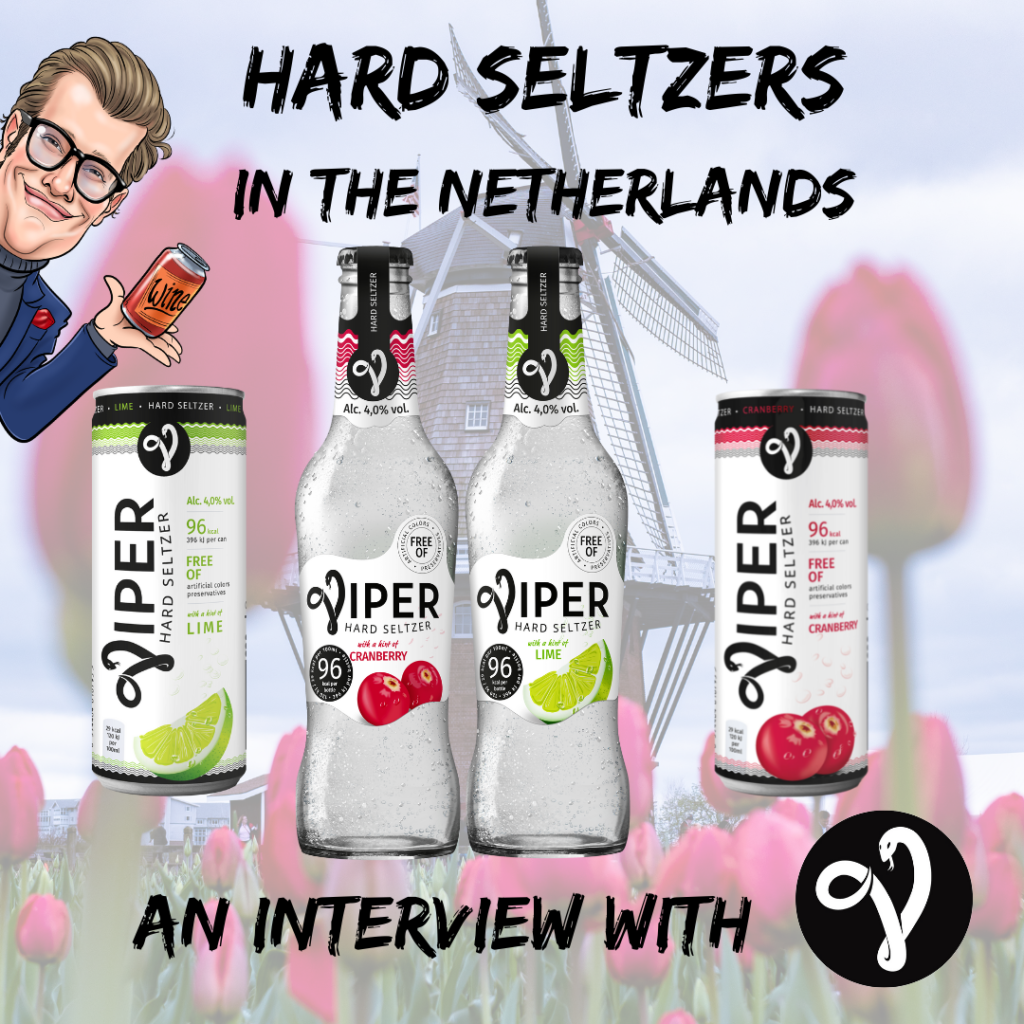
Viper is inspired on the new booming drink category – HARD SELTZERS – born in the US market. We invested a lot of effort in bringing the idea forward and created the ultimate refreshment – well balanced with a hint of fruit flavor (e.g. lime) and a bite of alcohol. Different than most hard seltzers on the US market, Viper is a brewed hard seltzer, which produces a more balanced drink, with a unique tasting experience. Viper is a sparkling water with a bite of alcohol and a hint of fruit flavour, perfect to enjoy a great time with your friends. On a hot summer evening at a park or any other relaxing time – whenever – Viper always gives you the ultimate refreshment. It is 96 kcal per can/bottle, does not contain any artificial colours and preservatives. Also, Viper is gluten free, because we don’t use ingredients that can be source for gluten.

In addition to cans, Viper also chooses to offer the product in bottle. This drink is ideal for on trade and retail, where the Dutch consumer relatively often consumes from a glass bottle instead of a can, which makes it perfect for a hot summer evening in the park or on a terrace. Viper Hard Seltzer is presented with the pay-off ‘sparkling water with a bite’. The bite refers to the snake (‘Viper’), which can also be seen in the brand logo. Viper is launched in two flavours; cranberry and lime.

Tasting notes Dennis

Both are fresh and have a refreshing character, really ‘thirst-quenching’. The lime is really like that (1,2,3,4,6,) 7 soda drink but without all the sugar and with a little bit of subtitle cinnamon in the end. The cranberry gives a little bit sweet nose at first, the flavors of fresh cranberry is pickup quite fast and the bubbles catch up, nice when you like a boost of red fruit in the summer!

And Why are you, Yara, in the canned adult beverage industry?

Good question; As the daughter of a bar owner, I grew up with beer. Not drinking it (back then), but seeing others drink it. It showed me that beer brings people together; it is a product that connects people and let them have fun. I’ve always had a connection to the beer industry and to Grolsch too. Working at the pub for over 8 years, tapping Grolsch, gave me a connection to the brewery even before I started working here. The good part is that I am working for two brands (Viper and Kornuit) that personally fit me better, while I’m still working for the brewery I had this connection with. Regarding the ‘can’ question; For me I think it’s just that Hard Seltzer and beer is also served in cans.

Ook Grolsch komt met een eigen hard seltzer: Viper - Soundflow

How do you see the future of canned adult beverages?

With people being on the move, drinking outside, going places, I think this industry will be growing. Cans are light and easy to bring with you while you’re on your way. In the Netherlands we are a ‘bottle drinking country’, most beer we will consume from crates and bottles but can consumption seems to grow. Looking at the trend of canned craft beers and also Hard Seltzers, I believe the canned alcoholic beverages will only be growing more.

Cranberry - Viper

Do you wish to add something to this interview?

Just some shameless self-promotion; Try a Viper Hard Seltzer when you see it in the supermarket or on a terrace! Cheers!

Thanks Yara, the pleasure was all mine.

Not all millennials are the same, a profile of five different types of ‘new age drinkers’

A few weeks ago I published an article called ‘Ready-to-drink category will soon overtake wine in the US’. In this article I emphasized the sky rocking growth, +130% in one year, of RTD beverages like pre-mix cocktails, wine in a can, Hard Spritzers and Seltzers. And the forecast that these products will soon outrun wine in a total segment in the US.

Framed on the new age drinkers, the millennials, the adult beverage industry need to change or adjust their way of thinking, production lines, marketing mindset, transport/warehousing, (social) media plans and many more things.

Generally millennials don’t go for a product, they want a whole experience. Brands need to be reconcilable with a true story behind it, also the discover new things, interact & connect with friends and see that ‘marketing with meaning’ really works. Use goes before possession and entertainment and easy digital app use is key to succes.

If we look outside the wine business, we see that national and international brands like Airbnb, Uber, Swapfiets, Netflix, Hello Fresh and Go Sharing are focused on using a place to stay, taxi, bike, on-demand content, healthy meal boxes or electric scooters. Its all about service, easy of use, environmental focus, app based and marketing with a meaning and experience to share with friends!

Other ‘millennial driven’ brand like Starbucks, Converse, Nintendo and Apple are creative in their product range, authentic in their marketing and have a solid long-lasting story behind their brands.

Generally looking within the traditional adult beverage industry, marketing is top down driven and brand are ‘premium’ or high in value due to name and price level of the past years. Why is wine from Burgundy the best in France? Is it because my father always drunk it and the wine companies have famous names? Or is that just from a perspective of older generations?

What about millennials? Do all millennials think the same? You could guess the answer, not they do not. If you what to characterize this generation – roughly born between1981 and 1996, give or take a year or two – you can distinguish five groups with a special market segmentation model.

Segmentation by model Glocalities

The Glocalities model, which has been in existence since 2014, provides insight into the values ​​of daily life, cultures, preferences and consumer behavior of residents from 27 countries. Let’s take a quick look at the segmentation groups and see what their preferences are.

Socializers (10%)

Socializers are very family oriented, they love to spend time with their loved ones. They enjoy the little things in life and are generally unambitious. Socializers will take as few risks as possible, because they want a quiet and harmonious life. They do like to consume, but not necessarily luxury products. The Socializers are not brand sensitive. Socializers are less internationally oriented.

Conservatives (15%)

This are the ‘old school’ millennials, they are properly first time millennials (early 80s) who care about norms and values ​​and form the bridge between their own generation and the previous one. Have really grown up with the upcoming of the internet, computers were large and expensive and have learned what digitization is. Conservatives are family-oriented. They also attach great importance to religion and/or traditions. They want to live a meaningful life with their loved ones around them. They have a great sense of national pride and are also concerned about global problems, such as environmental pollution. Conservatives don’t like to take risks. Consuming is not important to them, they attach more value to simple things. They have strong opinions about all sorts of things.

Achievers (20%)

Achievers are very focused on professional success and status. This can be seen in the luxury products that this group consumes. Achievers want to be noticed by others, recognized and preferably seen as a role model. They are positive in life. For Achievers it is relatively important to improve their social status. Career and money are important here. They are very driven. Success makes this target group happy. However, family and relationships with others is very important to the Achievers. They find it important to help others and therefore do their best to make a difference to society.

Creatives (25%)

Creatives can be described as open-minded global citizens. They are open to different cultures and different roles based on gender. Equality is something the Creatives find important and strive for. The Creatives find it important to have good relationships with others. They can easily move in someone his/her situation. For the Creatives, career and money are less important. They prefer to go for new experiences that enrich their lives. Sustainability and “global issues” are very important themes. They are environmentally conscious and contribute to a sustainable and better world. They are also characterized by trying new things.

Challengers (30%)

Challengers love to consume and like to stay on top of the latest trends. Money and career are important to this group, it brings them to a lifestyle that they envision. In this way they like to get recognition from others. Challengers are slightly more individualistic and thus less family oriented than other target groups.

Are you born between 1981 and 1996? Which type of millennial are you? Or a bit of all five?

Deep(er) drive into RTD cocktails, a bit of field research

Alcoholic ”Ready-to-drink products”, also known as RTD for short, are popping up in every corner and sales are sky high. From rum/cola, to voda/juice the orange and of course wine or grape juice based drinks in a can. But the real RTD drinker is looking for hip labels, low alcohol, cheerful and quick to drink with friends, always and everywhere!

In the last couple of years we have seen the rise of the big brand with gin, rum and other mix drinks. Let’s share a few examples;

Taylor’s Port and tonic in a can

Taylor’s ‘Chip Dry’ and Tonic has the good taste of dry white Port, a smooth dry freshness with hints almond, honey, figs and dried white fruit, 5.5% abv in a 250ml can. more on this can and brand very soon in a separated article!

New Bacardi cocktails named Bahama Mama, Mojito, and Sunset Punch. 

Bacardí's New Canned Cocktails Come in Bahama Mama, Mojito, and Sunset Punch  Flavors

Quality rum mixed with fruity notes of orange, red berries, and pineapple. Zesty lime and mint, and tangy bloody orange, lemon, and ginger flavor notes. 5.9% abv in a 355ml can.

Captain Morgan Orginal Spices en Cola

Captain Morgan's Spiced Caribbean Gold Rum Spi ... | prices, stores,  tasting notes and market data

Notes of rich vanilla, warming spice and hints of oak balanced perfectly with cola this Spiced Caribbean ‘Gold’ with 5% abv in a 250ml can.

Bombay Dry gin & tonic

Een afbeelding van Bombay Dry gin & tonic

Complex flavors, yet subtle character. Light floral taste of a nice dry gin & tonic with 7% abv in a 250ml can.

What about supermarket and their own brands?

As for the mix drink range (also called pre-mix) here is a lot on the shelfs these days. And then there are the supermarkets who have their own brand coming, like the German discounter Lidl with a range of pre-mix cocktails.

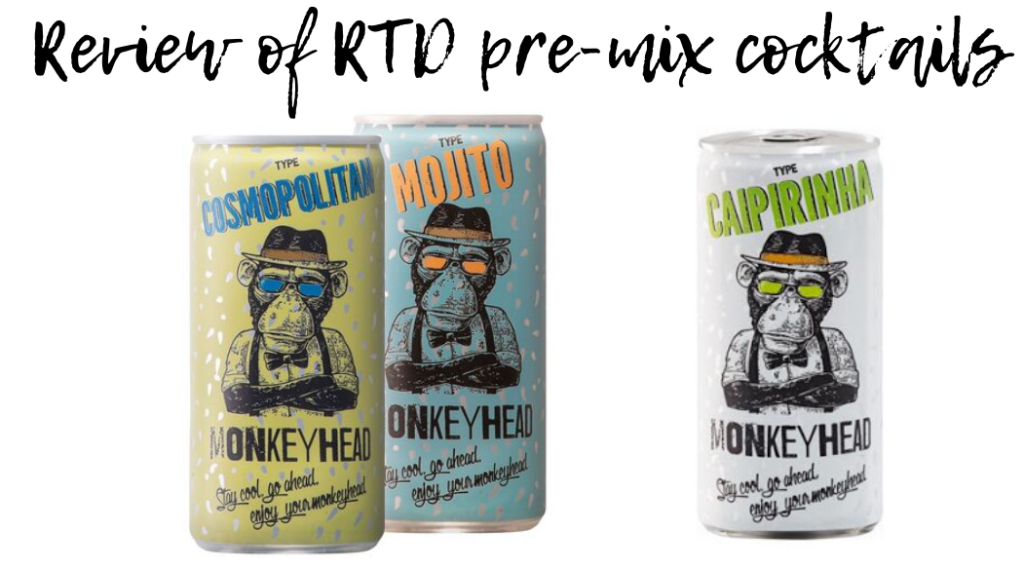
Monkeyhead – Cosmopolitan cocktail with vodka, cranberry juice, lime juice and triple sec, e.g. Cointreau. Refreshing, softer on the vodka than expected, the triple sec disappears slightly in the taste of cranberry, but doable for the ready-made pre-mix cocktail, 6,9% abv 200ml can.

Monkeyhead – Mojito cocktail made with rum, lime juice, cane sugar, sparkling water and mint with lots of ice. And this last ingredient is always a missed opportunity with a pre-mix Mojito. This beverage in a can is fresh, little bit over the top on the can sugar but quite ‘minty’ in the finish. But for a great experience, put in a fresh mint leaf, 6,9% abv 200ml can.

Monkeyhead Caipirinha cocktail made of lemons, cachaça rum, ice and cane sugar. This pre-mix cocktail is incredibly fresh, it tastes like freshly squeezed limes, while the rum remains soft in taste. Of course that sweetness again, but you imagine yourself at the Copacabana in Rio de Janeiro! 6,9% abv 200ml can.

My final conclusion? This RTD segment is one segment to keep an eye on for sure. There will be more and more in this range in the near future, which will promote competition and therefore improve quality. A new revolution is on his way, or already there?!

Zangeressen Ashley Roberts & Kimberly Wyatt van ‘The Pussycat Dolls’ zetten in de VS & UK een hard seltzer op de markt, wie volgt?

De hard seltzer pakt ook in Nederland steeds meer terrein. Waar ging het ook alweer om? Allerlei bruisende fruit drankjes in een blikje met een laag alcoholgehalte. Handzaam, fris, fruitig, laag in calorieën, geen toegevoegde suikers, natuurlijke ingrediënten en goed geprijsd!

Grote merken als Coca Cola, Heineken en Grolsch hebben inmiddels al stelling genomen door hun eigen merken te lanceren. In een rap tempo gaat de strijd om de portemonnee van de millennial door en tevens komen er steeds meer (inter) nationale merken beschikbaar in Nederland.

Binnenkort zal ik een meer publiceren over de hard seltzer in Nederland, reviews van diverse merken met smaken als framboos, mango, citroen, lemoen en nog veel meer! Daarnaast ben ik volop bezig met een samenwerking in Noord Amerika waar later meer over volgt!

De hype lijkt door covid over te slaan naar een vaste waarde in het drank schap. De weg omhoog van dit ‘gezondere’ alcoholhoudende drankje lijkt geen einde te kennen.

Net als in de wijnwereld krijgen ook steeds meer ‘bekendheden’ lucht van deze ontwikkeling.

Zo ook Ashley Roberts en Kimberly Wyatt van The Pussycat Dolls. Deze dames zetten in de VS en UK een hard seltzer op de markt, wie volgt?

Je leest het hele artikel op thespiritsbusiness.com

Source: the spirits business

6 redenen om te starten met wijn in een blikje! (DUTCH)

Het segment ‘canned wines’ blijft meer groeien dan andere formaten, in belangrijke mondiale markten zoals de VS, maar ook het vaste land van Europa. Bijzonder om te zien, zeker in een tijd waarin het wijnvolume afvlakt of afneemt. Maar juist daarom is het misschien geen verrassing dat dit formaat veel aandacht trekt, net als in andere categorieën van alcoholische dranken zoals mixdranken of ready to drink cocktails.

Voor de consument zijn de voordelen van deze opkomende verpakking duidelijk. Kleiner, lichter maar ook duurzame (net zo recyclebaar als glas). Veel jonge consumenten staan ​​open voor meer onderscheidende verpakkingsontwerpen, waardoor deze verpakking perfect is voor ‘sociaal’ drinken buiten, wat een groeiende gelegenheid is tijdens Covid-19.

Ook voor de detailhandel zijn er voordelen. Blikjes nemen minder ruimte in beslag in schappen en de koelkasten, zijn lichter (minder vervoerskosten) en verkrijgbaar in diverse formaten. Als het in de speciaalzaak wordt verkocht, zijn er ook meer mogelijkheden om een ​​hogere marge te maken dan een standaardfles van 750 ml normaal zou bieden.

Wat zijn die overwegingen dan?

  1. ‘Het is niet zomaar dezelfde wijn maar in een blikje’.
    • Benut de diverse segmenten en expirimenteer met andere verpakkingen en andere wijnen
  2. Benut de groei in ‘premiumisatie’.
    • Het premium segement zal ook in deze categorie groeien, stap tijdig in!
  3. Benut de huidige mogelijkheden voor RTDs voor wijn.
    • Groei mee en profiteer van de brede groei van Ready To Drink dranken.
  4. Bestaande wijnmerken kunnen succesvol uitbreiden naar het blikformaat.
  5. Focus op de diepte in plaats van de breedte van de distributie.
  6. Canned wine is een manier om in de trend van een laag alcoholpercentage te komen.
WI Graphic Wine Packaging Consideration Rates 1030x584 - 6 key factors wine businesses should consider when evaluating the opportunity for wine in cans

Source Wine Intelligence and full article in English click here

Ready-to-drink category will soon overtake wine in the US

Source: thedrinksbusiness.com

Intro in Dutch, article in English

Alcoholische ‘’Ready-to-drink products’’ ook wel afgekort RTD genoemd schieten als padenstoelen uit de grond. Van rum/cola, tot voda/jus de oranje en natuurlijk wijn of op druivensap gebaseerde drankjes in een blikje niet te vergeten. Maar de echte RTD drinker zoekt hippe labels, laag in alcohol, vrolijk en snel te drinken met vrienden, altijd en overal!

Het aanbod is enorm van cocktails, mixdrankjes en andere hippe ‘Hard Seltzer’ of ‘Spritzers’ op basis van fruit zoals frambozen, limoen en (soms) met een tikje wijn erin! In de Verenigde Staten lijkt deze categorie zelf groter te worden dan de wijn!

Daar wil ik graag meer over weten, binnenkort volgt er meer over RTD!

Hieronder enkele quotes uit een interessant artikel, link boven aan.

”Forecasters predict ready-to-drink products will soon outrun wine in the United States, reveals new IWSR Drinks Market Analysis report. Not only did RTDs post extraordinary double-digit growth in 2020, up by +26.4%, it was the only alcohol category to grow at all during the Covid crisis, resonating with consumers across all demographics.”

”In fact, the category is so red-hot right now that RTD volume is projected to increase by almost +27% this year, driven largely by stupendous growth in the US, which holds nearly half (44%) of global RTD volume. Here’s where it gets interesting… Stateside, where hard seltzers have exploded by +130%, RTD volume is already larger than the nation’s total spirits category. Yep, total spirits category.””

A new report by IWSR Drinks Market Analysis suggests the US will soon be consuming more RTDs than wine.

Should US winemakers be worried?

“Given the growth of this trend and the need to stay relevant, innovation within the wine industry is starting to quicken pace in regard to non-traditional wine options,” said Brandy Rand, COO of the Americas at IWSR Drinks Market Analysis. “Several winemakers have already invested in the ready-to-drink space. Within the last several months alone, several major brands have introduced wine spritzers.”’

Japan is the second biggest market for RTDs with a 22% share, followed by Australia, Canada, and China.

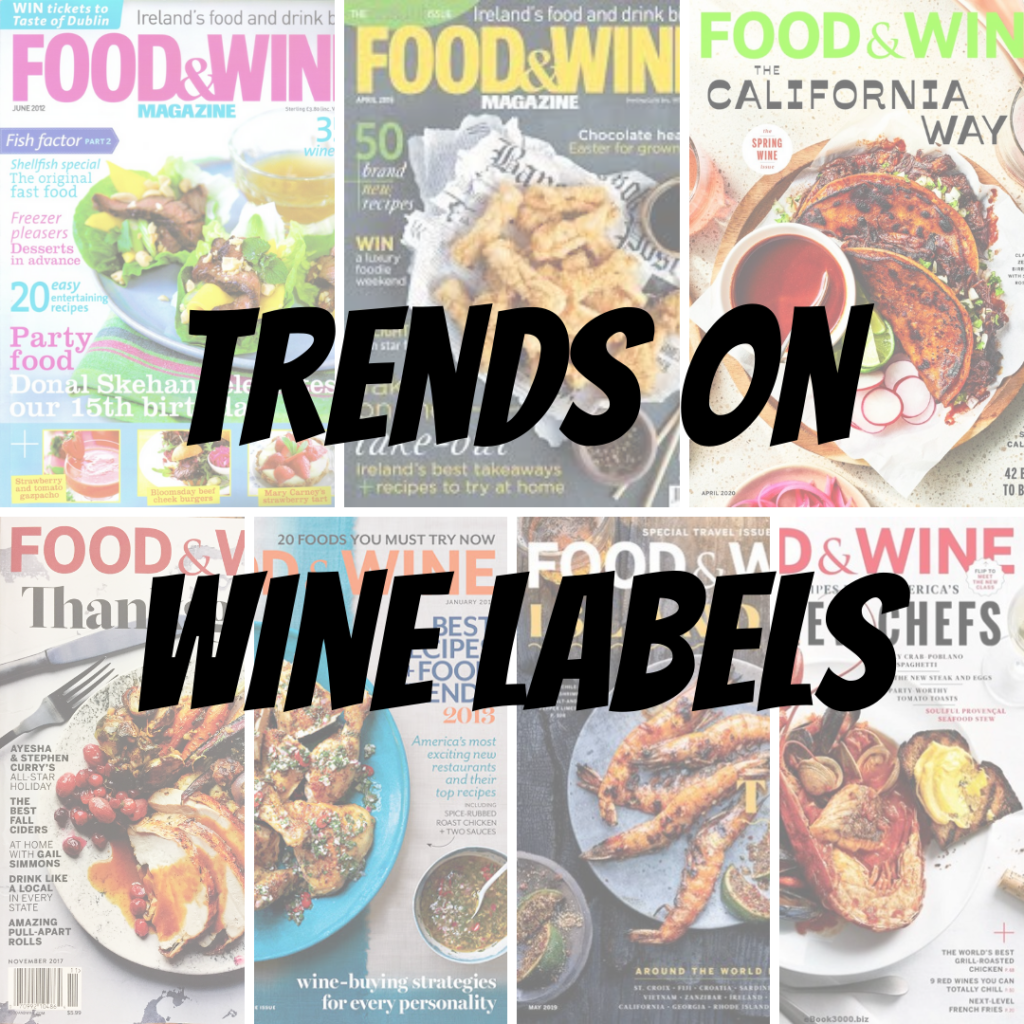
‘’A Field Guide to the Latest Trends in Wine-Label Design’’(DUTCH)

Zo omschrijft het Amerikaanse maandblad Food & Wine het boek ’99 Bottles of Wine’ van auteur David Schuemann.

Food&Wine is een Amerikaans kwaliteitsmaandblad (1978) en bevat recepten, kooktips, reisinformatie, restaurantrecensies, chef-koks interviews en combinaties van wijnen en seizoensgebonden/vakantie-inhoud. Maar terug naar de labels van flessen wijn, want wijnetiketten zijn al lang geen plaatjes van stoffige kastelen of pentekeningen van wijngaarden.

In het boek staan 99 voorbeelden van bijzondere etiketten en mooie wijnen.

Wat zijn de trends?

Volgens de schrijver meer met de hand getekend, minimaal opgezet, spetterend, broeiend, provocerend, heidens en vooral klaar voor Instagram. Uit wetenschappelijk onderzoek blijkt dat vrouwelijke wijndrinkers sneller overgaan tot een etiket met dieren erop en mannelijke wijnconsumenten sneller geneigd zijn om zich te laten verleiden tot klassieke etiketten.

Ik nam de proef op de som en ging naar Nederlands grootste supermarkt en keek mijn ogen uit! Het reusltaat zie je hieronder.

Nieuwsgiering naar het boek? Koop het via Amazon, klik hier.
Source: Food&Wine

MILLENNIAL wine drinkers emerging in MEXICO

According to Wine Intelligence Mexico is an interesting market with more millennial wine drinkers than other countries.

As the Mexican wine market continues to evolve, there is a growing opportunity for a broader range of wines, particularly with Millennial wine drinkers.

”As recently as 2016, typical Mexican wine consumers were aged around 40; today, 59% of wine consumers are now under the age of 35. This is significant because in many wine markets, the average age of consumers is climbing, reflecting ageing populations as a whole. In Mexico, an opportunity is fast opening up for wine producers and brands to connect with this emerging wine drinker group. Millennials in Mexico are enjoying building their knowledge and experience in wine, with 83% stating they have a strong interest in wine, whilst also enjoying exploring grape varieties and countries of origin’

But what kind of wines are the Mexican Millennials interested in?

”The main beneficiaries of this are producers of sweeter or more fragrant whites made from Moscato, Torrontes and Verdelho; and among reds, Tempranillo. From a source country perspective, domestically produced continues to dominate the market, and drinkers are increasingly turning away from wine from Argentina and Chile, and towards Italy and California.”

So this is most definitely a market for canned wines, spritzers, hard seltzer and millennial driven wine in general.

Source: Wine Intelligence

Wine Intelligence offers a broad range of research, insights and strategy services which help wine business make better and more profitable business decisions. Quotes are from CEO Lulie Halstead.