A journey in the new galaxy of (canned) wines! Meet your hero’s!

Gamea, Mr. Bubble, Dr. Corvinus, PJ White, Lady Blandy and the Cork Borg. These could be names for a new adventure Galaxy series!

But it is all about Italian wine! Let me tell you the story behind these wine characters and the way this brand makes it a overall experience without even sipping the wines. Amazing!

In the not too distant future, a band of unpredictable characters is ready to experience the most incredible of adventures. Will they be able to solve the mystery of the ancient wine prophecy and save the world?
Earth, year 2150. Climate change has devastated the planet, causing the extinction of 99% of plant and animal species. Much of the world’s population lives in huge city-states and is forced to eat pills and synthetic drinks in order to survive.

Dr. Corvinus, the last heir of an ancient dynasty of sommeliers, lives with his robot assistant Cork Bor. The two spend whole days among books and parchments, hoping to be able to produce wine without using grapes, which are now completely extinct. Despite their efforts, however, their every attempt fails miserably. Then they the last bottle with an imprinted text on the back of the label. These are writings dating back to more than 2000 years ago: they seem to hint at an ancient prophecy about wine.

There is a mission to accomplish and a team worthy of it is needed. Meet the team!

Gamea, the biologist who prefers plants to peopleLady Blendy, an anthropomorphic cat with some personality problems and a great talent for mechanics and … murder, and finally Pj White, a penniless thug who, by a series of coincidences, is mistaken by Cork Borg for the greatest engineer of the Earth.

The wines

All the wines are linked to the characters described above, with their own way of doing things, this is canned wines with a awesome story and it sticks! So let’s start with the white wines!

PJ White’ – Pinot Grigio Terra Siciliane IGT – 9,5%

Fresh and cool like mr PJ White himself. Fresh lemons, pears and a lot of freshness in every sip. The core of this wine makes you happy and tempt you to take another sip.

‘Gamea’ Garganegra Verona IGT – 9,5%

Known from the famous Soave area, this power grape, the Garganegra, made it in a can. We can be brief on this one, lemons and almonds. All you want from a Garganegra, job well done!

‘Dr Corvinus’ Corvina Veneto IGT11%

A famous Veneto wine in a can, lot’s of cherry and a typical Corvina nose. Nice and easy going with some herbs in the finish! Goes well with pizza in my opinion.

‘Lady Blend’ Merlot & Cabernet Sauvignon Veneto IGT10,5%

What a amazing Merlot/CS blend is this. Cherry, black plum, blueberry and with soft tannins. It really rock from the can and also in your glass. Without any doubt a wine well made and ready to go!

‘Cork Borg’ Moscato Moscato Veneto IGT – 9,5%

A real nice sparkling Moscato. I smell flowers, fruits and typical aroma of grapes. A very delicate taste, sweet with a hint of roses. Fine and very persistent bubbles.

Mr Bubble’ Glera Gera Veneto IGT – 9,5%

All that you expect from a bubbly wine from this region. Lot’s of lime, bit of pear, nice bubbles and a long after taste!

I also interviewed Alberto Buratto, one of the founders of this quest!

With whom do I have the pleasure of speaking?
I am Alberto Buratto who together with Alberto Zampini and Gabriele Stringa had the idea of creating the first Italian quality wines in cans.

Alberto Buratto with the limited editions of ZAO Amarone and Valpolicella.

What is your background in wine?
Since 1990 I have been producing wine, first in Tuscany near Siena. In 1997 I started producing a limited edition ZAO Amarone and Valpolicella. This Amarone waits 12 years after vinification before going to market. It is a vision of a wine in which the characteristics of the grapes, the aging in wood and the refinement in the bottle are enhanced. All to seek elegance.
From 1997 to 2015 with Count Paolo Marzotto I had the opportunity to create a company in Sicily with 115 hectares of organic vines.
A wonderful team of over 50 people with whom from the countryside to the cellar we have experienced classic Sicilian vines such as Nero d’Avola, Grillo, etc but also international vines such as Petit Verdot or Viognier. The successes arrived as well as the awards from Robert Parker, Wine Spectator, Tre Bicchieri Gambero Rosso etc.
In 2015 I created together with my friends Marco Bernabei, Alberto Zampini, Gabriele Stringa a new way of making wine: Ferro13.
We wanted to give life to a brand where we do not communicate the wine, the territory but we tell who we are and our emotions. All seasoned with a contemporary image.

How would you describe your wine in a can?
Our canned wines have been created thinking of a quality consumer who is looking for premium wines (€ 11 – € 20 per ml 750) and who wants to solve these problems:
– taste quality wines
– being able to buy quality at a lower cost because the quantity is one third compared to the bottle
– being able to drink well without wasting bottles unnecessarily (one cans two glasses)
– being able to store wine easily at home without taking up too much space
– have a safeguarding approach to the environment using a container that can be recycled indefinitely and drinking organic wines
– being able to bring the wine to temperature quickly
– taste two or more wines at the restaurant without having to buy the bottle.

Why are you in the canned wines industry?
Traveling and visiting wineries, restaurants and wine bars in the 5 cotinents for over 200 days a year for over 20 years I had seen various attempts at wines in cans.
I have tasted many and some of them had impressed me in a particular way.
We started talking about it with my partners (on 2013)  even before creating our other company Ferro13, but then we thought it was too premature.
Last year, thanks to the reflections of the first lockdowns, we decided to create a cellar dedicated exclusively to quality wine in cans.

How do you see the future of canned wines?
I believe it is a future of great evolution.
Consumption has changed and we are all more attentive to quality at 360 degrees.
Preconceptions we had have fallen, who would have thought for example that within 24 months students under 10 would have studied with computers, or that digital purchases had these increases, or that electronic money would exceed cash payments?

I too was reluctant to drink canned wine …I believe more and more there will be quality companies that will offer quality wines and therefore the consumer will have the opportunity to have fun and discover a different way of consuming wine.

When we thought of canned wine, we thought of 2150, when life will have changed a lot.
We have created characters that will help us bring Italian quality wine to the next generations.

Thank you very much for your time Alberto, it was my pleasure!

Rueda – Grupo Yllera

Veelzijdig, autentiek meer dan alleen Verdejo!

Enige tijd geleden had ik een goed gesprek met Andreea Irimia Export Manager Europa van Bodegas Grupo Yllera

Dit wijnhuis uit Rueda maakt meer dan alleen maar Verdejo, veel meer en ik mocht het een en ander proeven.

Voor de oorsprong van gaan we terug naar de jaren zeventig van de vorige eeuw. De familie Yllera stond aan de wieg van een beroemde pionierswijn (Cantosan), gemaakt van de, nu zo immens beroemde, Verdejo druif. Vanaf dat moment begon de wijnwereld rond het dorpje Rueda te floreren. We zijn dus aangeland in één van de uniekste wijngebieden van Spanje, Rueda dus!

Dit wijngebied ligt ten noordwesten van Madrid, in de luwte van de bergketen Sierra de Gredos. Met een omvang van bijna 13.000 ha. en een continentaal koel klimaat is dit gebied het walhalla voor de vlaggenschip druif, de Verdejo.

Binnen het wijnbedrijf wordt er naast Rueda gebruik gemaakt van andere wijngaarden in meerdere ‘’Denominación de Origen’’ zoals Ribera del Duero, Toro en Rioja. Men heeft 100ha in eigen bezig en maakt voor de overige productie van de kwaliteitswijnen gebruik van lange termijn contracten met andere wijnboeren (D.O. Rueda, 300 Ha in Toro, 150 Ha in Ribera del Duero and 80 Ha in Cigales). Om in dit gehele proces de kwalijk te waarborgen heeft men bij Yllera een eigen ‘technical department’ en een team welke zeer regelmatig de wijngaarden bezoek om de kwaliteit te controleren. Het wijnbedrijf is uitgerust met ‘state-of-the-art’ technologie. Denk aan temperatuur gecontroleerde tanks van 6 miljoen (!) liter, klimaat gestuurde ruimtes, laboratoria faciliteiten voor diverse tests op kwaliteit en geavanceerde ruimte met meer dan 5.000 vaten (Frans en Amerikaans eiken).

De verdejo druif is hier natuurlijk heer en meester, maar Rueda heeft zoveel meer te bieden.

Ik proefde voor Yllera de volgende wijnen;

Boada Rueda

De samenstelling van deze wijn is Verdejo, Sauvignon Blanc en Chardonnay. De inheemse frisheid wordt bijgestaan door internationale ‘grootheden’voor meer zuurbalans en fruitigheid.

Helder licht citroen van kleur met groene schitteringen. Citrus fruit afgewisseld met aroma’s van steenfruit en tikje tropisch. Citroen, beetje lemon, groene rinse appels, tikje perzik, stukje meloen in afwisseling met iets wat van witte bloemen. Het samenspel van de verschillende druiven is mooi proefbaar door de afwisseling van fris en rijp fruit. Een schitterende zuurbalans tussen de fluit aroma’s en de aanwezige zuren. De Verdejo zorgt uiteindelijk voor het ultieme evenwicht door middel van structuur en elegantie. De afdronk is fris, vol en houdt de energieke zuren goed in balans.

Cantosán Brut – mousserende wijn uit D.O. Rueda

Zelf was ik totaal niet bekend met het feit dat men in Rueda ook bubbels maken. Deze mousserende wijn is gemaakt van 100% Verdejo (hoe kan het ook anders) en via de ‘Traditionele Methode’, zoals ook in de Champagne steek toegepast. Na het handmatig oogsten en selecteren van de beste druiven, wordt alleen het ‘sap’ van de eerste persing gebruikt. Hiervoor gebruikt men een zogenaamde pneumatische pers, een op luchtdruk werkende pers, welke zeer nauwkeurig en zacht de druiven perst. Het fermentatieproces gebeurd in roestvrijstalen tanks op een gecontroleerde temperatuur van 17 ºC.

Cantosán Brut Espumosos - Bodegas Grupo Yllera

Na de fermentatie gaat de wijn op fles, maar niet zonder er een traditioneel een mengsel van gist en suiker aan toe te voegen, het alom bekende ‘dosage’(ook wel bekend als liqueur de tirage). Via een kroonkurk wordt de fles afgesloten en begint de flesrijping met de befaamde tweede gisting op fles, afsluitend volgt het dégorgement (het verwijderen van o.a. de vaste elementen van het gist). Het hele proces wordt beklonken toevoeging van Liqueur d’expédition en door een afsluiting met de kurk en de muilkorf bevestiging voor de druk ad 6 BAR, de muselet.

Helder in het glas met een stro gele kleur, fijne vonkelende parelende bubbels, lichte aroma’s van citrusfruit zoals citroenen en limoenen, tikje appelig (voornamelijk groen) met het hele berg aan afwisselende hints van toast, vettig mondgevoel, iets wat notige smaak als walnoten en amandelen. Duidelijk een complexe wijn met schitterende gelaagdheid en balans tussen fruit en zuren, de finale is lang en elegant. Een bewijs dat mousserende wijn uit dit deel van Spanje, prima op kan tegen de Cava wijnen.

Yllera 5.5 Verdejo Frizzante – Millennials here we go!

Dit is een bijzonder stukje vakwerk en een geweldige wijn voor de ‘’New Age wine drinkers’’ !

Echt een wijn gemaakt om te genieten zonder de calorieën uit ‘traditionele’ wijnen, een gelegenheid drank bij uitstek voor in het park, op de boot of lekker op het terras met vrienden.

Hoe wordt het gemaakt? Door ’s nachts te oogsten blijven de druiven uiterst vers en sappig. Het persen gebeurd zeer nauwkeurig. Voor de fermentatie past men nog een methode toe om extra geur- en smaakstoffen vrij te laten komen uit de schil, genaamd ‘maceration pellicular’. Daarna volgt de fermentatie, welke gebeurd onder strikte controle op zeer lage temperatuur van slechts 3 ºC (!!) tot de wijn een alcoholpercentage bereikt heeft van slechts 5,5%. De wijn blijft vervolgens nog een tijd op staal en wordt koud gestabiliseerd, daarna gaat het de fles in.

Yllera 5.5 Verdejo Frizzante Sparkling White Wine At The Best Price Buy  Cheap And With Discount

De wijn zit in een gematteerde fles, de wijn oogt net zo geel als limoncello! Zuiver, fris en geurt naar groene appels en tropisch fruit. In de smaak nogmaals de groene appels, maar ook ananas en frisse citroenen. De fruitigheid is goed in balans met de aanwezige zuren, wat de wijn de gewenste frisheid geeft.

De lichte, aangename, bubbel wordt veroorzaakt door de gedeeltelijke fermentatie.

Leuke wijn voor toekomst en ook fijn dat er slechts 5,5% alcohol in zit, kan je nog eens een verfrissend glaasje extra nemen zonder kop zorgen!

Yllera Vendimia Seleccionada

Yllera Vendimia Seleccionada 2015

Bijzonder te vermelden is dat deze wijn opgevoed wordt in eiken vaten van meer dan 40 jaar oud voor een periode van 24 maanden.

Gemiddeld robijn rood, gul, rijk, rond, elegant, complex rijp donker fruit, kruidig, bosbes, braam, klein dropje, rijpe zwarte bosvruchten, een vleugje vanille, mooie rijpe tannine met lange finale.

Pepe Yllera – Ribera del Duero

Pepe Yllera D.O. Ribera del Duero - Bodegas Grupo Yllera

Ter afsluting proefde ik een wijn van dit wijnbedrijf uit een andere steek dan Rueda, namelijk Ribera del Duero.

Dit bijzondere wijngebied ligt omringd door een ring van bergen, waardoor de invloeden van de Golf van Biskaje geen invloed hebben op de druiven. Het gebied kent dan ook korte, hete, droge zomers en ongelooflijk koude winters. De wijngaarden liggen op ruim 850 meter, het hoogste van de Spaanse Hoogvlakte. Deze omstandigheden zorgen voor schitterde wijnen met mooie frisse zuren en het behoud van fruitsmaken.

100% Tempranillo afkomstig van de D.O. Ribera del Duero, met wijnstokken tussen de dertig en veertig jaar oud. Na een rijping van zes maanden op eiken gaat de wijn nog eens voor minsten 6 maanden op fles voor ideale rijping.

Gemiddeld robijn rood, rijk aan donker fruit zoals bosbes en braam. Het woord wat bij deze wijn direct opkomt is, ZWOEL! Tikje laurierblad, zwarte bosvruchten, subtiel stukje vanille stokje en mooie zachte tannine in de lange afronk.

Not all millennials are the same, a profile of five different types of ‘new age drinkers’

A few weeks ago I published an article called ‘Ready-to-drink category will soon overtake wine in the US’. In this article I emphasized the sky rocking growth, +130% in one year, of RTD beverages like pre-mix cocktails, wine in a can, Hard Spritzers and Seltzers. And the forecast that these products will soon outrun wine in a total segment in the US.

Framed on the new age drinkers, the millennials, the adult beverage industry need to change or adjust their way of thinking, production lines, marketing mindset, transport/warehousing, (social) media plans and many more things.

Generally millennials don’t go for a product, they want a whole experience. Brands need to be reconcilable with a true story behind it, also the discover new things, interact & connect with friends and see that ‘marketing with meaning’ really works. Use goes before possession and entertainment and easy digital app use is key to succes.

If we look outside the wine business, we see that national and international brands like Airbnb, Uber, Swapfiets, Netflix, Hello Fresh and Go Sharing are focused on using a place to stay, taxi, bike, on-demand content, healthy meal boxes or electric scooters. Its all about service, easy of use, environmental focus, app based and marketing with a meaning and experience to share with friends!

Other ‘millennial driven’ brand like Starbucks, Converse, Nintendo and Apple are creative in their product range, authentic in their marketing and have a solid long-lasting story behind their brands.

Generally looking within the traditional adult beverage industry, marketing is top down driven and brand are ‘premium’ or high in value due to name and price level of the past years. Why is wine from Burgundy the best in France? Is it because my father always drunk it and the wine companies have famous names? Or is that just from a perspective of older generations?

What about millennials? Do all millennials think the same? You could guess the answer, not they do not. If you what to characterize this generation – roughly born between1981 and 1996, give or take a year or two – you can distinguish five groups with a special market segmentation model.

Segmentation by model Glocalities

The Glocalities model, which has been in existence since 2014, provides insight into the values ​​of daily life, cultures, preferences and consumer behavior of residents from 27 countries. Let’s take a quick look at the segmentation groups and see what their preferences are.

Socializers (10%)

Socializers are very family oriented, they love to spend time with their loved ones. They enjoy the little things in life and are generally unambitious. Socializers will take as few risks as possible, because they want a quiet and harmonious life. They do like to consume, but not necessarily luxury products. The Socializers are not brand sensitive. Socializers are less internationally oriented.

Conservatives (15%)

This are the ‘old school’ millennials, they are properly first time millennials (early 80s) who care about norms and values ​​and form the bridge between their own generation and the previous one. Have really grown up with the upcoming of the internet, computers were large and expensive and have learned what digitization is. Conservatives are family-oriented. They also attach great importance to religion and/or traditions. They want to live a meaningful life with their loved ones around them. They have a great sense of national pride and are also concerned about global problems, such as environmental pollution. Conservatives don’t like to take risks. Consuming is not important to them, they attach more value to simple things. They have strong opinions about all sorts of things.

Achievers (20%)

Achievers are very focused on professional success and status. This can be seen in the luxury products that this group consumes. Achievers want to be noticed by others, recognized and preferably seen as a role model. They are positive in life. For Achievers it is relatively important to improve their social status. Career and money are important here. They are very driven. Success makes this target group happy. However, family and relationships with others is very important to the Achievers. They find it important to help others and therefore do their best to make a difference to society.

Creatives (25%)

Creatives can be described as open-minded global citizens. They are open to different cultures and different roles based on gender. Equality is something the Creatives find important and strive for. The Creatives find it important to have good relationships with others. They can easily move in someone his/her situation. For the Creatives, career and money are less important. They prefer to go for new experiences that enrich their lives. Sustainability and “global issues” are very important themes. They are environmentally conscious and contribute to a sustainable and better world. They are also characterized by trying new things.

Challengers (30%)

Challengers love to consume and like to stay on top of the latest trends. Money and career are important to this group, it brings them to a lifestyle that they envision. In this way they like to get recognition from others. Challengers are slightly more individualistic and thus less family oriented than other target groups.

Are you born between 1981 and 1996? Which type of millennial are you? Or a bit of all five?

A unique international wine competition focusing on Merlot and/or Cabernet and their crossings

Please click here for more information on how to enter.

For more than 15 years now, a special wine competition has been organized in and around the northern Italian city of Bergamo.

‘Emozioni dal Mondo Merlot e Cabernet Insieme’ – translated as ‘Emotions of the world Merlot and Cabernet together’. So all the wines are mono-cepages or blends of the world famous almost inseparable duo Merlot and Cabernet (with some Cabernet Franc). The competition has been lawfully recognized by OIV (Organisation International de la Vigne et du Vin) since its very first edition and uses the 100 points method.

Over the year many wineries send in there wines and it is without question that the entrees are coming from countries all over the world like Argentina, Australia, Austria, Brazil, Croatia, France, Germany, Italia, Moldova, Romania, Servia and Slovenia.

The competition has got the following categories, in which wineries can apply;

Still dry wines, sparkling wines and sweet and liqueur wines all of Merlot and/or Cabernet or crossings of Merlot and/or Cabernet Sauvignon or Cabernet Franc

All wine should be with a Protected Designation of Origin (PDO) and Protected Geographical Indication (PGI) mark if produced in the European Union (EU) and wines with a Geographical Indication (GI) mark if produced in Extra European Countries, where applicable.

And very important is that wine should have a minimum percentage content of 60%. the presence of only one or both the above-mentioned varieties.

Last year there was an adapted version due to the ongoing corona, but the organization is full of hope to hold a 100% version again in October with jury members from counties like Japan, Italia, France, Austria, Germany, Moldova, US, UK and The Netherlands.

2020 edition

Are you a wineries with wines of Merlot and/or Cabernet or crossings of Merlot and/or Cabernet Sauvignon or Cabernet Franc and do you want to be a part of this competition? Please enter your wines and all relevant documents before September 30th 2021.

Please click here for more information on how to enter.

Deep(er) drive into RTD cocktails, a bit of field research

Alcoholic ”Ready-to-drink products”, also known as RTD for short, are popping up in every corner and sales are sky high. From rum/cola, to voda/juice the orange and of course wine or grape juice based drinks in a can. But the real RTD drinker is looking for hip labels, low alcohol, cheerful and quick to drink with friends, always and everywhere!

In the last couple of years we have seen the rise of the big brand with gin, rum and other mix drinks. Let’s share a few examples;

Taylor’s Port and tonic in a can

Taylor’s ‘Chip Dry’ and Tonic has the good taste of dry white Port, a smooth dry freshness with hints almond, honey, figs and dried white fruit, 5.5% abv in a 250ml can. more on this can and brand very soon in a separated article!

New Bacardi cocktails named Bahama Mama, Mojito, and Sunset Punch. 

Bacardí's New Canned Cocktails Come in Bahama Mama, Mojito, and Sunset Punch  Flavors

Quality rum mixed with fruity notes of orange, red berries, and pineapple. Zesty lime and mint, and tangy bloody orange, lemon, and ginger flavor notes. 5.9% abv in a 355ml can.

Captain Morgan Orginal Spices en Cola

Captain Morgan's Spiced Caribbean Gold Rum Spi ... | prices, stores,  tasting notes and market data

Notes of rich vanilla, warming spice and hints of oak balanced perfectly with cola this Spiced Caribbean ‘Gold’ with 5% abv in a 250ml can.

Bombay Dry gin & tonic

Een afbeelding van Bombay Dry gin & tonic

Complex flavors, yet subtle character. Light floral taste of a nice dry gin & tonic with 7% abv in a 250ml can.

What about supermarket and their own brands?

As for the mix drink range (also called pre-mix) here is a lot on the shelfs these days. And then there are the supermarkets who have their own brand coming, like the German discounter Lidl with a range of pre-mix cocktails.

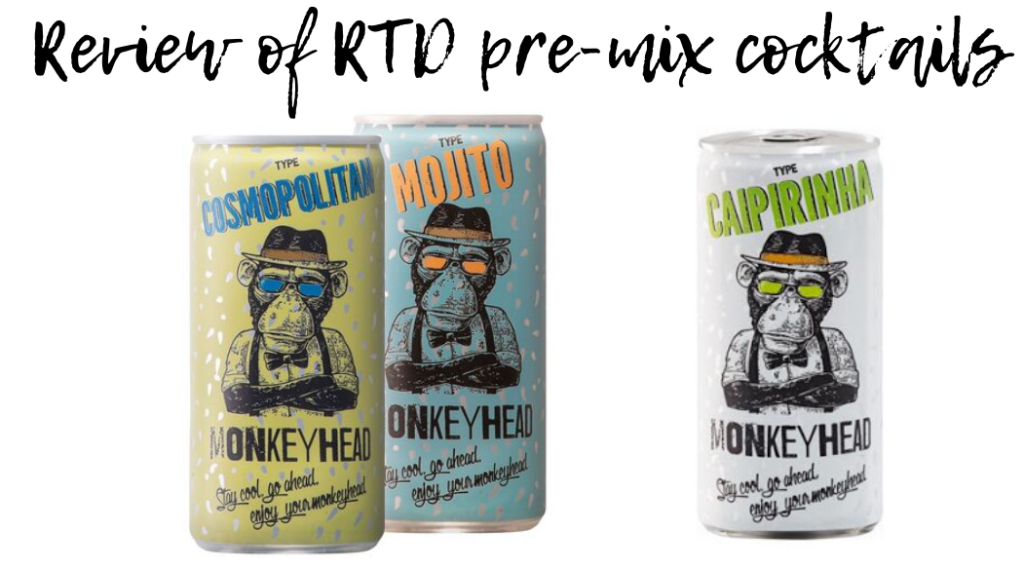
Monkeyhead – Cosmopolitan cocktail with vodka, cranberry juice, lime juice and triple sec, e.g. Cointreau. Refreshing, softer on the vodka than expected, the triple sec disappears slightly in the taste of cranberry, but doable for the ready-made pre-mix cocktail, 6,9% abv 200ml can.

Monkeyhead – Mojito cocktail made with rum, lime juice, cane sugar, sparkling water and mint with lots of ice. And this last ingredient is always a missed opportunity with a pre-mix Mojito. This beverage in a can is fresh, little bit over the top on the can sugar but quite ‘minty’ in the finish. But for a great experience, put in a fresh mint leaf, 6,9% abv 200ml can.

Monkeyhead Caipirinha cocktail made of lemons, cachaça rum, ice and cane sugar. This pre-mix cocktail is incredibly fresh, it tastes like freshly squeezed limes, while the rum remains soft in taste. Of course that sweetness again, but you imagine yourself at the Copacabana in Rio de Janeiro! 6,9% abv 200ml can.

My final conclusion? This RTD segment is one segment to keep an eye on for sure. There will be more and more in this range in the near future, which will promote competition and therefore improve quality. A new revolution is on his way, or already there?!

Zangeressen Ashley Roberts & Kimberly Wyatt van ‘The Pussycat Dolls’ zetten in de VS & UK een hard seltzer op de markt, wie volgt?

De hard seltzer pakt ook in Nederland steeds meer terrein. Waar ging het ook alweer om? Allerlei bruisende fruit drankjes in een blikje met een laag alcoholgehalte. Handzaam, fris, fruitig, laag in calorieën, geen toegevoegde suikers, natuurlijke ingrediënten en goed geprijsd!

Grote merken als Coca Cola, Heineken en Grolsch hebben inmiddels al stelling genomen door hun eigen merken te lanceren. In een rap tempo gaat de strijd om de portemonnee van de millennial door en tevens komen er steeds meer (inter) nationale merken beschikbaar in Nederland.

Binnenkort zal ik een meer publiceren over de hard seltzer in Nederland, reviews van diverse merken met smaken als framboos, mango, citroen, lemoen en nog veel meer! Daarnaast ben ik volop bezig met een samenwerking in Noord Amerika waar later meer over volgt!

De hype lijkt door covid over te slaan naar een vaste waarde in het drank schap. De weg omhoog van dit ‘gezondere’ alcoholhoudende drankje lijkt geen einde te kennen.

Net als in de wijnwereld krijgen ook steeds meer ‘bekendheden’ lucht van deze ontwikkeling.

Zo ook Ashley Roberts en Kimberly Wyatt van The Pussycat Dolls. Deze dames zetten in de VS en UK een hard seltzer op de markt, wie volgt?

Je leest het hele artikel op thespiritsbusiness.com

Source: the spirits business

Time 2Wine! De 1e kwaliteitswijn in een blikje in Nederland

Al enige tijd ben ik bezig met ‘canned wine’ in goed Nederlands wijn in een blikje genaamd. Een ontwikkeling welke via de VS en het VK langzaam is doorgesijpeld naar het Europese vaste land. Als ambassadeur van dit product schreef ik de afgelopen maanden al meerdere artikelen en nam ik diverse interviews af met veel buitenlandse spelers in de wereld van het wijnblikje. Voor de International Canned Wine Competition in Californië ben ik Internationaal ambassadeur voor contacten met producenten en werf ik nieuwe sponsoren. Hierdoor heb ik contacten met de internationale spelers in deze markt. Van blikjes met rode Bordeaux en Cru de Beaujolais, tot aan sappige Zinfandel uit Californië, diverse frisse bubbels uit Italië, vol rood en verwikkeld wit uit Spanje en niet te vergeten de authentieke wijnen uit Portugal passeerde mijn proeftafel!

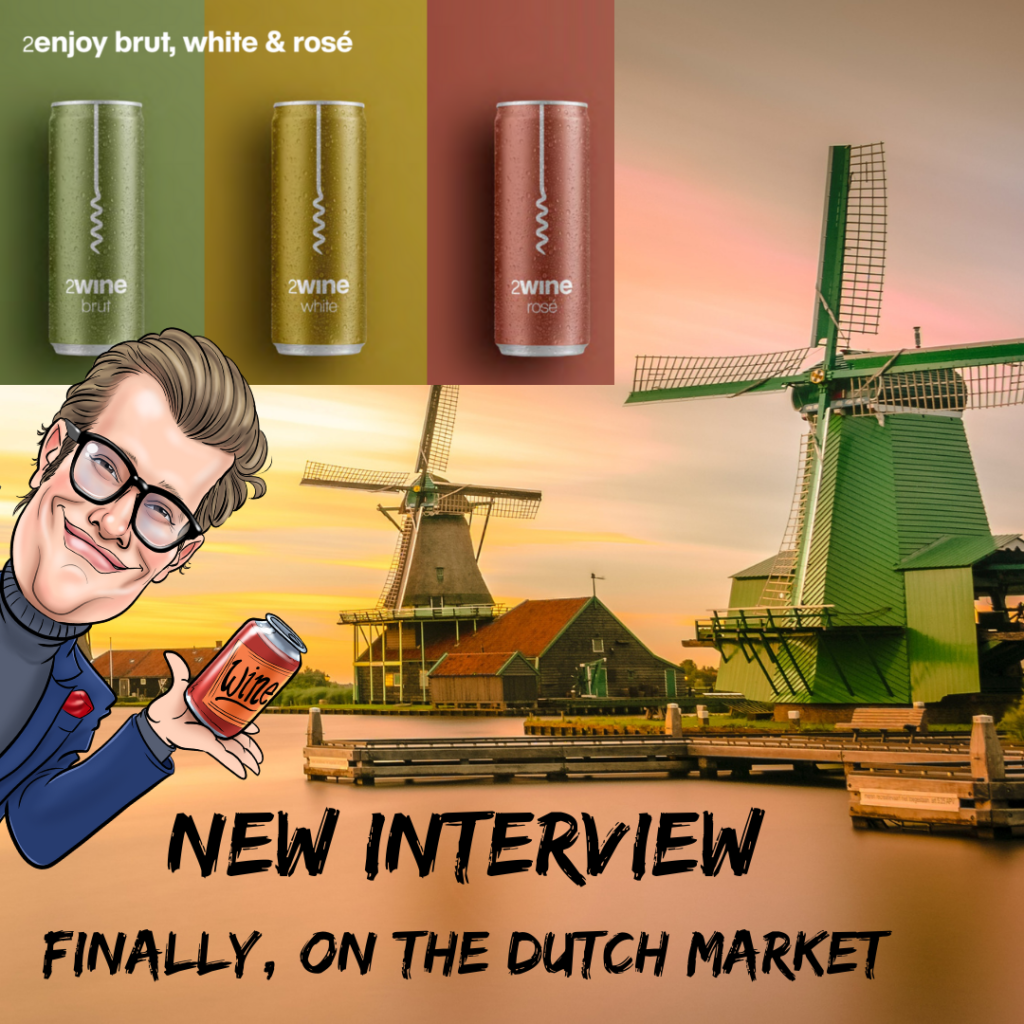
En nu is het eindelijk zo ver, een Nederlands merk, 2Wine, lanceert drie wijnen, ik sprak oprichter Wim Lochtenberg.

Leuk je te e-ontmoeten Wim, wat is je achtergrond in wijn?

Ik ben onder andere een biologische wijnboer op Mallorca en eigenaar van het Ecologische landgoed, Can Gelat Ecological Estate, en woon afwisselend in Nederland en Mallorca.

Dat klinkt erg intressant en afwisselend, wat doet een bio wijnmaker in de ‘canned wine’ markt?

De entree om ook met wijn in blik te starten is onder meer om de millennial een makkelijker entree te geven in wijn, met name op momenten dat er geen wijn in het formaat en medium beschikbaar is dat past en qua duurzaamheid verantwoord is. Blik heeft daarin vele voordelen (klik hier)

De naam 2Wine geeft duidelijk aan wat de inhoud van het blikje bevat en zegt wat je er mee wil. Als werkwoord, lekker wijnen met elkaar. Op momenten die het past. 2Gether, 2Celebrate, 2Party, 2Share en dus ook 2wine!

Een andere reden is, dat wij van mening zijn dat de merken die zich op de Europese markt begeven, onvoldoende kwaliteitsbeleving ten toon spreiden. De wijn is onvoldoende van kwaliteit en geeft het de consument mogelijk niet het juiste beeld van wat wijn in blik ook is. Ik zie in de USA serieuze producenten prima wijn ‘cannen’. Met kwaliteit bedoel ik niet zozeer complex. Wijn die je drinkt bij een kerstdiner of mijmerend voor een open haardvuur.

Maar wel wijn die zuiver is, de juiste aroma’s bevat, die in balans is met fruit en zuren. Gewoon lekker drinkbaar, voor het gekozen veelal ‘on the go moment’. En zowel vanuit het blikje als uit het glas lekker drinkt, net zoals je het zelf wil of uitkomt.

Helder en herkenbaar verhaal, de Internationale markt groeit enorm maar door en steeds meer merken komen met een divers aanbod aan wijnen in blik.

Hoe zie jij de toekomst voor dit segment voor je?

De toekomst van wijn in blik vraagt mogelijk geduld, vooral in een markt als de Nederlandse. We merken onbekendheid met het product wijn in blik. Vandaar de focus op millennials, die vanwege de hype van seltzers en speciaal bieren al meer aan het medium blik gewend zijn.

Ons design is daarop gebaseerd. Stijlvol. Een blikje om mee gezien te worden en zelfs een beetje van te houden. Een design passend in deze tijd, maar ook tijdloos! Een mooi tegenwicht tegen de (te) drukke of klassieke ontwerpen die gangbaar zijn om op te willen vallen, of te veel de klassieke wijnwereld willen nabootsen.

Hoe zou u uw wijn in een blikje omschrijven?

Dat laat ik liever aan jou over, gelet op je specialisme. Proef de wijnen zelf!

2Wine Brut

Deze mousserende frizzante’’ komt uit het Noordoosten van Italië uit de regio Veneto.  De bubbels is  fris en licht en blijft goed bewaard zowel in als uit het blikje. De wijn is een blend van Glera met Chardonnay en Verduzzo.

De Glera is de officiële druif voor de Prosecco wijn, de Chardonnay kennen we als globetrotter en in deze wijn zorgt de druif voor meer structuur en de laatste druif, de Verduzzo, verdient wat meer uitleg. Deze druif komt voornamelijk voor in de regio Friuli-Venezia Giulia, alwaar de druif vaak wordt ingedroogd om dessert wijnen te maken met complexe aroma’s als noten en honing. Dat is hier natuurlijk totaal niet aan de orde. Hier zorgt de Verduzzo voor bloemige aroma’s afgewisseld met verse citroenen, groene appeltjes en heeft de wijn een vrolijk karakter met een frisse afdronk. Een mooi gemaakte wijn voor op het terras of de boot of gewoon lekker in de tuin. Brut bruist immers altijd zeggen ze bij 2wine.

2wine rosé

Als het zomer is past daar ook een koud blikje rose wijn bij. Deze rosé is gemaakt van een blend van Merlot en Cabernet Sauvignon druiven en komt uit het gebied IGP Atlantique, net boven Bordeaux. De wijn is fruitig, stevig en heeft een kruidige bite met een klein zoetje in de afdronk.

2Wine Wit

Altijd prettig om een frisse Sauvignon Blanc te proeven uit een blikje. De druif gedijt het beste zonder al te veel invloed van zuurstof om zo fris mogelijk te blijven. Daarom is het een goede prestatie om dit goed in en vervolgens weer uit een blikje te krijgen. De druiven staan aangeplant in de Côtes de Duras, nabij Monbazillac in de wijnregio Sud Ouest.

Tijdens het proeven klonk er de volgende opmerking ‘’zo dat is nog eens een Sauvignon Blanc neus zeg’’ en dat is ook de kracht van de wijn. Op en top Sauvignon Blanc. Groene appels, citroenen, frisse zuren en een afdronk waar je wederom een lach op je gezicht van krijgt. Een perfecte borrel- en picknickwijn , ideaal voor in het park of gewoon lekker thuis in de tuin.

De wijnen zijn te koop bij Albert Heijn.