A journey through Catalunya with well-known and unique grape varieties

“Over 1,000 years of history”

4×4 trail around the vineyards!

The vineyards are located in Catalunya, just an hour drive from Barcelona. In the countryside of the northside of Spain. Were some people run a winery, this was not enough for the ambitioned Heretat family. They run a true ‘experience center’ on the 600-hectare estate, the vineyards make up 55 hectares.

4×4 trail around the vineyards!

You can take breakfast in the vineyards, go more active and do a bike, a buggy or even a 4×4 trail around the vineyards. Or take a swing at the golf course, play a game of padel tennis, roll in the sand during a game of beach volleyball or take a dive in the pool! After a day of enjoying the surroundings you can have a great diner at the quality restaurant or sleep at the eco-hotel. Concerning the vineyards, At Oller del Mas they have chosen to produce our wine organically and have been certified by the Catalan Council for Ecological Agrarian Production (CCPAE).

Hotel with pool

History of Heretat Oller del Mas

So let get more into the history of this fasination family.  Heretat Oller del Mas has more than 1,000 years (36 generation) of history. Surrounding the mediaeval castle that dates back to the 10th century and was completely restored from 1981 to 2008.The place exudes the captivating history of the Oller family: knights, noblemen, leaders, religious men and master craftsmen, who have left their mark on the country’s history.

The wine made in this part of Catalunya

Oller del Mas forms part of the Designation of Origin Pla de Bages, a beautiful area set near the mountains of Montserrat and the Parc Natural de Sant Llorenç de Munt i l’Obac. The soils in the area can be differed in two, the first is the central part of Pla de Bages, with with clay and marl soils at an altitude of 200 m above sea level.

The second type of soil in this area is called Alt Bages, where marl and lime bearing soils with a high carbonate content are present, at an altitude of 500 m above sea level. The climate can be classified as Mediterranean with strong continental influences due to its inland location quite far from the sea.

Within this area there are several grape varieties allowed. Next to the well-known international varieties there are also native varieties available. At Heretat Oller del Mas they have some amazing wines with those varieties, see here below.

Varieties used

The wines

Within my tasting I had the privilege to taste a whole range of the wines made at the winery.

Bernat Oller Blanc de Picapolls 2019 (91 Parker points)

A blend of Picapoll white and Picapoll red and named a so-called ‘Blanc de Picapolls’. The wine is partially fermented in French oak and acacia barrels. Why use acacia barrels? It gives a lot rounder and creamier feel, less dominant then oak, and acacia has an unusual, very distinctive, lemony-herb aroma. It is ideal for grapes with softer aromas, which will not be ”exceeded” by the dominant wood aromas. After the fermentation the wine is put on the lees for 6 months for more creamy texture.

Tasting notes

‘’A clear wine with a straw yellow color with golden reflections, that attract you to take your first sip. An intense nose does a good effort to unlock the full fruitiness of this wine, think of peach, pear and a hint of a creamy lemon curt.  On the palate, the wine well-structured with a well-balanced acidity in line with the creaminess, hint of spice and the central core of fruit. A wine with plenty more to discover and with a silky aftertaste.’’

Bernat Oller negre 2018 (91 Parker points)

This wine is made as a blend of Merlot, Syrah, Picapoll red and Picapoll white. A thing to mention is that this wine is fermented with a wild yeast. After the fermentation the wine is aged in different French barrels for minimum 8 months and has a total aging period of 15 months.

Tasting notes

‘’A clear ruby red color with aromas of red and dark fruit like red cherry, blackberry, bramble, black plum and a hint of white pepper. The hints of toast and vanilla are resulting from the use of wild yeast and the aging in soft French oak. The wine is multilayered with plenty of tannins and a comfortable long finish.’’

In the cellar

Càndia 2018

The first thing you notice about this wine is the well-designed informative front label. The bottling date, bottle number, parcel, maturation method, laboratory measurements and the course of the temperature over the months are stated on it! Ingenious and very well done!

This wine consists of the varieties of Garnatxa, Sumoll (native grape from the Penedès region), Samsó (local name of Carignan) and Syrah. The winemaker decided to do a fermentation of 20 days with its own yeast and let the skins in the tank for almost a month. This will create more color, tannins and dept in the wine.

A full plan of aging was developed which stated with 5 months in French oak barrels, then 6 months in cement egg and at the end 6 months in bottle in the cellar for final development of aromas.

Tasting notes

‘’The wine has a color between ruby and garnet and at the nose it is intense with floral and small berry aromas. On the palate we have cherry, blueberry and blackcurrant. Nice tannins are present and introducing a core of spiciness, little bit of toast and herbs, which strikes the right balance with the other flavor features.’’

Els Flautats 2018

With only 810 bottles produced we have entered the ‘experimental-wine department’ of Heretat Oller del Mas. The grape variety is Mandó, which is a synonym for the indigenous Spanish red wine grape called Garró, which is in danger of extinction. But not at Heretat Oller del Mas, they make a wine that is made on a ‘Body armored’ Beaujolais way!

It all starts with harvesting by hand and start a 10-day semi-carbonic maceration and to start up a spontaneous fermentation, afterwards the grape juice aged on the lees for 5 months and is bottled without any form of filtration to keep the natural characteristics! The period of bottle aging is at least 12 months.

Tasting notes

‘’Without any doubt you can see the comparison with a Gamay / Beaujolais ruby tinted wine, extraordinary color. The aroma’s that are started to hit your ‘odor sensors’ are a clean mix of fruitiness and freshness. Exciting and suppleness are word that describe this wines nose in full. An explosion of fruit also texture from the lees with a yogurt hint. Absolutely a wine that has flavors that attract and are vivid in the finish.’’

Arnau Oller 2016

Arnau Oller Estate Wine is an expression of a region where the natural environment plays a leading role.

The blend consists of 90% Merlot and 10% Piquepoul Noir. During the winemaking process the winemaker uses native yeast and is pumping over the juice twice a day. An important fact is that the tanks are drained without any pressing of the grapes to preserve quality. The aging of the wines is for a period of 12 months in new 500-liter French oak barrels – the so-called Puncheon – and finally the wines age for 12 months on bottle finished with a natural Catalan cork.

Tasting notes

‘’Dark red colored wine with a fragrant nose of black fruit and flsoral notes. On the palate the fruit and the herbs make their return in a great way. A full body wine which multilayered flavors. With every sip the wine is more interesting and the complex, smooth and subtle characteristic are getting your attention along the way. All the aromas are well balanced, dried dark fruit like cherries and plums are in full harmony with hints of rosemary, lavender and thyme. In the finish there is a subtle hint of licorice’’

‘’At the Older they sum it up as ‘a high quality, noble and complex wine’, and I can only agree on that!’’

Oller del Mas Especial Picapoll negre 2017 no.0543

With this wine we are in the ‘Champions League’ of the estate. Only the most value grapes of the highest quality are selected for these wines. Only 2.077 bottles are made, and I had the privilege to taste no.0543. The winemaker only used the native Pica poll red grape for this premium wine. Carefully handpicked grapes are selected in the vineyards and at fermentation the winemaker uses a natural yeast and carries out an open pumped over method, when alcoholic fermentation started. He closes the tanks at the end. All for a higher value of taste experience. At the end they use French oak barrels (500 liters) to mature the wines for a period of 9 months.

Tasting notes

‘’The winemaker succeeded in making a wine that reflects the authentic terroir of the Pal de Bages area. The aromas of the native Picapoll red variety are well integrated with the acidity and the aging in the French oak barrels. Blackberry, bramble, cherry, raspberry and also some flowery hints, herbs and spices (like pepper and cinnamon with earthy hints and a vanilla) touch in the finish. A delicate wine with complex and harmony as a backbone. Accessible flavors that linger and the wine has a friendly aftertaste that last long.’’

But there is more!

Did you know that 5 years ago the team of Older del Mas started a completely different project? A venture called Celler Bellaserra, that give the opportunity for the team to own their own company and create a concept to make great wines at another price rate and with own idea.

They just `began starting to make natural wines also…to be continued!

This article has been realized through the cooperation from FRANK MARGENAT, CEO & owner.

Frank (47) was born in Barcelona studied Economics in the IQS (Chemical Institute of Barcelona), later studied a grade of enology and wine marketing in Vilafranca del Penedes (Barcelona). Next of being the CEO of Oller del Mas and Celler de Bellaserra he is active in touristic apparments and real state and is recently become President of the Catalunya Wine Tourism Association.

FRANK MARGENAT

‘’At a moment I decide to increase the experience of our visitors, we have a golf course, a restaurant, a gym, swimming pools, paddle tennis, a horse riding but we needed something that we hadn’t, some cabins inside the forest to give the opportunity of any wine lover to enjoy our environment and the best views of Montserrat mountain that you can see, and its peace. 22 cabins are going to open next month of June 2021. With all our knowledge and experience I think I can do something for my country, to create the Wine Tourism association, Cataluny. We want to find wineries or DO’s cooperating all together to give the best value to Catalunya brand. In other parts of the word, like France, Italy, USA, Canada… anywhere… the brand is the big region, like Boudeaux, Borgogne, Toscana, Piedmont, Napa, Sonoma, Ontario or Rioja in Spain… But, in Catalunya we don’t make brand of it with the wines. Then the purpose of the Association is to give the best value to Catalunya by the wine tourism.’’

The wines of Oller del Mas and Celler de Bellaserra  are avalable in France, Belgium, the Caribbean, Ireland, the United Kingdom, the Netherlands, Germany, the Czech Republic, Sweden, Denmark, Switzerland, China (including Taiwan), New Zealand, Canada and several other countries. For more information click here.

An interview with Simon Gresty, Chairman, Can Makers

On behalf of the International Canned Wine Competition in California, I had an interview with Simon Gresty, Chairman, Can Makers.

A gold sponsor of this year’s International Canned Wine Competition, the Can Makers is the trade body representing drinks can manufacturers in the UK.

Members work together specifically to promote the benefits of the drinks can and aid communications between the industry and its customers: the brewers and soft drinks manufacturers and the retailers, as well as the packaging industry, the media and consumers.

The UK is the largest beverage can market in Europe, with over 10 billion cans shipped each year from UK can manufacturing plants. The Can Makers was the first organisation in Europe formed to promote drink cans. It is part of the Metal Packaging Manufacturers Association which represents the UK metal packaging industry.

Thanks for taking the time to speak with ICWC Simon. Can you tell me a little about yourself and your background?

In addition to my position as chairman of the Can Makers, I’ve now held my current role as General Manager at Ardagh for five years, overseeing all aspects of the business.

 I’ve worked in the industry for more than three decades, as an account manager in the early days before taking on commercial roles in sales and business development and then general management.

You were previously chairman of the Can Makers between 2006 and 2008. How has the industry changed since then?

There have been many changes of significance for the industry in the last 15 years, such as the shift in focus from printing capability to sustainability, with all its implications throughout the value chain.  And you have to remember that the colours we see on cans now, the creative designs and branding opportunities that are now a key differentiator when choosing to package wines or any beverage in cans, would have been unthinkable little more than a decade ago.

The metal beverage can industry has had to continually reinvent and adapt to market conditions in that time and adaptability is now a constant requirement. Increasing levels of operational versatility will therefore remain a key challenge for industry in the years ahead.

Why did you choose to support the ICWC?

The Can Makers Committee brings together stakeholders throughout the value chain from manufacturers to suppliers of raw materials and the Committee’s work proactively supports numerous environmental and technical initiatives as well as marketing campaigns to promote the can.

The fact is that canned wine is fast becoming big business. The UK market is now worth more than £3.6 million – an annual increase of 125% to August 2019, while the global canned wines market is expected to reach USD 155.1 million by 2027.

But despite this growth and the environmental benefits the can offers, there remains a perception among some that canned wine is somehow inferior.

Supporting ICWC is just one way in which the Can Makers is helping to change consumer and brand perception and drive growth in this category. It also follows Can Makers work with a number of leading wine critics, whom we invited to participate in a virtual wine taste test. The results were extremely encouraging and many of the wines continue to feature in the national press following endorsement by the critics.

Initiatives like this all make a significant contribution to normalising new formats and ensuring the merits of the can are considered by all beverage producers.

What does the future hold for canned wine?

In recent years we’ve seen a major shift in the types of beverages packaged in cans. As brands diversify, so the format itself has adapted.

The 330ml can has undoubtedly underpinned the rise in craft beers while sleek and slim cans are increasingly popular with premium brands for high quality wines as well as spirits and mixers.

A natural progression in this development, and one which I am keen to drive as far as possible during my time in office, is the perception of the can as a format which offers real prestige, as well as performance and convenience.

There is no doubt in my mind that the popularity of wine in cans will continue to grow. We are already seeing high quality brands launching exclusively in cans which simply would not have happened just a few years ago.

And for the sustainably conscious consumer, the canned format is ideal. Cans are light, convenient and easy to recycle. Aluminium cans are also the most recycled beverage container in the world and can be recycled forever without any loss of quality. This sustainability message is only going to become more important for brands in the years ahead.

The Can Makers will therefore continue to focus its communications activity on driving awareness of the benefits beverage cans offer throughout the value chain, from brands to consumers.

Californian (canned) wines made by Canadians

In these series of interviews I will interview many enthusiastic people who are involved in the canned wine business.

With whom do I have the pleasure of speaking?

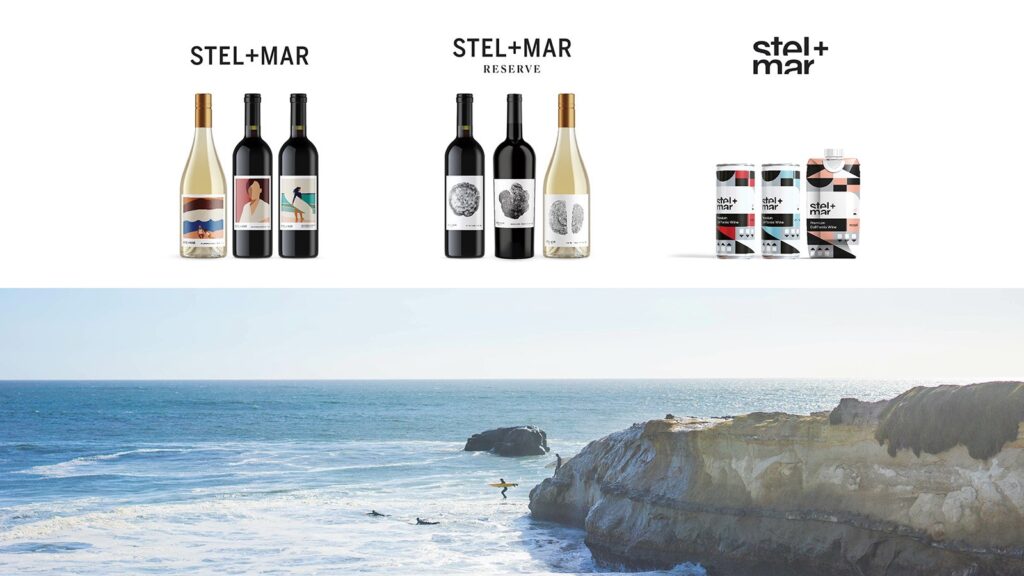
Justin Dumitrescu and Chris Noll, Founders of STEL+MAR.

Our wine brand is the result of two friends and their families coming together to make crowd-pleasing and award-winning California wines. The name is derived from their kids, Stella and Marcus, and a brand name was born. Our combination of amazing wine and label art has resonated with consumers around the world.

What is your background in wine?

We’ve been in the alcohol industry for several years starting with cider, which is similar to wine. We are both big wine lovers and have always wanted to get into wine.

How would you DESCRIBE your wine in a can?

Better than what’s in most bottles at similar values! Our wine in can is single varietal and single ava. Low sugar (less than 3g / L). We let the terroir speak for the wine—nothing added to the wine.

Each year we personally select the best lots from each harvest; we focus on wines that are single varietal, unadultered and above all, showcase the winemaker and wine region. We enter each year both optimistic and opportunistic; paying obsessive attention to the weather, the rain, cool nights, and the delicate harvest. Growing up in Canada and being driven by the changing seasons, we see vineyards in a similar light with their distinct cycle of growth, harvest and rest.

Our red is a 100% Zinfandel from the magnificent Lodi AVA.  A classic Lodi Red Zinfandel! A robust wine packed with ripe fruit (cherries, cassis, and blackberries) yet enough acidity to give it lift. The rich berry flavours are highlighted with subtle hints of chocolate and vanilla that do not overpower. Finished with ripe tannins. This medium-bodied Zinfandel pairs beautifully with lamb, grilled beef, and pizza.

Our white is a 100% Chardonnay from Mendocino. This beautiful Unoaked Chardonnay offers aromas of Anjou pear, nectarine, and green apple. The palate shows ripe orchard fruit and citrus flavors that are light and lively, backed by bright acidity. Vanilla minerality with some lingering toffee tones. This fruit-forward Chardonnay pairs beautifully with fish, grilled chicken, and sushi.

‘The Zinfandel is absolutely mind blowing! Spicy, black and red fruit combined with acidity. The wine lingers long and it must be said that having a high quality red canned is a hard job, but at STEL+MAR they did it!’

‘The unoaked Chardonnay does not smells like an unoaked….the vanilla and caramel gives a small nod to wood aging, but that is not technically the case. It is a wine with a good body which can be enjoyed ‘stand-alone’ or combined with lot’s of food, due to its gastronomic character’

Why are you in the canned wines industry?

We think canned wine is the next major innovation in wine. Similar to twist-off tops, it will take a few years for people to get past their inherent biases.

How do you see the future of canned wines?

Bright! Millennials will be quick to adopt canned wine followed by the older demographics. There’s no good reason why canned wine won’t represent 10-20% of the total wine market in 5 to 10 years.
We also package wines in tetra pack boxes and light glass bottles. We aim to make crowd-pleasing wine at good prices with beautiful label art, all packaged in environmentally-friendly packaging options.

Tetra pack boxes

Canned wines from NY!

In these series of interviews I will interview many enthusiastic people who are involved in the canned wine business.

With whom do I have the pleasure of speaking?

My name is Aimée Lasseigne New and I am the New York City Brand Ambassador for Lieb Cellars,which is a 22 hectares, certified sustainable, winery on the North Fork of Long Island, NY and also our second label Bridge Lane Wine which specializes in craft wine offered in bottles as well as alternative formats.

Aimée Lasseigne New

What is your background in wine?

I worked in fine wine retail for 14 years and have also served in restaurants.  I was selected twice to compete in the StarChefs Somm Slam at the International Chef Congress, have been a FICOFI guest sommelier, and my piece “The Struggle for Sweet” was selected as a placing entry for The Feiring Line Writing Mentorship Award. I am a graduate of Louisiana Scholars’ College, recognized as a Certified Sommelier by the Court of Master Sommeliers, and a Diploma Candidate of the Wine & Spirit Education Trust (WSET).  

As a freelance wine and spirits judge I have served on panels both locally and internationally in Paris, Beijing, Spain, Bulgaria, and Switzerland in addition to having visited vineyards across New York, Napa, Portugal, Bordeaux, Italy, and the Republic of Georgia.

How would you describe your wines in a can?

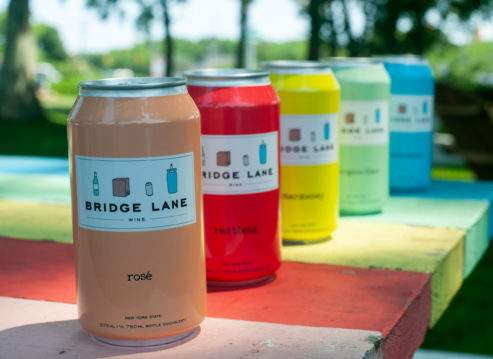
Bridge Lane is unique in that our wines are available in four sizes: 750ml bottles, 3L Bag-in-Box, 19.5L kegs, and 375ml cans.  We were the first in NY to offer wine in cans.

The canned wines range of Bridge Lane

Our rosé is the most popular.  It is dry, known for its crisp acidity and is Cabernet Franc based with notes of strawberry, peach, and watermelon. Our Chardonnay is unoaked with notes of lemon, pear and green apple.

If you don’t like Chardonnay, you will now! Great fruitiness and wonderful layers of aromas and what an aftertaste!

We have a rather unique wine – White Merlot which is actually a white wine made from Merlot grapes with no skin contact. There are notes of ripe honeydew melon and lime with an apple peel finish.

First time I tasted a White Merlot wine. Absolutely amazing and unique in his kind. Tropical fruit and little berries arise from the glass and the can. Without a doubt a great wine with potential in a can!

Our Sauvignon Blanc has freshly cut grass and floral aromas and a citrusy finish.

This is really what you would expect from a Sauvignon Blanc from this part of the world. Crispy, juicy and great acidity!

Our Red Blend is mainly made of Merlot with notes of black cherry and spicy cedar and spends 6 months in Hungarian Oak.

A BDX blend as it should be with a lot of ‘over sea’ freshness, which referring to the cooling ocean influence preserves the fresh acidity in the wine.The wine has got depth and notes of dark fruit and a balance between acidity and fruitiness. This is an example of a great red wine in a can!

We do have a 6th Bridge Lane wine, and it is available only in cans – our Bridge Lane Bubbles which was first released in 2020.  It is mostly made of Riesling with notes of tangerine, honey, and jasmine.  Unlike our other wines which are dry this wine has a little residual sugar to balance the zippy Riesling.

Why are you in the canned wines industry?

Our General Manager, Ami Opisso discussed this with me recently.  They had talked about cans in 2014 when they rebranded Bridge Lane and launched boxes and kegs because it was logical to include cans as a part of our alternative format focus, and as she said, “because we wanted to bring them to the beach” but she quickly realized that cans were going to require a lot more research and development than the other formats.  There were multiple barriers to entry.

A purchase of an entire truckload of cans from Ball Corp. was necessary, the shrink-sleeve process would occur in the Midwest, and there were no mobile canners in the Northeast who had ever canned wine before. 

She said it took her and Russell Hearn (our winemaker) two years to figure out the logistics.  Our rosé was introduced in a can in 2017 as a small batch to make sure it was viable, and our other wines followed in 2018.

How do you see the future of canned wines?

I see only increased growth potential.  I don’t have the exact figures in front of me, but the percentages of canned wine sales are constantly increasing at a rapid pace and are even starting to be explored in unexpected markets such as India.   

Yet in the US, still wines in cans are currently less than 1% of sales. This has room for improvement here and also globally as trends skew towards interests in packaging of products that are better on the environment and choosing quality over quantity as individual canned servings of premium wines may offer.

Do you wish to add something to this interview?

Yes, I appreciate that The Wine Can Guy focuses on global matchmaking in the premium canned wine category.  I thank you for sharing your vision and for having me here.  Our industry is truly lucky to have you as an energetic ally.

The Wine Can Guy

A journey though north Italy and a tasting report on some authentic wines from the Valtellina area – Villa Walter Fontana

In love with the Valtellina

Walter Fontana

Cars, fashion and wines!

Some time ago I had a good chat with Marco Ferrari, Manager of Sales of the Villa Walter Fontana wine company. The winery is located in the city of Monza in Lombardy. Monza is mainly known for its Autodromo Nazionale, the Formula 1 circuit where many motorsport fans go every year to attend the Grand Prix of Italy. In this area the larges city is Milan were fashion, fast cars and wines come together!

History of Villa Walter Fontana

The history of Villa Walter Fontana (VWF) has been deeply linked to the Valtellina’s territory and its vineyards for over 60 years. In fact, as early as the middle of the last century, Walter Fontana assiduously frequented Valtellina’s cellars during his numerous stays in Bormio, a place where, in 1966, he founded, with great foresight, the Società Impianti Bormio (SIB), still one of the most important ski areas in Lombardy.

Walter’s greatest passion was the Valtellina and the wines that are made there. At that time he already had the sense for high biodiversity of the valley and the great potential, also in international evaluations, of the local wines. The authentic strength are the elegance as well as in the countless variations of possible food pairings. Today the commitment of VWF remains the one indicated by its founder: to promote a unique territory safeguarding its peculiarities and bringing it even closer to the consumers of the future. The winery has got the focus on the following principles; sustainability, patience and tradition.

Valtellina is an alpine valley of glacial origin considered the most important mountain viticulture area in Italy.

Heroic viticulture, dangerous job!

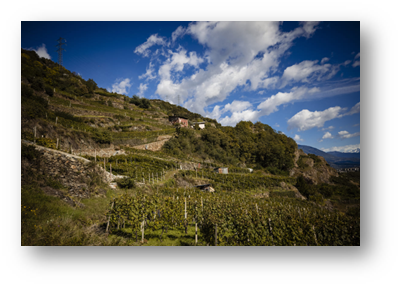
The Valtellina area is located in the north of Italy, near Bergamo, Como and Bellagio, its epicenter is the city of Sondrio. The vineyards cultivated on small terraces built on steep slopes present important challenges as the difficult accessibility makes the care of the vine and the harvest complex, so much so that it is sometimes carried out with the help of helicopters to transport to the bottom of the valley the grapes harvested on the terraces, an additional effort largely repaid by the quality of the production.

Tasting the wines

Villa Walter Fontana makes white, red and sparkling wines from different ‘appellations’ like Alpi Retiche IGT, Sforzato di Valtellina DOCG, Rosso di Valtellina DOC and Nebbiolo Alpi Retiche IGT. I did a tasting with the following wines.

ALPI RETICHE IGT
This wine is a 100% Sauvignon Blanc from the Alpi Retiche IGT region. This region was established in 1995 and got the current name in 2017. The wine is assembled under controlled temperatures, no filter is used and stored for 5 months in stainless steel tanks.

RACCONTO SEGRETO 2019

TASTING NOTES:
‘This wine is as clear as the mountain air of the region were the grapes are harvested! Dusting gooseberry, exploding boxwood and incredibly fresh lemons shooting out of the glass. The northern region naturally provides the fresh acidity, this wine is very close to the New Zealand variety, incredibly well made! A supple and svelte wine without a lot of fuss.’

Memore 2019 A blend of the ‘opposites’ in white wines! This wine is a cepage between Chardonnay & Sauvignon Blanc. The production process is equal as the ‘’Racconto Segreto’’ no wood added, just made on the pureness of grapes.

Deze afbeelding heeft een leeg alt-attribuut; de bestandsnaam is image-4.png

TASTING NOTES

‘’Clear with a lightly scented nose. The wine has less acidity than the previous one. The palate is more pear and apple with less dominant lemons. Medium body with more intensity within the multilayered flavors. Fresh, voluptuous hints make this wine  more gastronomic!’’   

If you are a Piedmont wine lover, the next few red wines  should definably have your attention. The wines are made from the Chiavennasca grape, which is the native name for Nebbiolo.

Rituale 2019 Alpi Retiche IGT After a careful selection of grapes the wine ripening for 8 months in steel tanks and finally ages for 2 years in the bottle.

TASTING NOTES

‘’A clear ruby red wine with a fresh and fruity nose. Within the taste the wine has aromas of little red berries and a floral note. But overall impression is a fresh and fruity forward style which is absolutely a great match for next summer BBQ!’’

Legame 2019 Rosso di Valtellina DOC

Another 100% Chiavennasca, the local Nebbiolo, but this time with a little touch of ‘oak maturation’, due to the fact that the wine is put in large oak barrels of around 5.600 liters. Due to the large barrels the contact with the wood is low and the wood flavor is present but not too dominant. After the aging in the barrels the wine is aged for 1 year in the bottle for the final result.

TASTING NOTES

‘’The color is typically ‘Chiavennasca’, light ruby. The wine has a medium-high aroma intensity of light floral and soft small red fruit. On the palette there are red berries, cassis aroma’s, red cherries and a sweet hint of toast and cedarwood. All with well-integrated tannins, acidity and fruit is well balanced and it all finishes with a long aftertaste of plums.’’

Luci Nel Bosco 2017 – Sforzato di Valtellina DOCG

This non filtered Nebbiolo from the Valtellina DOCG is based on grapes that are dried for 2 months and aged in oak barrels for 20 months. After this the winemaker assembles the wine in stainless steel tanks and it matures for 1 year in the bottle. 

TASTING NOTES

‘’The nose of this wines is a powerful on! Fruity notes of blueberries, ripe raspberry, raisins, flowers, currants and smoky aromas are popping out of your glass. On the palette this wine has a lot of intensity (leather, licorice, nutmeg and clove) which improves the concentration. The wine can be descripted as complex and rich and doesn’t lose its fruitiness. Think of wonderful marmalade! All aromas have a lot of flavor packed and are harmonious with the acids in the wine. The tannins are vivid, but without being disturbing. Despite the high alcohol percentage, there is a pleasant mouthfeel, that’s lingers and ends with that typical ” Piemonte ” bitterness.’’

Pietra Antica 2016 Sassella Riserva Valtellina Superiore DOCG Like the Luci Nel Bosco 2017 this wine is also based on dried grapes to achieve a high sugar level for a minimum potential alcohol level of approximate 14%.

After fermentation the winemakers does not use any type of filter and the wine will go into large oak casks (similar to Legame 2019) for 24 months. After that they put the wine over in steel tanks, as the wine rest for 2 months and will be aged in bottle for a minimum aging of 1 year.

TASTING NOTES

‘’Again the typical ruby color and on the nose a refined mix of roses, vanilla and cherry. Well cohesive aromas in the nose and on the palette with additional raisins and flowers (roses), but also the typical ‘rusty’ scent, closed with old wood and light cherry. The taste is balanced, has a balance between fruit, aromas and acids. The tannins are soft and polished. The aftertaste is experienced as pleasant.’’

Meet Ben of Ben Wren – a canned wine from South Africa

In these series of interviews I will interview many enthusiastic people who are involved in the canned wine business.

WITH WHOM DO I HAVE THE PLEASURE OF SPEAKING?

Ben Wren – founder of Ben Wren Wine from South Africa.

WHAT IS YOUR BACKGOUND IN WINE?

I have a background in advertising, we launched the wine as we saw an opportunity to market quality wine to millennials. So that’s when we create drinks for a target market, not make wine and pitch it out to consumers. We started with a Sauvignon Blanc and Red Blend high end 3L wine box 2 years ago.

But this was probably 1 year too early and didn’t get retail support. To solve the sampling problem we launched 250ml wine cans and they exploded in the market and have taken over from the box.

Geen alternatieve tekst opgegeven voor deze afbeelding

HOW WOULD YOU DESRIBE YOUR WINE IN A CAN?

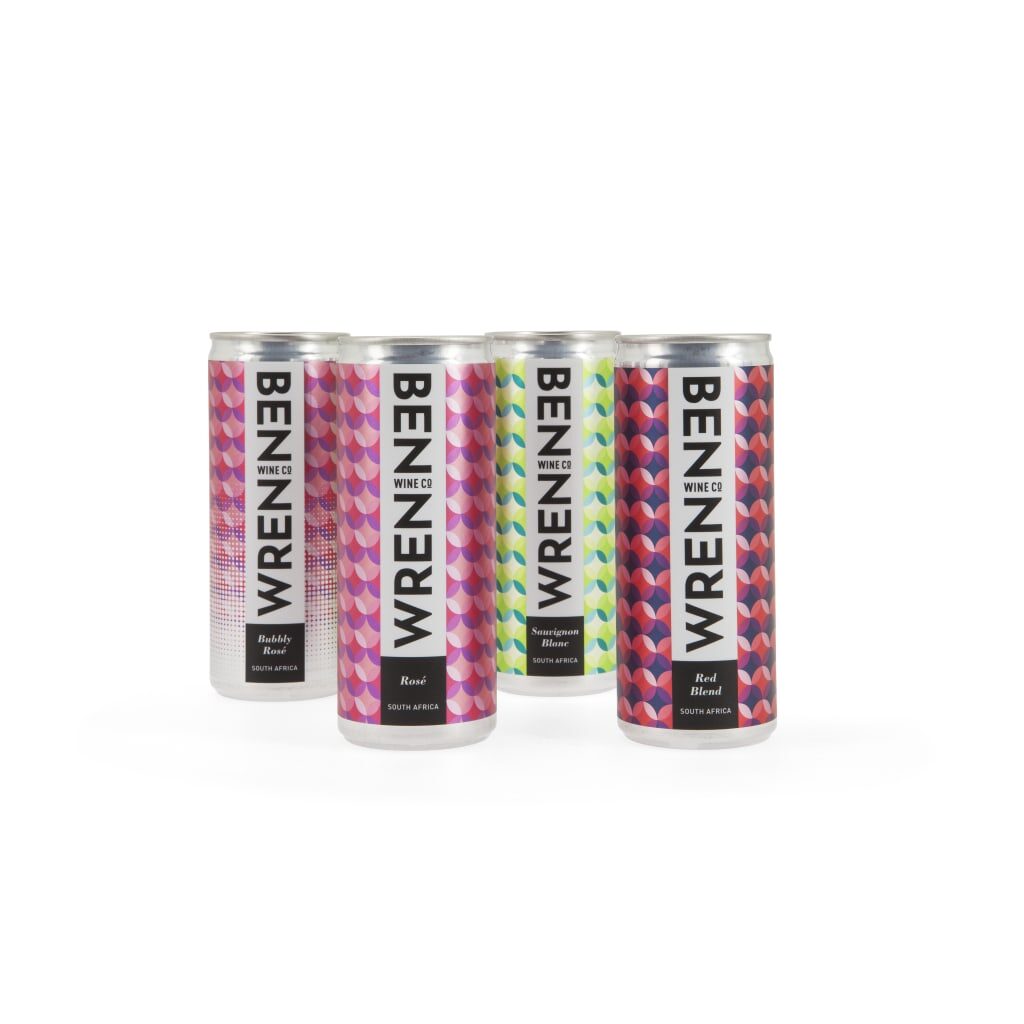
Well I make a mouth filling Cabernet Sauvignon/Cinsault red blend, a delicious rose of Syrah & Viognier (French CÔTE-RÔTIE recipe!!), an amazing Chenin Blanc, a crisp Sauvignon Blanc and a Bubbly Rosé.

All our success has been built on three factors – great wine, great (award winning) packaging and a competitive price. There is not a better wine at our price point (and above ). Our wines are light and easy drinking. Structured but uncomplicated. They are designed to go in a cooler box and sit next to craft beer. Here in South Africa uncomplicated wines work better in a can and our Rosé by the way is award winning

WHY ARE YOU IN THE CANNED WINES INDUSTRY?

Because I love wine and like doing things differently! Nowadays it’s too easy launching a wine in a bottle – and frankly the market is flooded with good wine bottles with not enough retail support. What I also see in the market is that there is a disconnect between young drinkers and fine wine. My plan is to bring a new generation into the wine category.

‘‘If we’re being totally honest, this is a marriage of convenience. Premium estate wines nursed to life by an award-winning wine master, partnered with stunningly versatile, earth-friendly packaging’’

Geen alternatieve tekst opgegeven voor deze afbeelding

HOW DO YOU SEE THE FUTURE OF CANNED WINES?

In more mature markets the category has been defined. Entry level, mid-range certified wine, high end specialist wines. And therefore, particularly in the US, we’re seeing better wine being put in cans from top wine makers. Also the range of wines like organic, low alcohol and de-alcoholized wine in cans are growing and will be more visible.

ANY OTHER THINGS YOU LIKE TO ADD?

Yes! Next to my wines, I also have a Spritzer range. They are out selling the wines, they appeal to wider audience and more friendly because of the lower alcohol, low sugar and are 100% natural. Maybe we could do a separated article about this!? Yes would be great!

Beaujolais Cru in a can! Meet Miss Vicky

In these series of interviews I will interview many enthusiastic people who are involved in the canned wine business all over the world!

With whom do I have the pleasure of speaking?

With ‘Miss Vicky Wine’ also known as Anne-Victoire Monrozier a French wine expert and blogger with family roots in the Beaujolais for over 200 years!

What is your backgound in wine?

As I said before my family runs wineries in the Beaujolais for many year now. On my dad’s side it is in Fleurie at Château des Moriers in the Beaujolais Crus. My cousins are in the Beaujolais-Villages, in the southern part of the region at Domaine de Buis-Rond. I was born in Paris and all changed in my life when my father decided to take over the family vineyard in Fleurie in 2005. I was always part of the vineyard, spending most of my holidays… I’m making my holiday an everyday today.

How would you desribe your wine in a can?

I found traditional wine labels didn’t match my idea of wine. As I was first known as a wine blogger, I’ve transfer this on my products: personalized, aesthetic, easy to recognize and social. My Fleurie – Ô Joie canned wine can be called crunchy, fresh, with structure and full of red berries that make you happy with every sip you take.

Geen alternatieve tekst opgegeven voor deze afbeelding

Tasting notes of The Wine Can Guy

‘’Full of red fruit like cherry, raspberry, strawberry with some hints of cinnamon. An elegant red wine with soft tannins and a good balance’’ 

Why are you in the canned wines industry?

Cans are exciting, they make you think of wine in a different way, liberate you from the wine long history, the snobbism that can sometimes make you feel you have to be a connoisseur to open a bottle. I’m always ready to try something new and besides the innovative side, cans are really answering a need. Need for a smaller content, lighted weight, more practicality. 

How do you see the future of canned wines?

Cans will never replace the bottle, but they will grow because – as I was just saying – they are answering a need for smarter consumption, easier way to grasp a glass. The development or hard seltzer and beer in can will also help to ease the positive perception of canned wine, so will the multiplication of winemakers that will put artisan wines in a can. Maybe natural and organic winemakers will also adopt the trend, helping giving quality and craftmanship a better place in the market.

Meet Cool Vino – ‘welcome in the new normal’​

In these series of interviews I will interview many enthusiastic people who are involved in the canned wine business.

WITH WHOM DO I HAVE THE PLEASURE OF SPEAKING?

Hey Dennis! We have the pleasure of speaking with you! We are Carmen & Carolina founders of Cool Vino, The Spanish Rosé, a canned rosé wine with bubbles from Castilla La Mancha Spain.

WHAT IS YOUR BACKGROUND IN WINE?

Well 3 years ago we had no wine background except for the fact that we loved to drink it. We can say we are new to the wine scene but again the concept of canned wine is also new so we believe that we entered the canned wine market at the right time. Our goal is to introduce wine to younger generations in a less serious format so we created a great quality product that can be transported anywhere and that is easy to drink.

Geen alternatieve tekst opgegeven voor deze afbeelding

HOW WOULD YOU DESCRIBE YOUR WINE IN A CAN?

We created a brand that is visually very attractive, sexy and with an accent of femininity. The juice itself is fresh and fruity, no sugars added. The acidity highlights the freshness of the wine with a consistent body but without reaching the tannic notes of red wines. The soft and small CO2 bubbles that we have added to the wine make it more friendly and easier to drink. And let’s not forget about its bubble gum pink color. Let’s summarize this in millennial language: we created a great quality wine that is light to drink, cools fast, the can is 100% recyclable and can be consumed anytime and anywhere.

TASTING NOTES OF THE WINE CAN GUY

‘Great pinky color, with raspberry and strawberry, a real funky wine for any sunny outdoor event’’

WHY ARE YOU IN THE CANNED WINES INDUSTRY?

Carmen and myself are part of the millennial generation. We love to drink wine but we felt like drinking wine didn’t need to be so serious. The wine scene is very outdated. A big part of Millennials and the part of the legal drinking age Generation Z, see wine as a product that is expensive and that is more suited to an older generation. Not to mention that for many people wine is an acquired taste… Innovation does not mean breaking thousands of years of tradition on the contrary it’s all about adapting those traditions to younger generations in a language and form that they can understand and relate to. Now with covid the format makes even more sense.

At Cool Vino we are committed to environmental, economic and social sustainability. Our brand believes in 3 fundamental pillars, transparency, integrity and innovation. Transparency in showing the origin of our products, how we make them and who makes them possible. Integrity as we act ethically from the field to the commercialization of our products. We are honest, in the long term we seek the common good. Innovation by implementing the use of technological advances in all the processes of the production chain.

HOW DO YOU SEE THE FUTURE OF CANNED WINES?

We believe that they might just save the wine industry. The canned wine industry has made a commitment to social change. Like any other industry the wine industry needs to recognize that change is good and canned wines are here to rejuvenate this outdated hierarchical industry.

We will keep drinking wines in bottles but cans will reach new customers. The industry needs to be rejuvenated in the way we communicate with these younger generations and recognize their spending power. At the end of the day it’s good for the entire industry as a whole. We will be expanding our market in the US to other states this year and will launch Cool Vino in Spain this spring adding another Cool Vino SKU, The Spanish White with bubbles. Welcome to the new normal. Pop the can in your cooler or fridge, let it cool for 15 minutes, drop the glass, grab your can and enjoy Cool Vino.

Can-U – Portugal native canned wine!

In these series of interviews I will interview many enthusiastic people who are involved in the canned wine business.

WITH WHOM DO I HAVE THE PLEASURE OF SPEAKING?

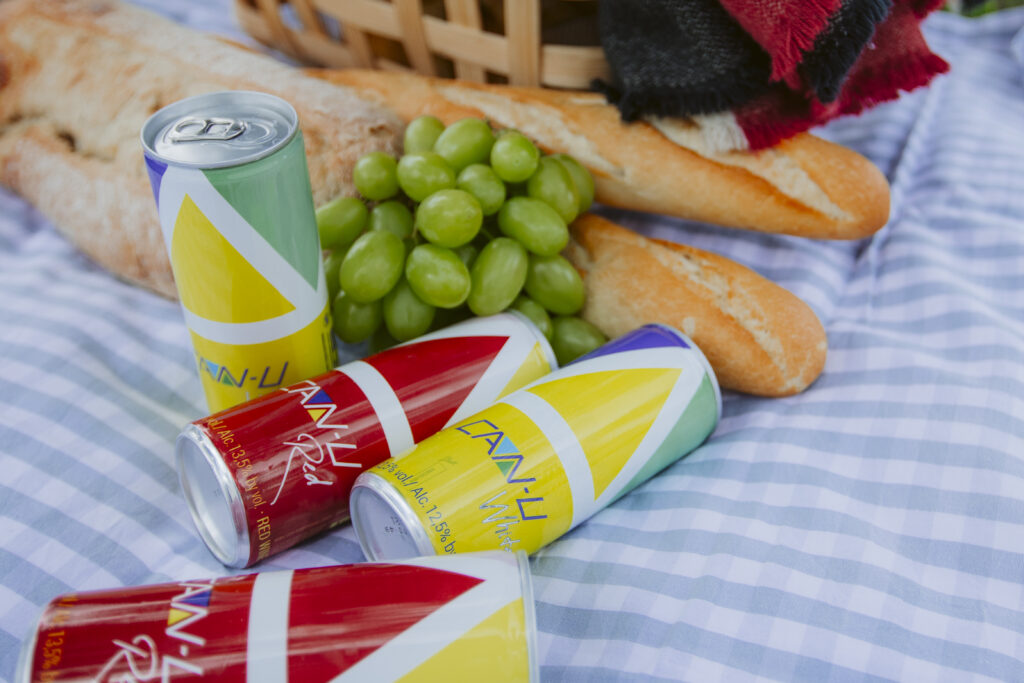
My name is João Henriques and I am the co-founder of the Can-U brand based in Portugal. CAN-U is a brand of canned wine and sangria. This is an innovative concept that aims to bring quality, simplicity and practicality to all those who appreciate wine. CAN-U are Portuguese wines and sangria, uncomplicated and easy to drink, the better solution to bars, to terraces, to the beach, to take to parties, festivals and concerts, or to accompany a picnic, in a relaxed way. The can, still seen by some like an avant-garde idea, is a practical option for drinks that should be consumed young. CAN-U is for everybody. CAN-U is practical, easy to carry, easy to open and very easy to drink.

WHAT IS YOUR BACKGROUND IN WINE?

I like wines, but I am not professional. I did some training (wine introduction, level 1 and 2).

HOW WOULD YOU DESCRIBE YOUR WINE IN A CAN?

We describe our wines in a can like wines that could be enjoyed with a meal, but also in a relaxed way, as we can drink them in the beach, in swimming pool, in a festivals, picnics, concerts, etc. Our red is a blend of Aragonês & Syrah and is made by total destemming and control of fermentation temperature. The wine is clear with a garnet color and violet nuances. The wine has an intense nose with a lot of red fruits and strawberry jam. In the taste the wines shows these aroma’s as well, has a full-body and is balanced and persistent.

Our white is a blend of the native grapes from Portugal; Fernão Pires & Trincadeiras das Pratas. The wine is clear with a citrine color. The wine has an great nose with a lot of tropical and citric fruits. In the taste the wines shows these aroma’s as well, is very fresh, intense and balanced. Excellent to serve with fish and seafood, as well as an aperitif. I want to give you an inside in these native grapes from Portugal, which are great for canned wine! The Fernão Pires grape (also called Maria Gomes) produces floral white wines. They are fresh, fruity and aromatic, with blossom, acacia and spice. Wines to drink young, as an aperitif, with lightly spiced snacks or with fried fresh sardines.

Trincadeira das Pratas is a light-skinned grape variety mainly used in blended white wines, particularly the Estremadura, Ribatejo and Setubal wine regions. Its primary role is to bring perfume and delicate flavor into a blend. Trincadeira das Pratas vines bud and ripen early in the growing season, making them susceptible to spring frosts, but Portugal’s warm, sunny climate means this is rarely a concern.

TASTING NOTES OF THE WINE CAN GUY

‘When I tasted the red I was blown away by the complexity, the spiciness and the full body. Absolutely amazing. Especially as it is very difficult to have a good quality wine in a can, job well done!’

‘The white wines has a bit more body then expected, which I really well done. It is fresh and fruity and has a great bite for excellent food pairing!’

WHY ARE YOU IN THE CANNED WINES INDUSTRY?

As wines are one thing that we like, this was the way to have our own brand and the starting of our experience in the world of wines. We know this could be a good market in future, not to substitute the bottles, but as a complement.

HOW DO YOU SEE THE FUTURE OF CANNED WINES?

We think that canned wines will be a trend, because of the practicability that we can have with a can. We believe canned wine will have their place in the market once people change their way of thinking. Once we try it we become fans. We would like to tell people not to judge canned wines before they try it. It won’t be the end of bottled wines, it’ll be the beginning of canned wines. Two different products, two different concepts.

Andra – BE BOLD. BE FREE

In these series of interviews I will interview many enthusiastic people who are involved in the canned wine business.

WITH WHOM DO I HAVE THE PLEASURE OF SPEAKING?

Adam Lovell and I am an entrepreneur in the canned wine segment of the wine industry. Originally, I am from New Zealand but for the last 4 years I have been living and working in Spain & Portugal and it is here that I have created my company and products.

WHAT IS YOUR BACKGOUND IN WINE?

As a teenager working in restaurants, I became interested in wine. I was lucky enough, as I went through school and university, to work in a number of restaurants with some rather extensive wine lists. This gave me an excellent basis of knowledge which I then sought to extend when I left university by going to work in some of the vineyards and wineries in the region I grew up in. I worked in a few places at home and then came to work in Europe. I did a vintage in France before deciding to try my luck in Spain. I was able to work with a few wineries in some different regions and learn a lot in that time and that led me to noticing a gap in the market with canned wine which I was eager to explore.

HOW WOULD YOU DESRIBE YOUR WINE IN A CAN?

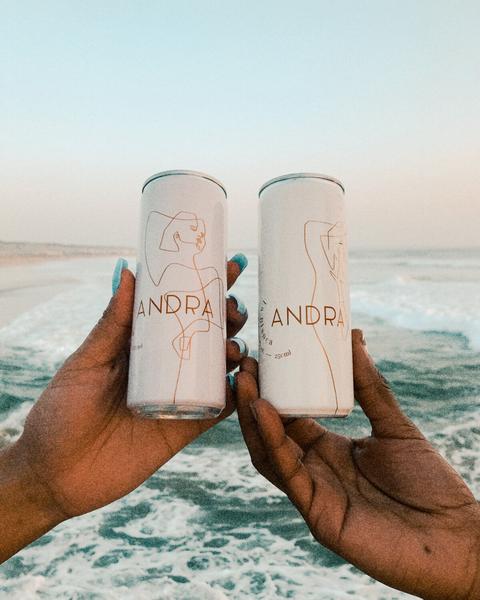
The wine in a can I have created is called Andra. I have created this product with the intention of bringing quality wine to consumers in a way that excites, engages and inspires. In particular, I have decided to create something for women as I see very little in the drinks industry that is made especially with women in mind and figured this would be a fun and enjoyable market sector in which to create something cool. The wine itself is some great wine from the Valencia region. A rosé made 100% from Bobal and a white wine 100% from Macabeo. The wines are soft, well-rounded but still crisp, with nice fruit forward notes that make for very enjoyable drinking. And of course, coming from the can, they are kept fresh and vibrant! This is the first product line I have created of what, I hope, to be a fair few more. Watch this space!

TASTING NOTES OF THE WINE CAN GUY – ROSE

‘Fresh, dry and with aromas of young little red fruit like raspberry, strawberry and a twist if herbs…..like Provence! Well done and a joy to drink’’.

Geen alternatieve tekst opgegeven voor deze afbeelding

WHY ARE YOU IN THE CANNED WINES INDUSTRY?

I was drawn to the canned wine industry as, after a number of years working with wine, I became very bored with the traditional wine marketing. I find it very often to be unengaging and rather self-absorbed, always talking about the quality and features of the product and putting little consideration into the actual experience that they are seeking to create. For this reason, I notice that a lot of people, younger generations especially, are not interested in the wine they are purchasing and despite liking the taste, see little to no value in digging any deeper. Why? Because there is nothing that really communicates with them to entice them to look further. The wine they drink is then a part of the background as opposed to being something that contributes something to the experience. A personal mission I have been developing is to find a way to bring quality wine to consumers in a more accessible and engaging way and it is through this format that I have found a great new way to do just that. Wine can be fun and carefree too, y’know.

HOW DO YOU SEE THE FUTURE OF CANNED WINES?

A lot of people in the industry seem to be up in arms about the use of cans and its sort of blasphemy against the qualitative values of the world of wine and their beloved bottles. Again though, I think this viewpoint is rather self-centered and fails to realize the magnitude of wine consumers or potential consumers who are not swayed by this in the same way and would prefer an easier, more convenient and more sustainable way to consume their wine. For the wine enthusiasts, their cultures and traditions will persist but the canned wine world should open up wine consumption to far greater numbers, thus growing the size of the industry as a whole. This may cause a large shift of format among the entry level ranges as producers adapt to accommodate this new preference in the market – also, making it more sustainable as a whole – but when it comes to the more intricate and traditional side of wine, I believe there are still positives. As more people are brought into wine consumption with this easily accessible format there should also be an increase in the consumption of this higher quality wine too as more people are gently persuaded into the market and then start to explore more.

I am super excited and grateful to be putting something engaging, creative and sustainable out into the world of wine and I look forward to all of the fantastic adventures and great people I encounter as the project grows. Thank you Dennis for your time and the opportunity to share my ideas and opinions.

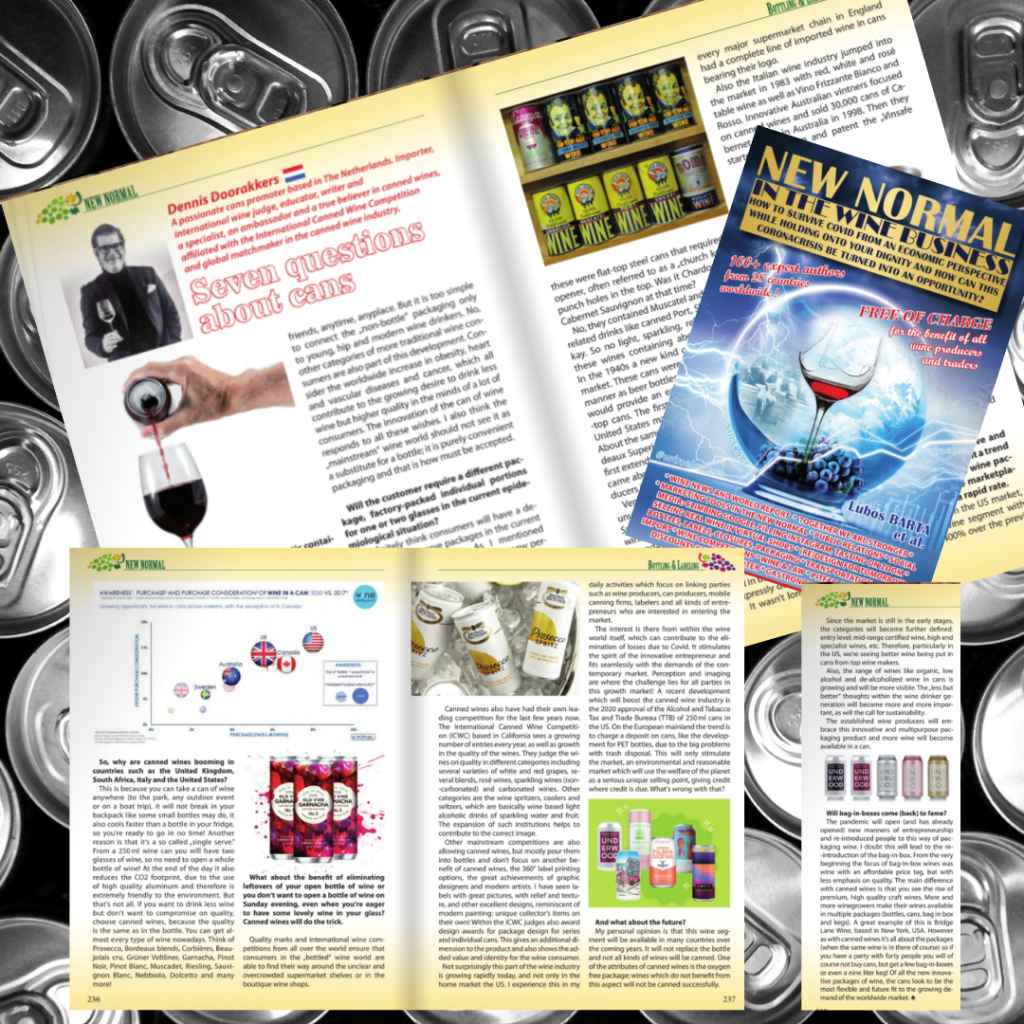
𝙉𝙀𝙒 𝙉𝙊𝙍𝙈𝘼𝙇 𝙄𝙉 𝙏𝙃𝙀 𝙒𝙄𝙉𝙀 𝘽𝙐𝙎𝙄𝙉𝙀𝙎𝙎 – SOMMELIER Magazine (GastroPress) – co-author

Some time ago I was asked by Lubos Bárta (Chief editor E-SOMMELIER Magazine (GastroPress Ltd.), if I wanted to participate in an international publication. As the topic is so important I publish my part again – for the whole publication click on this link.

”𝙉𝙀𝙒 𝙉𝙊𝙍𝙈𝘼𝙇 𝙄𝙉 𝙏𝙃𝙀 𝙒𝙄𝙉𝙀 𝘽𝙐𝙎𝙄𝙉𝙀𝙎𝙎 (𝙤𝙧 𝙃𝙤𝙬 𝙏𝙤 𝙎𝙪𝙧𝙫𝙞𝙫𝙚 𝘾𝙤𝙫𝙞𝙙 𝙁𝙧𝙤𝙢 𝘼𝙣 𝙀𝙘𝙤𝙣𝙤𝙢𝙞𝙘 𝙋𝙚𝙧𝙨𝙥𝙚𝙘𝙩𝙞𝙫𝙚 𝙒𝙝𝙞𝙡𝙚 𝙃𝙤𝙡𝙙𝙞𝙣𝙜 𝙊𝙣𝙩𝙤 𝙔𝙤𝙪𝙧 𝘿𝙞𝙜𝙣𝙞𝙩𝙮 𝘼𝙣𝙙 𝙃𝙤𝙬 𝘾𝙖𝙣 𝙏𝙝𝙞𝙨 𝘾𝙤𝙧𝙤𝙣𝙖 𝘾𝙧𝙞𝙨𝙞𝙨 𝘽𝙚 𝙏𝙪𝙧𝙣𝙚𝙙 𝙄𝙣𝙩𝙤 𝘼𝙣 𝙊𝙥𝙥𝙤𝙧𝙩𝙪𝙣𝙞𝙩𝙮)

Will wine be sold in cans or plastic containers in small individual portions?

Yes, certainly without any doubt and this has already been the case for several years in a lot of countries around the world. 

Recent research of the British research firm Wine Intelligence shows that the acceptance of canned wine has grown greatly in the United States, the United Kingdom, Canada and even Sweden. In the current Covid crisis consumers appear to be more open to alternative packaging in wine than ever before. Smaller packages are becoming more popular for multiple reasons. The new generation of wine drinkers is into the experience of drinking quality wine. They want to drink wine with friends, anytime, anyplace. But it is too simple to connect the ‘non-bottle’ packaging only to young, hip and modern wine drinkers. No, other ‘categories’ of more traditional wine consumers are also part of this development. Consider the worldwide increase in obesity, heart and vascular disease and cancer, which all contribute to the growing desire to drink less wine but higher quality in the minds of a lot of consumers. The innovation of the can of wine responds to all these wishes. I also think the ‘mainstream’ wine world should not see it as a substitute for a bottle; it is purely convenient packaging and that how is must be accepted.Geen alternatieve tekst opgegeven voor deze afbeelding

Will the customer require a different package, factory-packed individual portions for one or two glasses in the current epidemiological situation?

I definitely think consumers will have a demand for ‘single serve’ packages in the current epidemiological situation. As I mentioned before this current pandemic opens new perspectives and sometimes forces producers and consumers alternative packaging in wine than ever before.

But is the wine can really that new and contemporary?

Let me take you briefly into the history of wine in a can. The first experiments with canned wine paralleled the introduction of the first beer cans in 1935 in the United States. These were not the ‘tab’ cans that we are used to these days; these were flat-top steel cans that required an opener, often referred to as a “church key,” to punch holes in the top. Was it Chardonnay or Cabernet Sauvignon at that time? No, they contained Muscatel and other wine related drinks like canned Port, Sherry and Tokay. So no light, sparkling, refreshing wines; these wines containing about 20% alcohol. In the 1940s a new kind of can came on the market. These cans were opened in the same manner as beer bottles and it was hoped they would provide an easier transition than flat-top cans. The first wine canned outside the United States may have been from Australia. About the same time a French steel can of Bordeaux Superieur appeared on the market. The first extended marketing of white wine in cans came about in the late 1970s courtesy of producers in Australia. Venezuela and Argentina followed with unusual canned wines based on red wine of Spain with citrus fruit juices added – like the wine spritzers, coolers and seltzers we have nowadays!

Geen alternatieve tekst opgegeven voor deze afbeelding

In 1981 aluminum cans were introduced in England, specifically a French vin de table specially selected for the can. Within one year, a redesigned tall 250 ml can, was introduced and wines were imported in bulk to be canned in England or in cans expressly designed and filled for the producer. It wasn’t long before every major supermarket chain in England had a complete line of imported wine in cans bearing their logo. Also the Italian wine industry jumped into the market in 1983 with red, white and rosé table wine as well as Vino Frizzante Bianco and Rosso. Innovative Australian vintners focused on canned wines and sold 30,000 cans of Cabernet Shiraz in Australia in 1998. Then they started to develop and patent the ‘Vinsafe canning technology,” which assures stability of premium varietal wines and a shelf life of at least five years. Their 250 ml. cans are distributed in Asia, Europe, Canada, New Zealand and Australia. 

But what about today’s perspective and the near future of canned wines? Is it a trend that will pass or will this form of wine packaging get its own place in the marketplace? The market is growing at a rapid rate.

To quote some figures from the US market, it is the fastest growing wine segment with a growth percentage of 400% over the previous 4 four years.

So, why are canned wines booming in countries as the United Kingdom, South Africa, Italy and the United States? This is because you can take a can of wine anywhere (to the park, any outdoor event or on a boat trip), it will not break in your backpack like some small bottles may do, it also cools faster than a bottle in your fridge, so you’re ready to go in no time! Another reason is that it’s a so called “single serve.” From a 250 ml wine can you will have two glasses of wine, so no need to open a whole bottle of wine! At the end of the day it also reduces the CO2 footprint, due to the use of high quality aluminum and therefore is extremely friendly to the environment. But that’s not all. If you want to drink less wine but don’t want to compromise on quality, choose canned wines, because the quality is the same as in the bottle. You can get almost every type of wine nowadays. Think of Prosecco, Bordeaux blends, Corbières, Beaujolais cru, Gruner Veltliner, Grenacha, Pinot Noir, Pinot Blanc, Muscadet, Riesling, Sauvignon Blanc, Nebbiolo, Dolcetto and many more! What about the benefit of eliminating leftovers of your open bottle of wine or you don’t want to open a bottle of wine on Sunday evening, even when you’re eager to have some lovely wine in your glass? Canned wines will do the trick.

Quality marks and international wine competitions from all over the world ensure that consumers in the ‘bottled’ wine world are able to find their way around the unclear and overcrowded supermarket shelves or in the boutique wine shops. 

Canned wines also have had their own leading competition for the last few years now. The International Canned Wine Competition (ICWC) based in California sees a growing number of entries every year, as well as growth in the quality of the wines.

They judge the wines on quality in different categories including several varieties of white and red grapes, several blends, rosé wines, sparkling wines (non-carbonated) and carbonated wines. Other categories are the wine spritzers, coolers and seltzers, which are basically wine based light alcoholic drinks of sparkling water and fruit. Theexpansion of such institutions helps to contribute to the correct image.

Other ‘mainstream’ competitions are also allowing canned wines, but mostly pour them into bottles and don’t focus on another benefit of canned wines, the 360° label printing options, the great achievements of graphic designers and modern artists. I have seen labels with great pictures, with relief and texture, and other excellent designs, reminiscent of modern painting: unique collector’s items on their own! Within the ICWC judges also award design awards for package design for series and individual cans. This gives an additional dimension to the product and also shows the added value and identity for the wine consumer.

Not surprisingly this part of the wine industry is growing rapidly today, and not only in the ‘home market’ the US. I experience this in my daily activities which focus on linking parties such as wine producers, can producers, mobile canning firms, labelers and all kinds of entrepreneurs who are interested in entering the market.

The interest is there from within the wine world itself, which can contribute to the elimination of losses due to Covid. It stimulates the spirit of the innovative entrepreneur and fits seamlessly with the demands of the contemporary market. Perception and imaging are where the challenge lies for all parties in this growth market! A recent development which will boost the canned wine industry is the 2020 approval of the Alcohol and Tobacco Tax and Trade Bureau (TTB) of 250 ml cans in the US. On the European mainland the trend is to charge a deposit on cans, like the development for PET bottles, due to the big problems with trash disposal. This will only stimulate the market, an environmental and reasonable market which will use the welfare of the planet as a serious unique selling point, giving credit where credit is due. What’s wrong with that?

And what about the future?

My personal opinion is that this wine segment will be available in many countries over the coming years. It will not replace the bottle and not all kinds of wines will be canned. One of the attributes of canned wines is the oxygen free package; wines which do not benefit from this aspect will not be canned successfully. 

Since the market is still in the early stages, the categories will become further defined: entry level; mid-range certified wine, high end specialist wines, etc. Therefore, particularly in the US, we’re seeing better wine being put in cans from top wine makers.

Also, the range of wines like organic, low alcohol and de-alcoholized wine in cans is growing and will be more visible. The ‘less but better’ thoughts within the wine drinker generation will become more and more important, as will the call for sustainability.

The established wine producers will embrace this innovative and multipurpose packaging product and more wine will become available in a can.

Will bag-in-boxes come (back) to fame?

The pandemic will open (and has already opened) new manners of entrepreneurship and re-introduced people to this way of packaging wine. I doubt this will lead to the re-introduction of the bag-in-box. From the very beginning the focus of bag-in-box wines was wine with an affordable price tag, but with less emphasis on quality. The main difference with canned wines is that you see the rise of premium, high quality craft wines.Geen alternatieve tekst opgegeven voor deze afbeelding

More and more winegrowers make their wines available in multiple packages (bottles, cans, bag in box and kegs). A great example of this is Bridge Lane Wine, based in New York, USA. However as with canned wines it’s all about the packages (when the same wine is in there of course) so if you have a party with forty people you will of course not buy cans, but get a few bag-in-boxes or even a nine liter keg! Of all the new innovative packages of wine, the cans look to be the most flexible and ‘future fit’ to the growing demand of the worldwide market.


Tagged : /

Canned Wine Company – premium wine in a can!

In these series of interviews I will interview many enthusiastic people who are involved in the canned wine business.

WITH WHOM DO I HAVE THE PLEASURE OF SPEAKING?

Geen alternatieve tekst opgegeven voor deze afbeelding

Simon Rollings, CEO & Founder of Canned Wine Company.

WHAT IS YOUR BACKGOUND IN WINE?

I was originality educated as a professional in supply chain management, operations, innovation and performance marketing. But like many others I was caught by the ‘wine bug’ and driven by my previous work experiences with food and drink start-ups like Hello Fresh.

I first launched Canned Wine Co. in summer 2019 together with wine buyer Ben Franks. Who is passionate about finding the next big thing and focuses on introducing new, truly unique wines.

Geen alternatieve tekst opgegeven voor deze afbeelding

HOW WOULD YOU DESRIBE YOUR WINES IN A CAN?

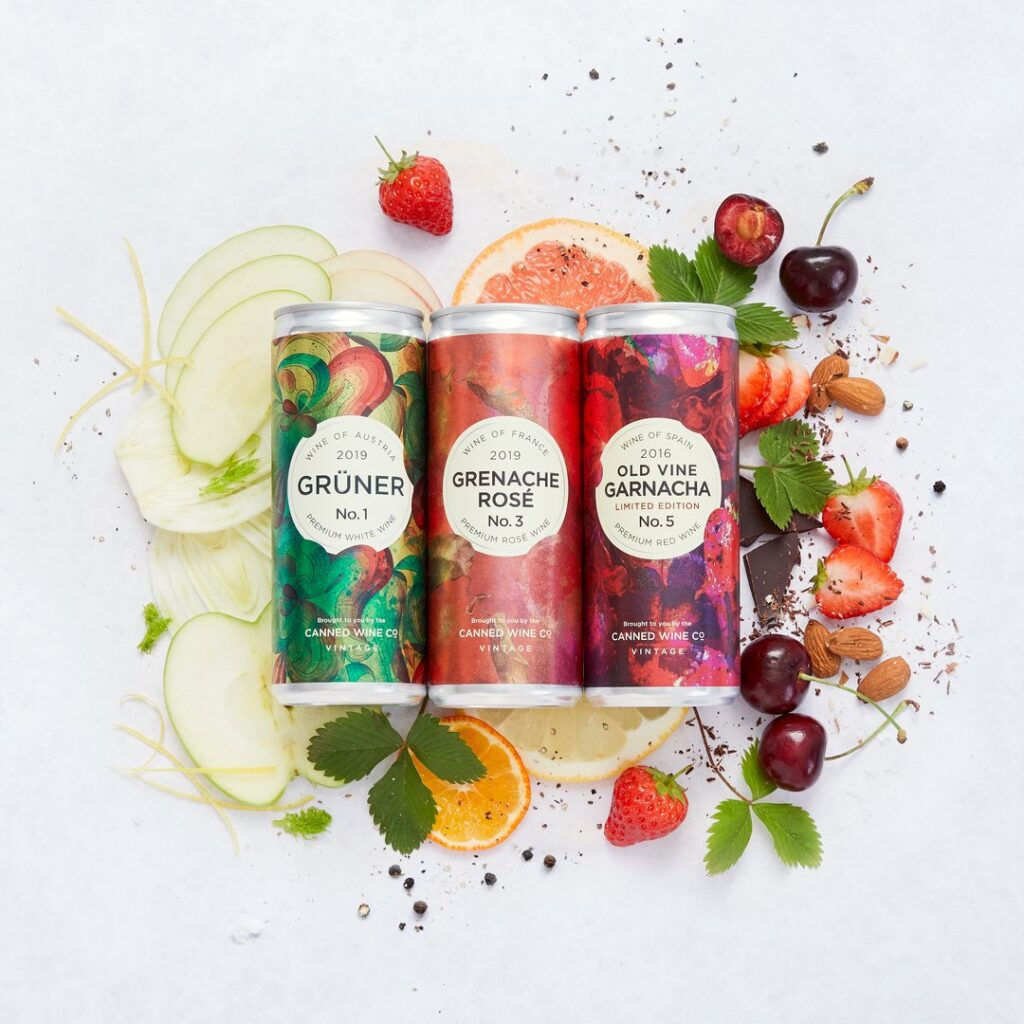
Our focus is on sourcing fantastic quality wines from some of Europe’s top producers. It is our aim to showcase the best of unusual varieties, not the same wines you can find everywhere. We source single vintage and single varietal wines that excel in cans. For example take our Grüner of Niederösterreich in north-east Austria. It’s a juicy white wine and a fantastic introduction to just how good Grüner Veltliner can be.

TASTING NOTES The Americans also affectionately call this grape Groovy and Groovy it is! The look and feel of this can really reflects the content. It’s modern, unique, wonderful branding. Great greenish color with flavors of fresh citrus, typical white pepper, refreshing lemons and a light creaminess. Definite a high quality wines with pleasant fresh acidity and a character of his own.’’

Geen alternatieve tekst opgegeven voor deze afbeelding

WHY ARE YOU IN THE CANNED WINES INDUSTRY?

We want to remove the barriers in the traditional wine market that stop people from buying better wines. Providing high quality wines in a portable 250ml format gives more people the opportunity to try exciting wines without having to spend more. We want to encourage people to drink less but better and increase customer confidence to try something new. We also aim to incorporate sustainability. From sustainable viticulture at the wineries we source from, to transportation, packaging and recycling. ‘‘We only work with smaller independent wineries to source the very best wines we can. Each wine is a limited run by nature, all single vintage and single variety.Geen alternatieve tekst opgegeven voor deze afbeelding

HOW DO YOU SEE THE FUTURE OF CANNED WINES?

Ultimately, I think we are moving towards a similar reality as the ‘bottle market’. A diversification from high-end to basic canned wines. The ‘less but better’ thoughts within the wine drinker generation will become more and more important, as will the call for sustainability. The established wine producers will embrace this innovative and multipurpose packaging and more wine will come available in a can.

MULTI AWARDED WINES! Their design of the cans and the quality of the wines are rewarded with medals from several international wine competitions.

Tagged : /