Interview with Giovanni Ponchia about DOC Vini Colli Berici & Vicenza

Who are you and what is your position?

My name is Giovanni Ponchia and I’m the Director of Consorzio Tutela Vini Colli Berici e Vicenza.

Giovanni Ponchia

Can you tell us more about the wine region and what makes the area of the Consorzio Colli Berici unique?

The DOC Colli Berici was establish in 1973 and is located in the heart of the Veneto region, in the province of Vicenza. It’s a unique area because it preserves its natural environment more than its sourrondings, it has a centuries-old vine growing tradition and its famous for being the land of the beautiful Palladian Villas. Geologically, the soils are made of limestone rocks, while the climate is much drier than in the rest of the region, with less than half the rainfall of northern Veneto.

How would you describe the wines from the area (grapes, blends, vinification methods etc)

Monovarietal productions are very frequent, that is based on a single grape variety, such as merlot, cabernet sauvignon, tai rosso and carmenère among red grapes, garganega, pinot bianco and incrocio manzoni among white grapes. Alcohol contents are quite high (without the aid of appassimento), as are structure and body. Classic white or red vinifications are made with temperature control and, for the reds, long macerations and frequent use of delestage. For the reds, maturation in small wood barrels is common, except for tai rosso, for which concrete or steel tank is preferred.

Overview of the vineyards

What is Consorzio Colli Berici’s sales top 5 countries?

Italy, Switzerland, Germany, the Netherlands and Russia

What are recent developments within the wine region that you would like to tell us about?

A steady increase in organic farms, the rediscovery of the pergola as an antidote to climate change, a slow but constant expansion of ‘resistant’ vine varieties.

For the next 5 years, what are the objectives for Consorzio Colli Berici for its members when it comes to brand awareness, etc?

Vineyards in Colli Berici
  • Lead producers to convey more the name of the territory than the name of the grape variety, also through the wines Colli Berici Rosso and Colli Berici Bianco (blends of several varieties).
  • Focus on grape varieties suited to the geo-climatic conditions.
  • Increase presence in foreign magazines and fairs.

What makes you happy in a professional way in your role?

It makes me happy to see the satisfaction of each individual producer. Even when I go into some associated winery and find it without wine (because they have sold it all) I feel quite happy 😊

Thanks you so much Giovanni, pleasure was all mine!

The original CBD infused wine in a can!

Wine in a can is of course not unknown to me! At the moment there is a lot of variance in type of wine, grape variety, Spritzers, Seltzers, bubbles, rose and so on. But I hadn’t tasted this one yet. Wine with Cannabidiol or CBD. I spoke to the product creator of Rebel wines!

With whom do I have the pleasure of speaking?

Rupert St Aubyn , MD and product creator.

What is your background and is it in wine?

As a commercial pilot in Zimbabwe, I spent 10 years flying across many African countries.  This led to much time spent in the Western Cape of South Africa, where they produce fantastic wine. This, in turn led to me importing Vondeling wines from there into Zimbabwe. On my return to the UK, I set up the UK Agency for Vondeling Wines. Since then, my business has grown to include wines from Italy, Argentina, Chile, New Zealand, Portugal, Spain, France and many others.  This business, formed in 2005 is Southern Wines Ltd.  It is a separate business to Rebel Wine Ltd, created in 2017, which specialises in CBD infused wines in cans.

Your wines have one unique ingredient, cannabis, could you tell us more?

In 2017, I was researching natural medications for my own use and came across Cannabidiol or CBD as it commonly known. As I discovered, CBD is an entirely natural substance and has been used for 1000’s of years in all the major civilisations, from China and Egypt to Greece and Rome, as a medication for a very wide variety of illnesses. Today it is gaining popularity as an alternative to traditional medication for its natural ability to support the Endocannabinoid system in the body.  CBD supports this system which helps promote sleep, relaxation, reducing anxiety and stress. It is now being used for a wide variety of conditions including Fibromylagia, Arthritis and Rheumatism among many others as it also supports inflammatory conditions.  It seems to go particularly well with wine. We use Broad Spectrum Organic Hemp derived CBD in our wines. 

Some practical question for the general public;

What does cannabis add to wine?

Put simply, CBD tastes bitter, earthy and Hempy.  It’s really not a nice taste.  By putting water soluble CBD into wine, we provide the full benefit of the CBD without the nasty taste. So you get the benefit of both, in delicious award winning wines. 

Do I get high from drinking this wine?

In line with UK government regulations, our product does not contain THC and therefore will not get you high. It is natural, safe and perfectly legal.

How would you describe your wine in a can?

Our wines are award winning in their own right and are delicious. We have a full bodied Merlot, a delicious Sauvignon Blanc, a fruity & fresh Rosé, plus 2 Skinny Rebel Spritzers (Low calorie, low alcohol), Rosé and White.  All these products are served in 200ml cans with 10mg of CBD. The addition of CBD is a great way to add  to your daily intake if you are a regular user of CBD.  If you are not, it is still a delicious, relaxing glass of wine.

Why are you in the canned wines industry?

We wanted to develop a fun product, primarily for outdoor events such as parties, picnics and festivals that was light weight, chilled quickly and offered the perfect single serve.

How do you see the future of canned wines?

Canned wines are lighter to transport and therefore have a lower environmental impact.  They are fully recyclable and have a very low carbon footprint (especially compared to glass).  Not only are they the most sustainable wine container, but, with new epoxy linings they preserve the freshness and taste of wines as well as a bottle; so our wine tastes just as good from a can as it does from a bottle. A can is a great way of having a glass of wine without having to open a bottle, saving wastage.  Being small and lightweight, it is ideal for travelling – trains, airlines, boats etc.  So there is a great future for canned wines, particularly with the demise of plastic and the banning of glass in many public areas (parks, beaches etc).

Thanks a lot Rupert, the pleasure was all mine!

Tagged :

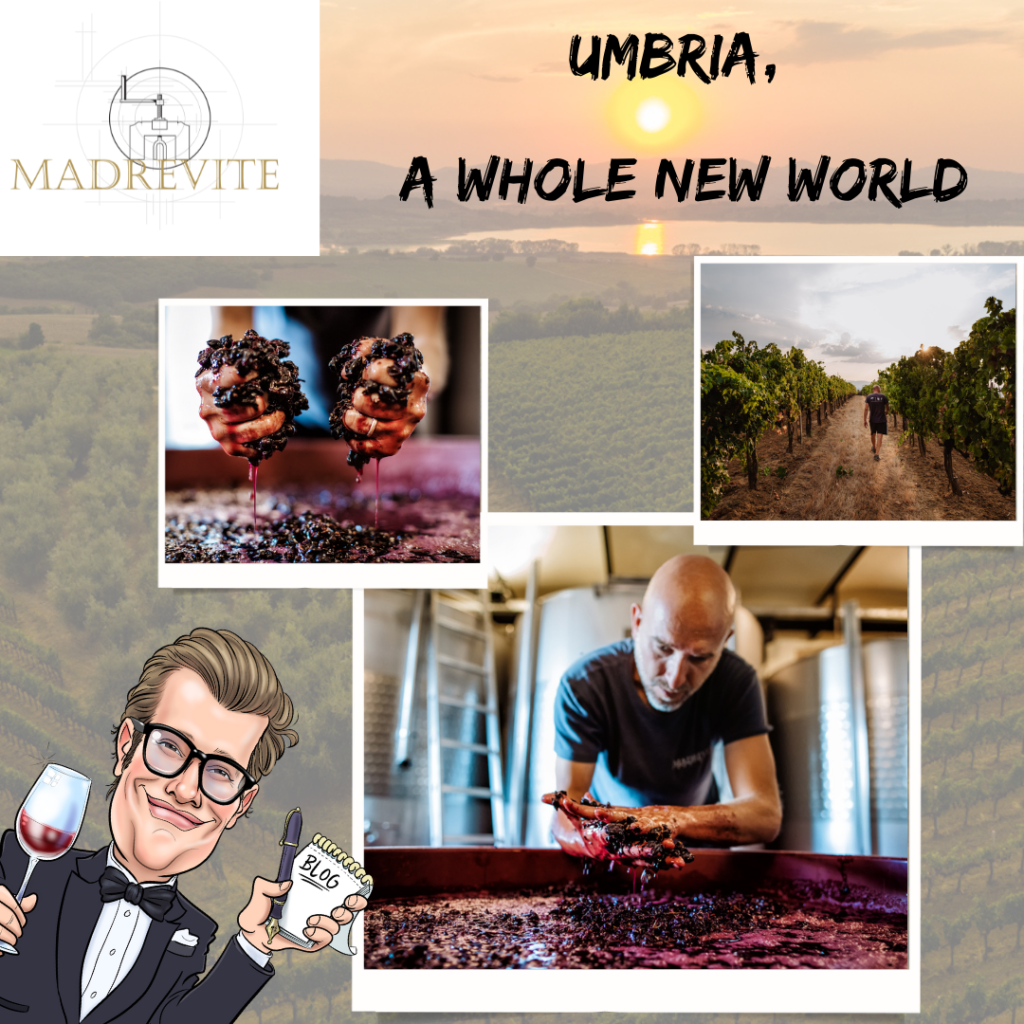
Madrevite, het levenswerk van wijnmaker Nicola Chiucchiurlotto

Waar het allemaal begon; Umbrië!

Waar ligt Umbrië? Dit relatief onbekende wijngebied grenst aan Toscane en de Marken. Tevens ligt het naast de imposante bergketen genaamd de Apennijnen.

Een artikel in ‘interview style’ met wijnmaker Nicola Chiucchiurlotto.

Kun je ons wat meer vertellen over de oorsprong en de huidige gang van zaken van het bedrijf?

Mijn baanbrekende experimenten begonnen in 2008, maar het wijnbedrijf is opgericht in 2003. Ik maak pure wijn om alle intrinsieke kwaliteiten van de druivencultivar te onthullen en om het bewustzijn te vergroten van de complexiteit van het gebied dat het gastvrijheid biedt en vervolgens samenvloeit tot één.

Over hoeveel wijngaarden hebben we het?

60 hectare die op drie verschillende beboste heuvels op de grens tussen Umbrië en Toscane liggen: hiervan zijn 11 hectare wijngaarden, 5 olijfgaarden; er zijn kleine bosgebieden en de rest is bouwland.

Welke druiven staan op deze wijngaarden aangeplant en hoe oud zijn deze struiken ongeveer?

De belangrijkste rode druiven die hier worden verbouwd zijn Gamay del Trasimeno, Sangiovese, Montepulciano en Syrah, terwijl de witte Trebbiano Spoletino en Grechetto zijn. De gemiddelde leeftijd is ongeveer 20 jaar, waarbij de wijngaarden tussen 280 en 350 meter boven zeeniveau liggen.

Wat kun je ons nog meer vertellen over hoe je werkt en wat je visie is voor de toekomst?

Mijn wijnen respecteren het grondgebied, de tijd en de traditie van de plaats waar ze zijn ontwikkeld. Uniciteit is geen eigenschap die je besluit te bereiken en die je probeert te overwinnen. Integendeel, het is het natuurlijke resultaat van constant werk en bewustzijn, gericht op het behouden van wat je al bezit.

Ik ben trots en moedig, loyaal en koppig. En misschien een dromer, want ik geloof in de synergie tussen mens en natuur, en ik heb een visie van collectieve, wederzijdse hulp, van wederzijdse uitwisseling en gemeenschappelijk engagement op het werk. Ik geloof in een gastvrije wereld waarin ik kan leven met het gezin, mijn vrouw – met wie ik de geneugten en ontberingen van deze baan deel – en waar ik wil dat mijn kinderen opgroeien.

De natuur zet de eerste stap. Dan is het aan ons om het kostbare ding te ontwikkelen dat het heeft kunnen beschermen.

Mijn wijnen zijn echt: ze vertellen een verhaal van liefde en toewijding aan het dagelijkse werk.

Il Reminore (UMBRIA Indicazione Geografica Protetta)

De druiven (Trebbiano Spoletino) worden handmatig geoogst en gedurende 36 tot 48 uur op de schillen gelaten voor meer concentratie en kleur. Daarna volgt een zachte persing en een koude klaring, alwaar de fermentatie bij een gecontroleerde temperatuur van 16°C plaatsvind. Tenslotte blijft de wijn voor 6 maanden in roestvrijstalen tanks op fijne lies en daarna nog eens 6 maanden op fles rijpen. Schitterende gouden kleur met een lichte mandarijn neus. In de kern van smaak proeven we appels, peren en tikje lemon curd. De wijn is droog en heeft een mineraal karakter.

La Bisbetica Rosé (UMBRIA Indicazione Geografica Protetta)

Deze rosé is gemaakt van de lokale Gamay del Trasimeno druif, welke in de rest van de wijnwereld beter bekend is als Grenache.

Ook hier een handmatige oogst van dedruiven met wederom een koude maceratie gedurende 6 tot 8 uur, waarna het zelfde proces wordt gevolgd als bij de Il Reminore. Daarna rijpt de wijn voor 4 maanden in roestvrijstalen en cementtanks op de fijne lies en aansluitend nog 3 maanden op fles.

Bloemige neus met in de smaak verse frambozen, tikje rode grapefruit en veel klein rood fruit. Evenwichtige zuren. De wijn is sappig en fris.

Opra (TRASIMENO Denominazione di Origine Controllata)

Wederom een wijn gemaakt van de lokale Gamay del Trasimeno druif. De lokale Grenache druiven worden handmatig geoogst en ondergaan een bijzondere methode. De zogenaamde “Governo all’uso toscano”-techniek. In de kern gaat het hier om spontane fermentatie zonder dat er gebruik wordt gemaakt van toegevoegde gisten, alles door maceratie op de schil die verandert naargelang het seizoen vordert. Om de fruitigheid te bewaren gaat de wijn voor 10 maanden in cementtanks en aansluitend nog eens 3 maanden op fles.

Robijn rood met een lichte intensiteit, bosbessen, zwarte kersen en pruimen gecombineerd met relatief hoge zuren zogen voor een frissen en toegankelijke wijn met in de afdronk de nodige aangename kruidigheid, waarbij de tannine rond en fijn aanvoelen! 

Futura Vino Spumante di Qualità Brut Nature (Ancestral Method)

Een bijzondere mousserende wijn, een PET-NAT.

Na het oogsten vindt er een directe persing plaats van de trossen, bij de fermentatie geen toevoeging van suikers en gisten voor de hergisting maar een eeuwen oud proces. Wanneer men in oktober de Trebbiano Spoletino oogst om de andere wijn genaamd ‘Il Reminore’ van te maken, bevriest men een klein deel van die most voor 2/3 maanden. In de lente, terwijl de temperatuur wordt verzacht, herstart de gisting op een natuurlijke manier, waardoor de bubbels in de wijn komen, de PET-NAT is geboren!

De wijn biedt een typische PET-NAT verwachting, de mix van fruitigheid en romigheid. Appel en peer beide fris maar toch ook romig van structuur. De bubbels zijn enthousiast en in balans en het PET-NAT karakter met de gisten is fijntjes aanwezig. In de smaak wordt het aanwezig citrus fruit afgewisseld met een klein pecannootje, subtiel!

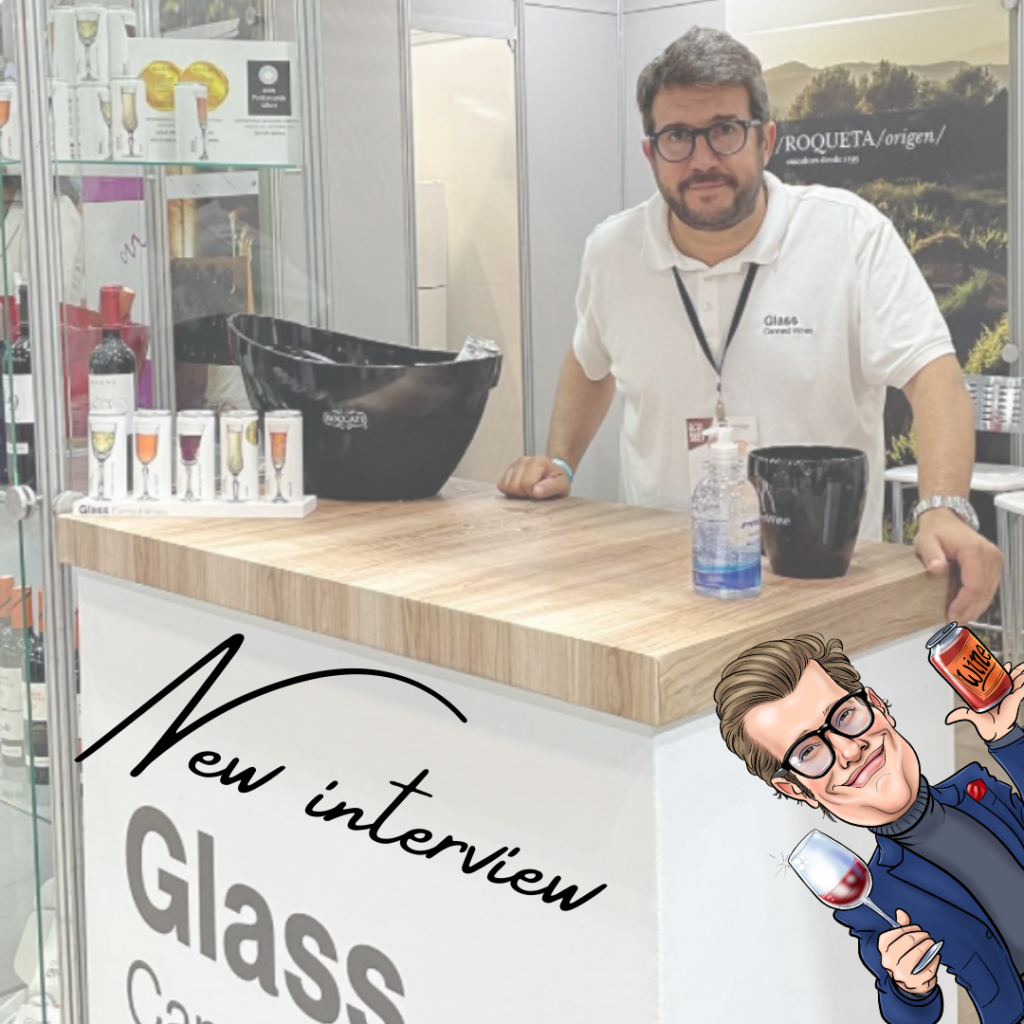
Glass canned wines from Barcelona

With whom do I have the pleasure of speaking?

This is Joan Anton Romero, an enthusiast guy from a small town near Barcelona called SantSadurníd’Anoia, known all over the world to be the cradle of Cava…

Glass quiere popularizar el consumo de vino en lata en Catalunya

What is your background in wine?

As you imagine, my DNA has a lot of wines and cavas on it, like all the children in my hometown when we were young we went to harvest to earn some money for the fun-fair… On my twenties while I’m the University I worked in the production for one of the biggest cavas… And in my late thirties after my Sommelier Master I also worked for a small cava… My last job related with wine was as Marketing&Sales manager of a big PrintingCompany… And after this i begun my adventure!

How would you describe your wine in a can?

My wine in a can are a range of five products, all of them thought under the same philosophy: I want to offer my customers an exquisite product, which I know from the vineyards and I have produced it in a way that everybody who taste it will love it. It’s just what it is, an honest young wine without pretensions, a lovely taste representing all the essence of our territory on every grape what we use.

Puigdemont Roca Create Glass Canned Wines for Aluvinum - World Brand Design  Society

A very nice range of canned wines. The design is done very nice also the name, fantastic! As we go deeper into the discovery of the wines, we find a broad range of flavors and I would say a wine that suits everyone’s needs! I love the Cabernet – Merlot Can. It is very hard to make a nice red from a can, this is well done and convinced when you want just a small portion of wine with your pizza! The other wines are also nice and have their own character from 2 bubbly wine to two uniquely white one!

Why are you in the canned wines industry?

By one side, I have two passions in my life: wines (in all the extension of the word: still, sparkling, etc) and marketing (design, packaging, sales…). This industry for me is the perfect mixt. Imagine that one day you can join your passions and create a way of life, a job… You will do your best because it’s your own life… The things u love! And by another side, for me is hard to understand that in a country like mine, with such a tradition of wineries, people drink more beer than wine. This is because we don’t make enough cathedra of our products, of our terroir, we don’t transmit how we really have to… With humble I’d like to apport my sand grain to this commitment.

Glass Canned Wines on Packaging of the World - Creative Package Design  Gallery

How do you see the future of canned wines?

For me CannedWines are not the future, are the present! A CannedWine is a wine packed in 21st century mindset: recycled, low feet carbon, RTD, mono-doses, always fresh and in perfect conditions… We just have to explain it to people who still don’t know that CW exists, at the end, like happens in beer’s world, the can and the bottle will collaborate to promote wine in the same way.

Home – glasscannedwines

Do you wish to add something to this interview?

I’d like to add that for me is an honor to be interviewed by you, and also to be recognized by two prices in the International Canned Wine Competition with two gold medals in Sparkling White Wine and Packaging. One year and a half ago for me all of this was the best dream ever, and today, after a long way of efforts and work, I am here, talking with you… If you make things with illusion and constancy, you can dream big… And this is only the beginning.

Thanks Joan Anton, the pleasure was all mine!

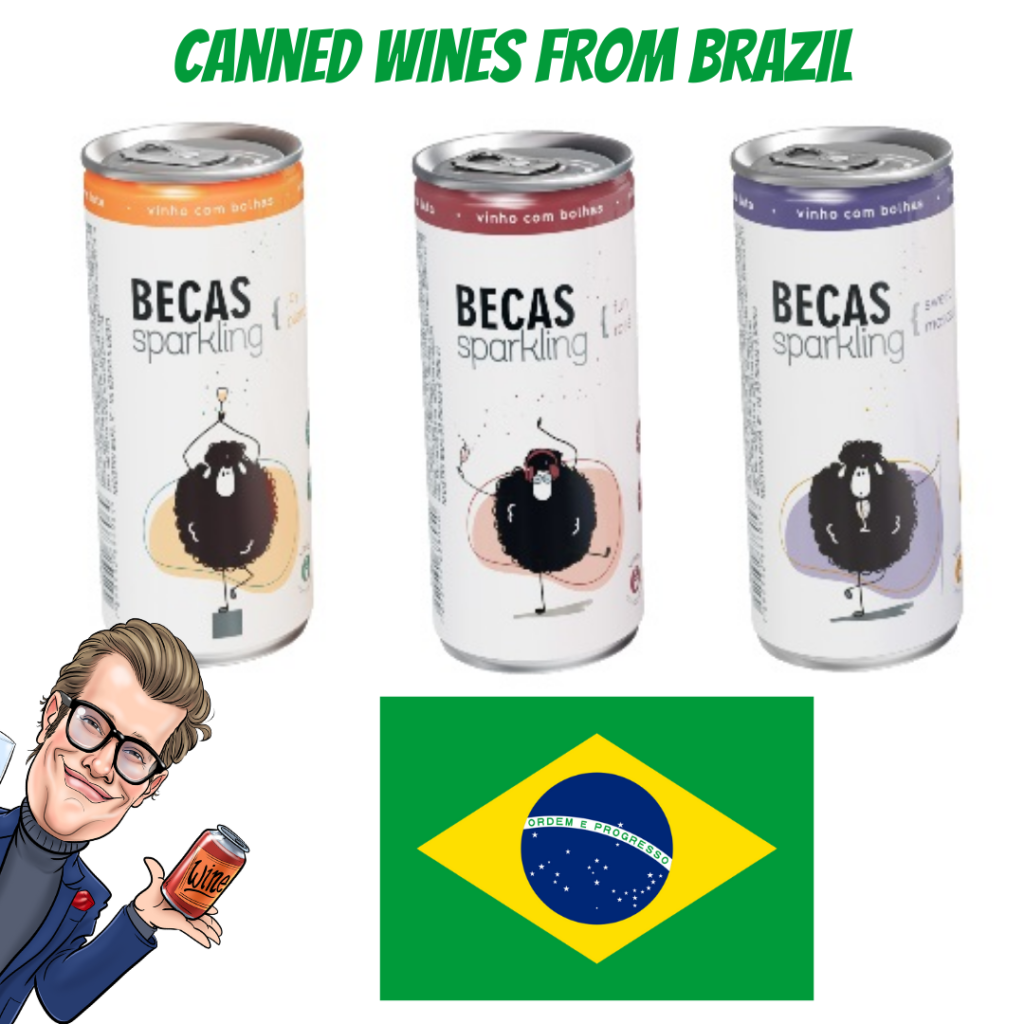
Canned wines from Brazil

Canned wines are starting to find there place in the US, the UK, South Africa and on several countries on the European mainland. This time I got some samples from a whole other continent and country, BRAZIL!

With whom do I have the pleasure of speaking?

Lucas Simões, Product and Project Coordinator Ponto Nero Winery.

Thanks Lucas, nice to meet you, what is your background in wine?

I’m Winemaker, Sommelier, Marketing Specialist and Student WSET Level 3.

How would you describe your wine in a can?

Becas Sparkling wines are young and fresh. Its low alcohol content, vibrant acidity and intense aromas are an invitation to an uncomplicated consumption.

Sparkling Joy Blanc Becas, Serra Gaúcha (Gaucho Highlands) – Brazil, Medium Dry Sparkling Wine, 100% Chardonnay 7% ABV 269ml

Pale yellow color. Little sweetness of ripe melons, tropical fruit and some apples and pears. All with a good connection to the acidity in the wine.

Sparkling Fun Rosé Serra Gaúcha (Gaucho Highlands) – Brazil, 98% Glera and 2% Merlot, Medium Dry Sparkling Wine, 7% ABV 269ml

Medium rose in the color, with notes of little red fruit also apples and pears and also a small sweetness at the end. Fresh and sparkling and a unique blend of grapes!

SWEET MOSCATO Serra Gaúcha (Gaucho Highlands) – Brazil, Sweet Sparkling Wine, 100% Muscat, 7% ABV 269ml

Pale yellow color with hints of flowers and fresh and intensely aromatic.

Why are you in the canned wines industry?

Although the use of canned wines is not new at a global level, for the Brazilian market it is an innovative segment that will reach new consumers.

How do you see the future of canned wines?

It is certainly an expanding segment, which provides a more democratic way to consume wines in the most varied moments and styles.

Do you wish to add something to this interview?

The Becas Sparkling brand proposes a fun and informal communication, without sacrificing product quality.

Thanks you Lucas the pleasure was all mine!

Backyard Urban Canned SPRITZER

With whom do I have the pleasure of speaking?

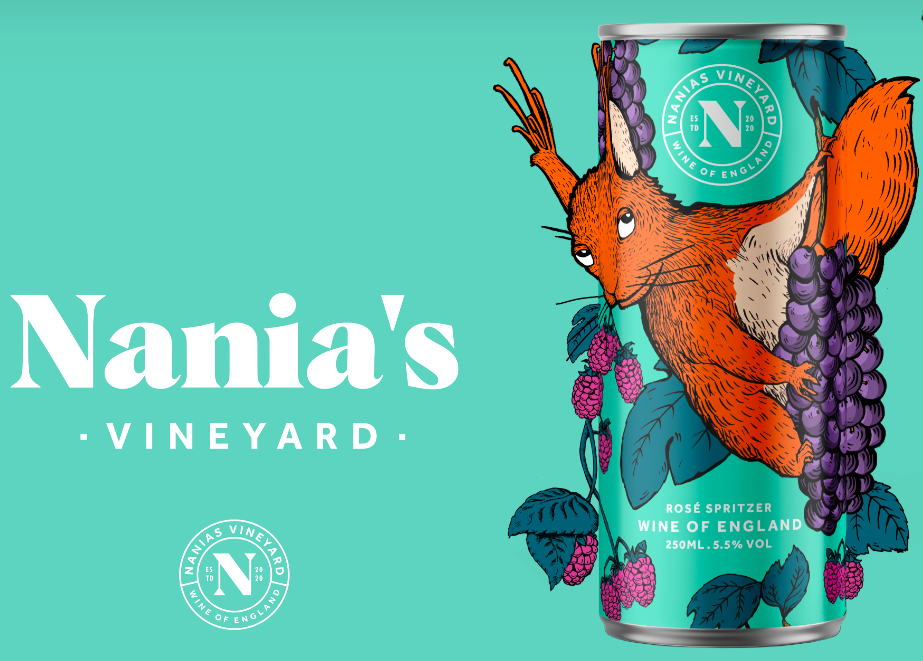
James Bailey Smith, I’m a cameraman documentary filmmaker and winemaker. Located in Bristol City Centre in the UK.

Nice to meet you James and very interesting….a cameraman and filmmaker…. so what is your background in wine?

Well I’ve been doing my camera and film work for 15 years but I decided to get into the wine industry because I got hold of a lot moment. So in the UK, we have small Parcels of land called allotments where people can grow like fruits and vegetables. And I’m very fortunate to have one outside the back of my house. And so I when I moved to this house, it, I got the allotment and I decided for the first thing I would do is plant a small vineyard with the eye. Idea of making my own wine which I have been doing now for three years and I just fell in love with wine making and I wanted to work out how I could get into the industry started researching some ideas and realize that I well discovered that canned wine was becoming popular in America and so I decided to set up a English canned wine company. So basically I’m a winemaker small scale, Back Garden, Vineyard allotments. I don’t have a background in wine other than drinking it, which I guess is the same for a lot of people but in terms of like the wine industry I have been making my own wine and that’s kind of what got me interested purely through making my own wine called NANIA’S.

That is so cool! Backyard wine from a filmmakers, this story gets better and better! How would you describe your wine in a can?

Okay, so we just have one product at the moment. It is a English Rose, a spritzer. So we made a very, very fruit forward base wine from a great called rot, the Rondo great which grows very well in the UK. It’s a hybrid grape that also is used in The Netherlands!. So it’s much better for our climates which is all we are on the margins of what is possible.

Be a small sort of disruptive brand in this space

So it’s five and a half percent and it’s bursting with summer fruit notes. So we’ve got loads of raspberries in there also great amount of strawberry, it is really delicious easy going drink. It’s not a pretentious is an uncomplicated wine, but it does have some complexity because we’ve we’ve added a small amount of a raspberry shrub.

So a shrub is a kind of cordial, but it’s not really a cordial. It’s it’s a way of preserving freedom. So Sailors used to have a shrub on their sailing ship so they would get their vitamin C on the long voyages across the Atlantic.

And so I have put a small amount of raspberry shrub into the mix in the spritzer to give it a little bit more complexity and a shrub is made of vinegar which is one of the things that preserves it. There is a very tiny amount of this raspberry shrub in the mix, which adds somebody and some complexity to the whole drink. It’s a deliciously refreshing summer spritzer!

Why are you in the canned wine industry?

Why would you not want to buy quality wines in a smaller format? I mean, it just makes complete sense. You know, if I open a bottle of wine on a Monday night or Tuesday with dinner the Temptation and often what happens is that you’d finish the whole lot or you might drink it on Wednesday. And, you know, we all know we shouldn’t be drinking so much. So it’s much better for portion control. And I think that the public will realize that very soon and can wine will be a very good it proposition.

Well, the wine industry bottles are the past, the cans of the future.

That’s why I’ve decided to go with can whine and I guess the other thing is; who am I to go up against this ancient industry of wine trading, and just do what everyone else is doing and put my wine in a bottle? That sounds to me like really hard work, why would you want to set up a company doing exactly the same as everyone else has been doing for so long? So for me can wine made more sense because it’s a new thing and exciting thing and something that I can get behind and be a small sort of disruptive brand in this space, everyone’s doing bottles and wine. Why would I do that? That’s kind of how I feel.

You sound like an innovative entrepreneur with a Millennial perspective on life, just what the world of canned wines needs! But how do you see the future of canned wines?

What I predict that will happen is that you will go into shops and supermarkets in a two or three years time and there will be a fridge full of canned wine with varieties from all over the world. And there will be a distinct section within one shot. They’ll be a range of qualities and prices. It will broadly, speaking will reflect the rest of the wine world. I also think there will be more interesting wines in the canned wine fridge in every shop.

The future? A fridge full of canned wine with varieties from all over the world

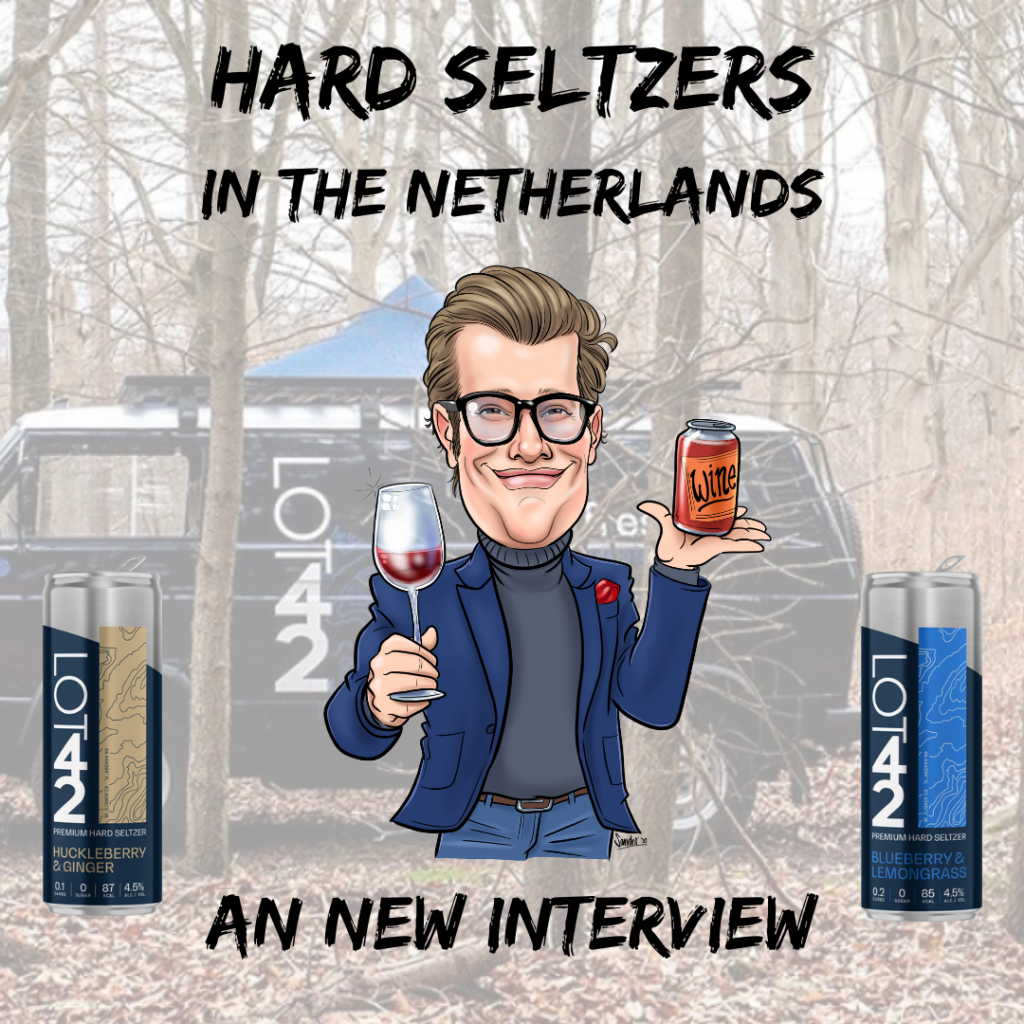
Lot 42 – Premium Hard Seltzer

With whom do I have the pleasure of speaking? 

My name is Chris MacDonald, I am Canadian but with Dutch heritage as my grandparents relocated to Prince Edward Island Canada after the war, from Overloon. So lucky situation of having two passports. My business and life partner is Dale Milliken, and he’s Scottish.

Lot 42 is an actual place in rural Canada (on Prince Edward Island) where both my Dutch and Scottish families resettled to when they hit refresh, and the family still lives there today. We also worked with my cousin, a chef from the Island, to pick flavours and ingredients that paired well and are plants indigenous to the island.

What is your background in the adult beverage/rtd industry?  

Dale worked on consumer insights, research, and innovation on Pernod Ricard’s scotch whisky business, and I on was an equity analyst covering European drinks companies, before moving to HEINEKEN to work in investor relations for two years and two years as the right hand and special assistant to the CFO Laurence Debroux. Dale brings marketing and consumer side, I bring finance and operations.

How would you describe your Hard Seltzer range?

Our range is a premium offering for the 25+ consumer. It delivers on taste, is made with premium spirits, and has more complex flavors than your typical hard seltzer

Huckleberry & Ginger, 330ml, 4,5% with 87kCal

A really subtitle and very clear HS, no sugar or any sweetness in the taste. Although I’m not a ginger fan and the ginger is more in top than the Huckleberry, this is without being really overpowering. So for all you ginger fans, this is a unique taste I have never seen in a HS of this quality. Bubbly character is soft for which there is no doubt about this drink, job well done!

Tasting notes

Blueberry & Lemongrass, 330ml, 4,5% with 85kCal

This one is also very subtle. Less coarse in the taste of its predecessor. The Lemongrass ingredient is special. Especially common in Asian cuisine, especially Thai, Indian, Vietnamese and Indonesian cuisine. The plant is known from growing places in India, Africa, Vietnam, Australia and America. The taste is slightly sour and that is exactly what it gives to this HS. The acidity provides the backbone for the fruitiness of the blueberry. More accessible than the ginger variety, but here too Lot 42 shows that this is not just a student drink, but that it can indeed be of very high quality. Surprisingly good taste with character!

Tasting notes

Why are you in the rtd beverage industry? 

RTDs are growing because of their affordability, portability, and convenience. With an RTD you know precisely what is going to be in your can and the exact measure. This compares to bar pours when drinks can be too strong or too weak. The can is durable and light weight making it the perfect vessel for on the go. And as aluminium is infinitely recyclable, it is better for the environment. At Lot 42, we go one step further and are a plastic free business where possible.  

How do you see the future of rtd beverages? 

We see cans continuing to grow and take share from one way glass which has a much higher environmental impact than cans. With major global brands now expanding to add premixed cans to their range, we see a big future for canned RTDs.

Do you wish to add something to this interview?

We are two gay guys who are fortunate enough to live together, work together, and be ourselves. We know how fortunate we are and that so many are not. From day one we have partnered with Rainbow Railroad, a Canadian charity that supports LGBTQIA people to relocate when it is not safe for them to be themselves. We donate a share of our profits to them and help to amplify their message. The story of the brand is all about hitting refresh. Taking steps to have a better pace and place in our daily lives.

Check out our brand manifesto film: https://www.youtube.com/watch?v=qgCDhbYs4_Y

Thanks Chris, much appreciated!

The World’s Finest Glass of Bubbly Awards 2021

The results are in from The World’s Finest Glass of Bubbly Awards 2021! For two days several judges tasted and evaluated all kinds of bubbly wines in the Champagne Route Bar in London.

I spoke to founder Christopher Walkey.

Hi Chris, great for taking the time for me! How many entrees did you have this 5th edition and what was the origin of those bubbly wines?

We had several hundred entries. Both northern and southern hemispheres across the world from Japan to England. This year the total of different countries was 14.

Did you had to do a lot of adjustments due to Covid-19?

Normally we invite 50 judges in total., due to covid-19 we have reduced that down to 12 judges. Our Chairman of the awards judging is Prof. Marin Berovic and our Honorary Judge is Michael Edwards (wine author and journalist). We previously have had judges from far away locations such as Australia, Alaska, South Africa.

Judging wines at the Champagne Route Bar in London.

What makes the Glass of Bubbly Awards so unique?

We have a unique judging system where wines are not only judged for medals, they are also added to categories so that consumers can better understand what the tasting experience of the wine will be. We bring together a host of judges from across the world including passionate consumer bubbly lovers so we get a broad opinion.

That sounds nice, could you tell me more about those so-called trophy’s?

Each trophy represents a best in category – We have 18 categories and each is dedicated to an expression of wine aroma and flavor. The highest scoring wine, i.e. the example that our judges see as the most applicable, wins the trophy – Examples of categories include ‘Light & Fruit’ and ‘Oaky & Toasty’.

I also heard something special about your partnership with Slow Food UK?

Yes, we also have a special trophy each year for Sustainability in partnership with Slow Food UK – wineries need to adhere to the criteria set by Slow Food UK in order to win this trophy.

Additionally, Michael Edwards Trophy each year is chosen which is simply the best wine tasted by Michael Edwards (or his representative when he is not available). Anyone can win at the Glass of Bubbly Awards!

And dos this trophy selection differs from the ‘normal’ judging procedure?

It is also a totally blind tasting format, no judge will know what style of wine they are tasting or where it originates from, so labels battle against each other on aroma and tasting qualities only.

Thanks again Chris for your time, do you have some closing words?

We would like to thank every wine label that submitted their wines to our competition and looking forward to next year! Cheers!

For all the winners and the overview of the results see here

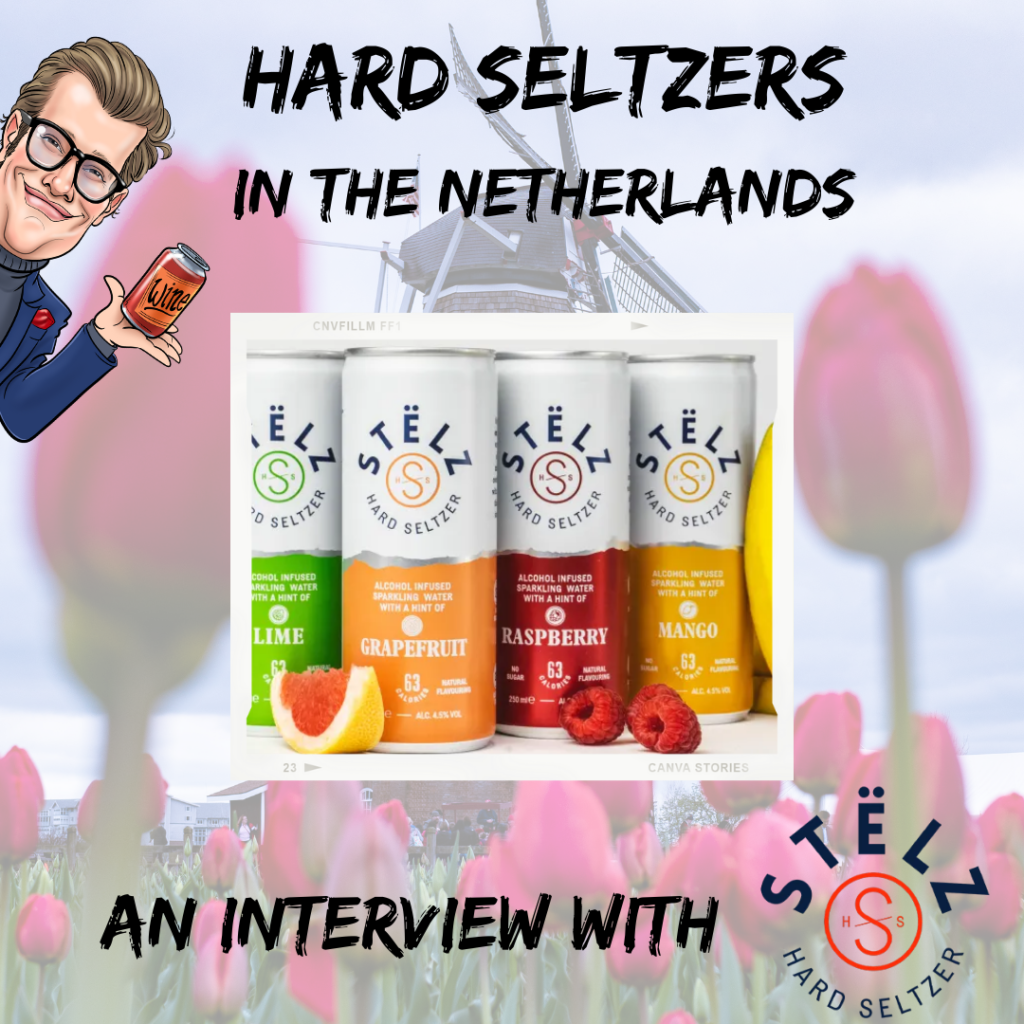
STËLZ – Hard Seltzer – ‘de 1e Nederlandse Hard Seltzer’

Profielfoto van Milan Voet
Milan Voet
  Co-Founder
STËLZ Hard Seltzer

Wie ben je en wat is je achtergrond in de drank-/rtd- industrie?

Mijn naam is Milan Voet, geboren in 1995 en opgegroeid in Landsmeer. Ik heb rechten gestudeerd aan de UvA, en vervolgens samen met Lodewijk Pessers het advocatenbureau Speyer opgericht. Pas tijdens een verblijf in de Verenigde Staten kwam ik voor het eerst in aanraking met hard seltzer. Hier zag ik hoe mijn leeftijdsgenoten massaal van het bier afstapten en dit nieuwe drankje omarmden. Van het een kwam het ander, en samen met Lodewijk, Glenn Cornelisse en Ebbo Gevers Leuven hebben we toen uiteindelijk het merk STËLZ opgericht.

STËLZ | Bier&cO

Leuk kennis te maken Milan! Jullie hebben een range aan setlzers, hoe zouden jullie het hard seltzer-assortiment van Stëlz omschrijven?

Ons assortiment bestaat uit frisse en gebalanceerde smaken. Ze sluiten goed bij elkaar aan omdat het voornamelijk toegankelijke fruitsmaken zijn. Daarnaast is hard seltzer licht in alcohol en calorieën, en speelt daarmee in op de behoefte om bewuster te drinken.

Lime

There are many lime variants in the Hard Seltzer category. This one resembles the sugar-free bubble drink with the number 7. Fresh and thirst-quenching.

Grapefruit

Particularly thirst-quenching, no sugar sweetener, pure nature and you can taste it. A fine bitterness of the grapefruit and balance the carbonation.

Raspberry

If you like small red fruit, this may be the drink of choice!
Refined bubbles have a harmonious taste with the juicy and slightly sour to slightly sweet raspberry flavor.

Mango

Pure taste, full and very fresh ripe mango. Reaches refined and not overpowered.

stelz try out – STËLZ Hard Seltzer

Hoe is jullie idee ontstaan om een hard seltzer te gaan maken?

De komst van hard seltzer vanuit de Verenigde Staten naar Europa kon niet uitblijven. Dat was in elk geval onze sterke overtuiging. Vanuit die gedachte hebben we besloten om ons eigen hard seltzer-merk te starten in Europa. Door snel in te spelen op de trend waren we de eerste hard seltzer in Europa.

STËLZ Hard Seltzer

Wat is volgens jou de USP van jullie merk?

Wij zijn een van de weinige hard seltzers zonder enige toegevoegde suikers. Daarnaast bevat ons blikje van alle hard seltzers de minste calorieën. Ook heeft ons blikje een premium design. Daarnaast maken we al onze content in-house en hebben we een groot team die de hele dag daarmee bezig is. Onze Instagram-community is de grootste van alle hard seltzer-merken in Nederland. (@stelz_int)

Waarom zit jullie Hard Seltzer in een blikje?

Daarvoor zijn verschillende redenen. Blik zorgt ervoor dat het product, de smaak en de kwaliteit beter worden behouden. Daarnaast zorgt blik ervoor dat het koolzuur goed in het drankje blijft. Blikjes zijn ook veel lichter in transport en kunnen zeer gemakkelijk gerecycled worden, dus als de keten goed aansluit wordt de ‘carbon footprint’ kleiner.

Hoe zie volgens jou de toekomst van dergelijke dranken eruit?

Wij verwachten dat de hard seltzer-markt blijft groeien. In de VS heeft hard seltzer 10% van de totale biermarkt overgenomen, en we verwachten dat dit in Nederland en de rest van Europa ook gaat gebeuren. Vooral met de trends om bewuster en gezonder te leven, past hard seltzer hier perfect in het plaatje.

Producten – STËLZ Hard Seltzer

Bedankt voor je tijd Milan, heb je nog een afsluiter welke je wilt delen?

Ja! Dat ik ontzettend veel plezier beleef aan het ondernemen en aan de interactie met onze community. Met STËLZ kunnen we mensen inspireren om bewuster te genieten!

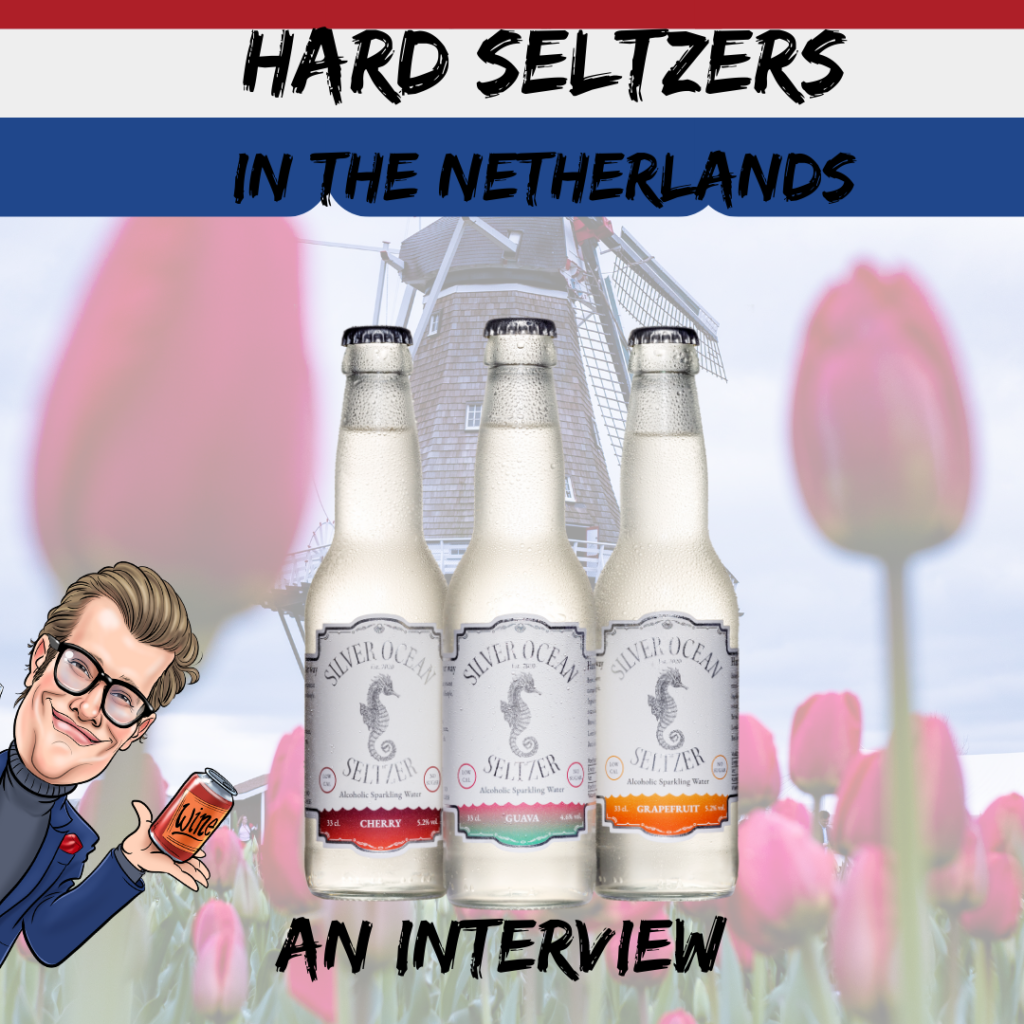
Silver Ocean Seltzer, lifestyle in a bottle!

The Hard Seltzers are booming, Ready to Drink category is going sky high and at this moment it looks like there is no stop too it.

Within the European market the market share of these fruity adult beverages is becoming more and more. Most of the available data is from the US market. As ‘State Side’ is the largest market has a Compound annual growth rate (CAGR) of 128% a year, this will also be the case in Europe as a ‘early adopter’.

So it was time for me to get in touch with several brands and investigate this ‘millennials’ market and do some ‘research’, well actually by tasting all of them!

A drink for the conscious consumer and with a vision for the future.

We mainly know Hard Seltzers in cans, from the supermarket or can be ordered online. But at Silver Ocean, 3 young men took a different approach.
All three sporty and busy with balance in life, good food but also enjoying a (calorie-filled) beer….there had to be another way!?

After a lot of tasting and experimenting with recipes, they started with a small batch and with success.
But these three men don’t just want to sell a Hard Selter, they like to see it in a broader perspective, making a positive impact on the world.

With whom do I have the pleasure of speaking?

With Lesley Daris. One of the three co-founders of Silver Ocean Seltzer.       

Groepsfoto-2.0-1536x1265.jpg

Great to speak to you Lesley, what is your background in the adult beverage/rtd industry?

All of us have no prior (professional) experience within this industry. Our experience is more first hand, from the other side of the bar. We’ve always been interested in good concepts and products though.

Silver Ocean Seltzer_logo Shopify.png

How would you describe your Hard Seltzer range? 

Silver Ocean Seltzer is a premium craft seltzer, Made the right way; Artisanally brewed with champagne yeast and cane sugar. This results in a refreshing, light and crisp drink with a cohesive taste profile. I would say it’s quite different from most of the premixed drinks within the Hard Seltzer category.

Tasting notes Dennis

All Seltzers are really very pure! A purity that I have not yet encountered with others. The fruit flavors are refined and match the surface without being disturbing.

With the cherry flavor it looks like you just bit into a small cherry, pure and pleasant.

The grapefruit is what you would expect from a grapefruit, but again modest, refined and beautifully fresh.

The range of three also includes a special flavor, namely Guava!

The Guava originates from Central America and tastes fruity and slightly floral, like a cross between a strawberry and a pear. And that’s exactly how this Guava tastes, great, special, unique and incredibly fresh.

Yes I noticed Silver Ocean is bottled and not canned, could you explain your vision on this?

We are really presenting it as a premium brand for the conscious consumer. This is all due to the fact that we can’t keep up with the big brewers in terms of quantity, so we don’t, we focus on absolute quality. Most Hard Seltzers available in The Netherlands, the marketing is aimed at students: it is sold in supermarkets and packaged in a can. That is not our way of working. We consciously go for a premium positioning, think of a subtle refreshing taste, bottled in a beautiful bottle and linked to a social purpose. That’s why we focus on the higher segment of the hospitality industry.

That’s a great vision and strategy, why are you in the ready-to-drink beverage (rtd) industry?

To raise the bar and build a premium brand with well thought about quality products. 

Thanks clear, but how do you see the future of rtd beverages?

I see the category expanding, although shifting more towards the low and no alcohol side. I foresee many crossovers between categories and brands. For example Fever Tree moving into the Hard Seltzer category and the rise of RTD Spritzers. As a whole this boosts the whole rtd category forward in terms of quality and innovation.    

And that’s exactly what this category needs and you guys are doing a great job! Do you wish to add something to this interview?

Just a little bit of own marketing…….If you’re looking for a good Hard Seltzer with a great additional social cause, check out Silver Ocean Seltzer!

Cheers on that Lesley and again thanks for your time and I will following you guys with great pleasure in the future!

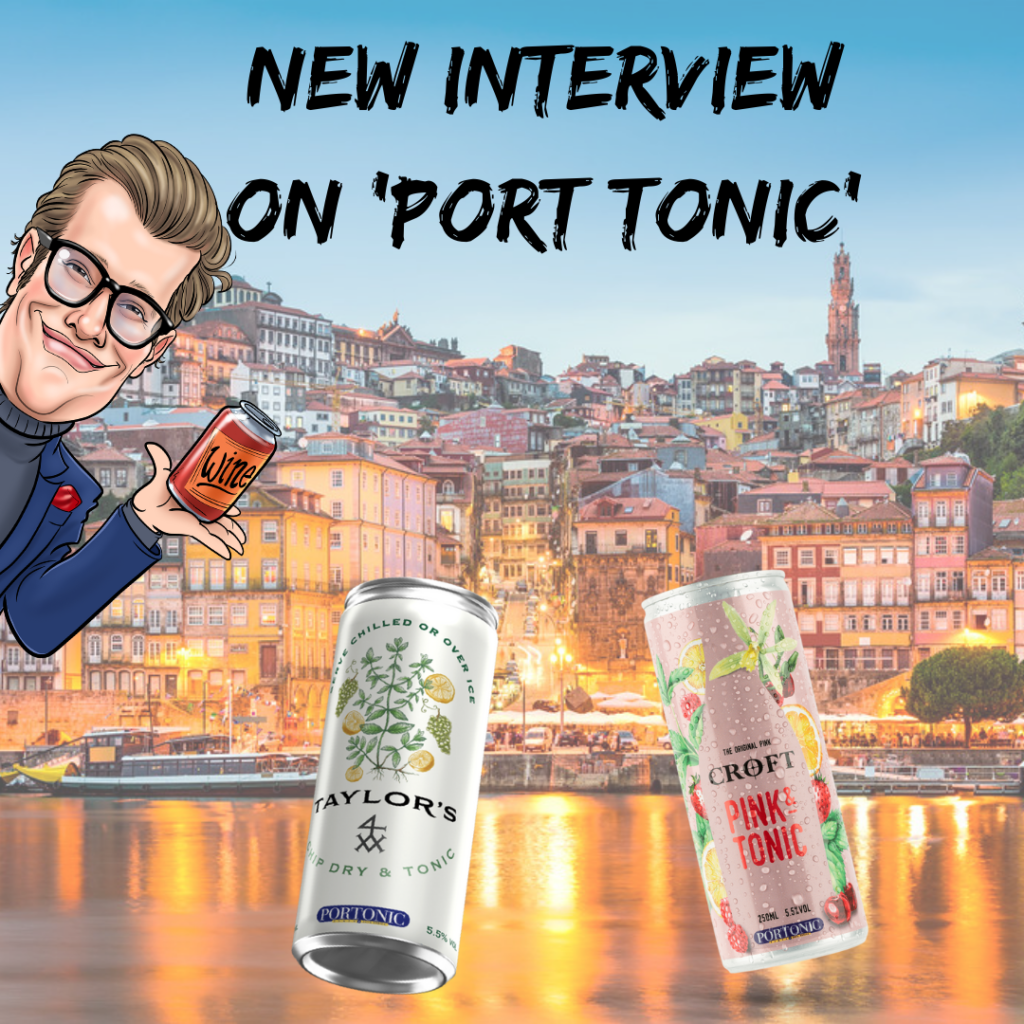
Innovation and pioneering in the port wine sector -Taylor’s Port & Croft Port are doing it!

Port, everybody knows it, but how is the image of this quality adult beverage of 18% to 20% from around the Porto area in Portugal?

I spoke to Adrian Bridge, CEO of The Fladgate Partnership, the company behind Taylor’s port, Croft Port and many more high quality brands. It is also in the tourism and distribution, about this development and the future of RTD drinks for the whole sector.

Could you tell a bit more about The Fladgate Partnership.

The original company of the group is Taylor’s Port, which was founded in 1692. However, in 2001 it acquired Croft Port, which was founded in 1588 and celebrated its 430th anniversary in 2018. With its other port wine houses (Fonseca Port and Krohn Port) The Fladgate Partnership is a leading player in producing special category Port, which it sells in over 105 countries.

What is your background in the beverage industry of port?

I moved to Portugal in 1994 to grow the Taylor’s and Fonseca Port brands in the UK and USA.  In 1998, became CEO of the Taylor Fonseca Group, spearheading its expansion by acquiring valuable industry assets, including Croft and Delaforce Port, and forming an enlarged group called The Fladgate Partnership. 

I’ve been at the forefront of innovation and change in the Port industry. In 2008 was responsible for the creation of rosé Port, the first new category for a generation, and launched the super-premium Port segment with the high-profile release of Taylor’s Scion in 2010.  In 2014 expanded the luxury gifting market with a series of 50-year-old Single Harvest Ports.

In 2010 created The Yeatman, Porto’s first world class luxury hotel, later adding two more iconic properties to the group’s portfolio, The Vintage House and Hotel Infante Sagres. In 2020 opened the World of Wine, a major cultural, gastronomic and retail complex. I am the mentor of the Porto Protocol, a global climate change initiative.

The Yeatman Hotel, Porto

What was the main reason to start this new products in a can?

Innovate and pioneer in the port wine sector. Broaden our customer base by satisfying consumers’ needs, while never compromising the outstanding quality of our Port Wines.

Who is your main target group with these cans?

Everyone looking for a refreshing, delicious and informal drink. The PORTONIC in a can will surprise and delight also those who are not familiar Port.

Taylor's Port announces the first ready-to-drink white Port & tonic in a  can. - Taylor's Port
Taylor’s Chip Dry & Tonic

What is your future goal for these products?

Now we want to consolidate the distribution of Taylor’s Chip Dry & Tonic and Croft Pink & Tonic in the different markets where we are present, and with it demonstrate the versatility and range of Port Wine.

Do you have plans to expand, have more products in cans of other alternative packages?

For the moment we are totally focused in promoting the cans we are just launching.

How would you describe your ready to drink beverage in a can?

The first pre-mixed and ready-to-drink Port & Tonic is presented in a convenient, practical, and elegant 250ml can, 100% recyclable, easy to carry and store. It is perfect to enjoy in a moment of relaxation, at home or outdoors, in the countryside or on the beach, with friends and family. Its volume was designed to be easy to transport and to chill.

Taylor’s Chip Dry & Tonic and Croft Pink & Tonic are wonderfully fresh and vibrant, with delicious flavors in a dry and very attractive finish. It is delicious and very practical to enjoy anytime and anywhere.

How do you see the future of ready to drink in a can in comparison to traditional products?

The Portonic ready to drink is easy to carry, versatile and ready to be enjoyed anytime, anywhere. It does not replace the traditional products but allows new moments of consumption reaching new consumers.

This project was challenging as we wanted to guarantee the best balanced and the most pleasing and refreshing drink.  We have done our own special dry tonic water to get the perfect ratio of a perfect Port and Tonic.

The result is a delicious drink, bursting with character, that will surprise and delight everyone.

Some tasting notes;

Croft Pink & Tonic

An amazing taste sensation of red fruits. Think of raspberries, strawberries, a subtitle hint of mint and an aftertaste of lemons. All combined with the soft bitterness of the tonic.

Croft Pink & Tonic - Croftpink

Taylor’s Chip Dry & Tonic

Refreshing and round on the palette, little hint of mint and soft lemon peel. All very good in balance with all the components of this Dry port/ Tonic!

Taylor's Port announces the first ready-to-drink white Port & tonic in a can.  - Taylor's Port

Thank you very much Adrian for your time, the pleasure was all mine!

An interview sponsor interview for the ICWC with Ardagh Metal Beverage Europe

For the International Canned Wine Competition, in my role as their International Ambassador was reasonable of acquisition of new sponsor contracts. One of the news sponsors is the Ardagh Metal Beverage Europe. Below you will read an interview with Adriana Escobar, Product Manager at Ardagh Metal Beverage Europe.

What is your personal background?

I’m a positive, objective oriented marketing professional with over 15 years of international experience in translating consumer needs and preferences into new product solutions, adding value to consumers and customers worldwide. Lived, studied, worked in 3 different countries, enhancing my intercultural skills to bring different worlds together: innovation in tradition.

Beverage Cans

What does your company do in the canned wine business?

Ardagh Group is a pioneer in wine cans, having developed this specialist packaging in response to the needs of our customers in the wine and wine-based beverage sectors. We produce 187ml, 200ml and 250ml wine cans, and also offer top-to-bottom support for customers, from corrosivity testing with the wines themselves, through connecting customers with expert fillers or helping them set up their own line, to all the nitty-gritty of getting the perfect design and graphics on the final cans.

Why are you focused on canned wines?

Wine in cans is a growing sector both in Europe and worldwide, and since cans are convenient, portable, sustainable, quickly chilled etc., they have a lot of advantages for consumers – especially with the current trends toward outdoor socializing and casual drinking occasions. Because Ardagh has a long track record in the wine industry, and we are always innovating, it was a natural next step to offer the wine can as a packaging option.

Ardagh Group adds lightness for sustainability


What makes canned wines different from other canned products (eg. beer, soda) in your business?

It’s probably the fact that wine comes with such a specific tradition behind it, and with certain cultural expectations that are often really special for the country or region where the wine comes from. By being absolutely careful to make sure the wine can preserves the delicate and unique qualities of each wine, we want to honor all of that tradition, all of the culture inherent in these wonderful wine products, while also helping customers to expand their markets and welcome in a potentially new generation of wine drinkers. So canned wines are different because they’re the next step in a long, long tradition that has had a certain “look” for hundreds of years, and they’re uniquely innovative and exciting for that reason.

Why do you sponsor the International Canned Wine Competition?

We are delighted to sponsor the ICWC because we know just how excellent and exciting canned wines can be. It’s really great to celebrate them and see them formally recognized.

Ardagh Group lists metal packaging unit in $8.5bn merger agreement -  FoodBev Media

How do you see the future of canned wines?

Canned wines are a really exciting market. Particularly among, say, younger drinkers who may not necessarily have thought of wine as a casual-drinking choice before, we see them growing in popularity in quite a big way. Wine in cans really expands the possibilities for wine producers to reach new markets and offer a new and modern proposition which carries their great tradition into the future. 

La Maison Rigal, canned wine from Gascony!

With whom do I have the pleasure of speaking?

Julien TOUBOUL, general manager / oenologist of la Maison Rigal since 2017

What is your background in wine?

I have started working in the wine industry as quality manager at La Chapelle d’Armentières for almost 2 years before my 6 year-experience as a wine buyer at Carrefour.

How would you describe your wine in a can?

A blend of two grape varieties from Gascony: Colombard with notes of citrus and exotic fruits (grapefruit, passion fruit) assembled with Sauvignon that brings complexity and elegance. A fruity and lively wine that you can take everywhere and drink on various occasions.’’

Why are you in the canned wines industry?  

According to wine intelligence, consumers are becoming more aware that transporting glass bottles comes with a carbon footprint, therefore, are seeking for more sustainable alternatives.  canned wine concept by Maison Rigal is driven by consumer demand for portability and convenience.

La Maison Rigal
la Maison Rigal

How do you see the future of canned wines?

Regarding the future for such packaging alternative for wine, it is definitely a bright one.  We were aiming for the English speaking countries in the beginning (UK, Canada) and our very first purchase order was for a Greek chain store.  Who would have imagined!  We are on out way of gaining new clients, those from New Wold wine producing countries who were rarely interested by our main production like the AOC Cahors red wine.

Our Pygat Colombard-Sauvignon is produced in Gascony from indigenous grape varieties of South-West France. Tasting notes along with wine & pairing suggestions complete the description. #onedose #sharingiscaring #pleasure #ohlala

Gatão, Vinho Verde in a can!

With whom do I have the pleasure of speaking?

Gil Frias, Commercial Director of JMV Group.

JMV Group is a Portuguese owned business group, with companies in Portugal, Spain, Canada, and USA. It has 7 companies developing 3 businesses (Wine Production, Coffee Production and Drinks Distribution).

JMV Group owns BORGES WINES, a company from 19th century that produces GATAO WINE and other brands in several different wine demarcated regions of Portugal. The company exports 60% of its volume which rounds 8 million bottles per year. 

What is your background in wine?

I am working in the wine sector since 2000. Responsible for brand building and sales of wines, spirits, ports and sparkling initially in Portugal and Spain and, since last 10 years, in almost 70 different countries in which Borges Wines are being represented.

How would you describe your wine in a can?

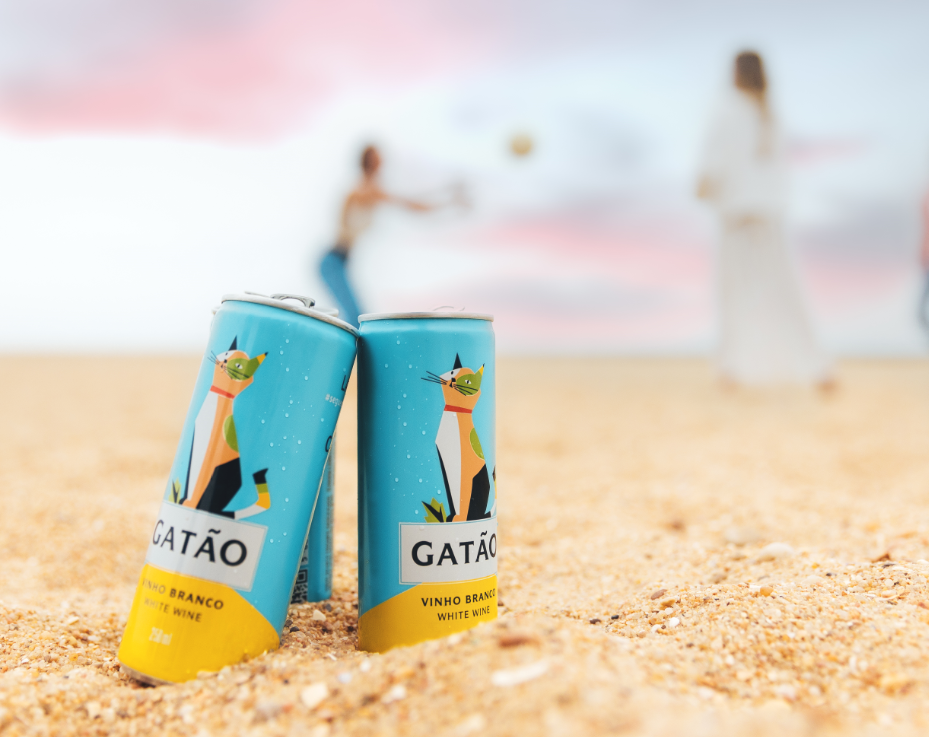
It is a typical wine from the Northwest area of Portugal:  fresh, young, low alcohol (9 degrees), floral and citrus aromatic, slightly petillant and very easy-going. Goes perfectly with seafood, salads, light meats, and it is often connected with summer consumption.

Why are you in the canned wines industry?

Because canned wine is perfect for young consumers of wine:

–        Environmentally friendly

–        Non-complicated

–        Summer, pool, and beach consumption

We believe this format is perfect for our GATÃO WINE.

How do you see the future of canned wines?

We believe canned wines is a trend that will grow strongly next years, and it is not a short-term fashion.

Environmental concerns make people search for smarter and lighter formats of packaging.

The can is perfect for young wines that live of its fruitiness. The hermeticity of the can and the opaque surface is ideal for maintaining the fruity scents of wines.

The fine surface of the can is also ideal to get quickly the right serving temperature, with lower level of energy spending.

Do you wish to add something to this interview?

We want to send our congratulations to you for all the work you do in promoting this new concept of wine in can.

Rough Day Rosé – Thracian Valley, Bulgaria

With whom do i have the pleasure of speaking?

Robert Hayk, CEO & Co-Founder of G&B Importers, was born in Armenia and raised in Soviet Russia. Having always dreamed of living in the United States, he immigrated in 1997.  Robert attended Georgetown University to study Government & Finance and then spent 15 years in the world of banking and investments, laying out the foundation for pursuing his true passion of owning his own business.

Nice to meet you Robert, what is your background in wine?

It was in the 90s, during his time working for the US Embassy in Bulgaria, that Robert developed his love and appreciation for Bulgaria, its agricultural industry, and wine in particular. There the seed for Grapes & Barley was planted, as Robert began contemplating the possibility of creating a company that could take advantage of the fertile soils of Bulgaria and the untapped potential of its wine industry and history. G&B is now the largest U.S. importer of Bulgarian wines, distributing its own brands and private labels created for retailers like Total Wine & More and Walmart in 35 states.

Your company produces the Rough Day Rosé in a can, how would you describe your wine in a can?

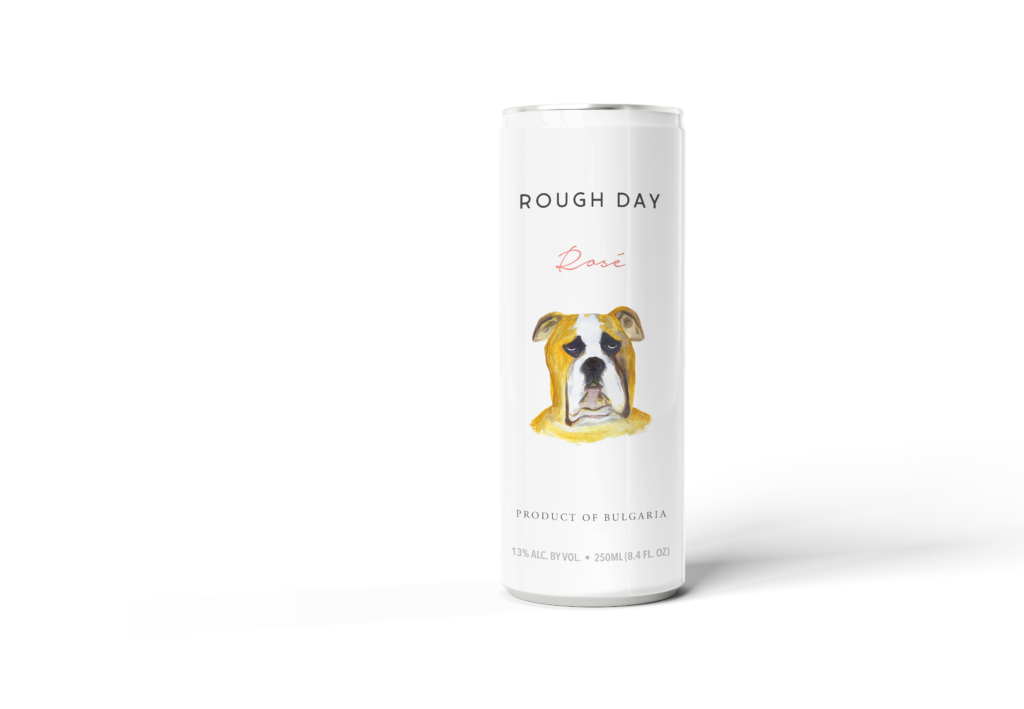
Rough Day Rosé is a delicately fruity rosé of 100% Gamza grape with aromas and flavors of strawberry, cherry, and rose petals. Gamza is a native grape from the northern region of Bulgaria, the Danube Plain. The rosé is dry, yet full of fruit and refreshing to drink straight out of the can. It’s easy to open and easy to enjoy.

All great charicaristics of the wines, but why are you in the canned wines industry?

There are so many reasons to get into canned wines. Cans are arguably the most sustainable beverage packaging option we have, since aluminum is already one of the most recycled materials. Not to mention the fact it’s thinner and weighs significantly less than glass, allowing us to ship more wine on fewer containers and trucks. It’s also less prone to breakage, preventing waste during transport and making it more portable for consumers as well. It’s also incredibly convenient. There’s no need for a cork screw or even a wine glass, so combine that with the lighter weight and you can take them almost anywhere. We also love how it’s sized for a single person, giving consumers the opportunity to experiment more and lower their consumption without a lot of waste. And lastly, from a business and marketing perspective, cans offer a lot of creativity for branding with the full 360 degree space, and because consumers can drink straight out of the can, anyone who drinks your wine is acting as a marketing vehicle, whether they’re drinking it on social media, at the beach, or at a concert.

How do you see the future of canned wines?

I definitely think cans are here to stay. The market for canned wines is growing rapidly in the US, but the technology still has some catching up to do. You’re already starting to see premium wines being put in cans, but I think we’ll start to see can liners that last longer, allowing the industry to expand further into more reds and age worthy wines in cans. I think once the technology is there, any stigmas against canned wines will easy be overpowered by all the benefits I mentioned.

Do you wish to add something to this interview?

We really believe cans have the power to help demystify and democratize wine. By reducing the level of snobbery often associated with wine, we can open up this beautiful product to so many more people. Wine has played such a large part throughout human history and culture––an accompaniment to celebrations and rituals, etc. Rather than feeling like cans are moving away from tradition, we actually feel like it helps bring us all back to the simple enjoyment of a delicious and natural product.

RICH, a luxury, made convenient.

In these series of interviews I will interview many enthusiastic people who are involved in the canned wine business.

With whom do I have the pleasure of speaking?

Andrea Holz, Head of Sales and Operations.

What is your background in wine?

I have started in the canned wine industry with RICH when I was 18 years old after finishing my secondary school specialising in Economics and Finance. I achieved my Business bachelor’s degree from Munich and New York City. Five and a half years later I am still going with a passion, thrive and determination greater than ever especially after we were able to expand with RICH into a number of new markets and continuing to expand our global footprint substantially. We are thrilled to be sponsoring the upcoming National Film Awards in London with our company. I am now responsible for leading the sales operations department with a focus on the UK market. My role includes overseeing all of the business activities and for driving sales efforts in order to enhance the business’ position with consumers and to solidify the position of the business in the canned wine market.

How would you describe your wine in a can?

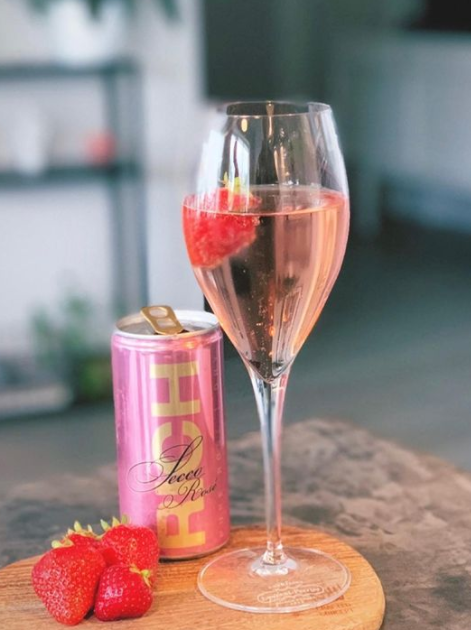
Short but sweet? RICH is a luxury, made convenient. Our sustainable canned vegan secco provides luxurious flavour. A premium sparkling Italian wine delivers on taste as well as lifestyle making it the ideal go-to drink for our customers as the perfect treat at the end of the day or at your next event without compromising on quality.

Why are you in the canned wines industry?

I never really planned to be in the canned wine industry and what many people don’t know is that I am also working in Supply Chain for a Technology Company for the past two years but my heart does beat for RICH day and night! I cannot imagine not being part of the RICH family and continuing to disrupt the global canned wine market. And why I am in the canned wine industry in particular.. so a major advantage of cans is a reduced carbon footprint – aluminum has far higher recycling rates than glass, and the carbon effect of shipping lighter containers is significant. We at RICH thrive to produce and consume as sustainable as possible hence this is personally a very important aspect for me.

Another aspect is that I recognize huge potential for the canned wine industry as consumers are becoming more aware of how high the quality can remain in aluminum and the taste is even better than from a bottle in my opinion. As an example, the advantage of canned wine is faster chilling. This makes cans a good choice for picnics, concerts in the park and drinking by the pool, where glass is most likely prohibited.

How do you see the future of canned wines?

Well I can’t wait for the day when Prosecco in particular RICH Prosecco will overtake Champagne! (She said with a big smile on her face).

Over the past few years, there has been a rise in the popularity of Prosecco, especially canned secco. With years of record-breaking sales, it is believed that Prosecco is well on its way to overtaking champagne as the most popular choice of sparkling wine. While often compared to Champagne, Prosecco wines are made with a different set of grapes and an entirely different winemaking method. It is usually produced in a dry, brut style but its fruit flavours give it a sweeter flavour that makes it an easier drink.

When it comes to food pairing, RICH Prosecco is versatile and tastes well with a wide range of dishes from different cuisines. Not many wines can be served before and also work well with the main course, but RICH Prosecco does that perfectly. Because of its sweet aromatics and bubbles, the drink matches well with spicy dishes and Asian cuisine.

Once again, given the sustainability aspect, I think that canned secco is the way to go.

Drink RICH. The most delicious, vegan and sustainable premium secco in a can.  And thank you for being here today Dennis! It was a pleasure. Stay happy, healthy and sparkly.

Zeena – a sip of freedom – Terra Alta, Catalonia

In these series of interviews I will interview many enthusiastic people who are involved in the canned wine business.

To whom do I have the pleasure of speaking?

Sana Khouja, Founder & CEO of Mindful Drinkers. 

What is your background in wine?

My love for the world of wine goes back a long way. For four years, I worked at Perinet, playing a pivotal role. It was there that I soaked up the wine culture and everything that surrounds it.
At the end of 2019, Mindful Drinkers was born and with it, Zeena. Zeena was created out of a desire to revolutionize the wine industry. Packaging wine in cans opens up possibilities to reach new audiences who can enjoy it free and on the go.

How would you describe your wine in a can?

Zeena is fully transparent in its ingredients and the production process, prioritizing the quality of the products, making a conscious selection of the grapes that originate the wines. We canned single varietals of the best Spanish varieties to educate the new consumer about the extraordinary national raw material, working under a firm commitment to R&D, working closely with the scientific experts of the Wine Technology Center VITEC. Our first choice has been the organically grown Grenache from Terra Alta (Catalonia), with which we have launched two young wines with vegan certification, devoid of additives and added sugars. They are Zeena Blanco, based on 2020 Garnacha Blanca, with an elegant and bright golden color, clean aroma with floral and citrus tones, dry and fresh in the mouth, with a light body; and Zeena Tinto, made from 2020 Garnacha Tinta, with purple color of medium brightness, clean aroma, with notes of strawberry and cherry, and a fresh palate with very subtle tannins. Zeena Rosé, also made from Garnacha Tinta, will soon be released, with a delicate salmon-pink tone, fruity and floral aroma, and lactic notes of red fruit.

Why are you in the canned wines industry?

Under the claim ‘a sip of freedom’, Zeena’s objective is not to fight against bottled wine but to push wine towards new ways and moments of consumption that the bottle cannot reach. Disruptive and global, with significant environmental awareness, it does not stick to specific targets but is based on attitudes and responds to new trends in the sector that point to substantial growth of young and organic wines in pick & go formats. Rebellious, young, engaging, honest and dreamy, Zeena is, therefore, a positive change that encourages consumers to overcome any complex so that they can enjoy wine wherever and whenever they want.  

How do you see the future of canned wines?

Wine in cans is the future; we intend to bring wine to new moments of consumption where it has no place now, breaking with certain stereotypes rooted in the wine culture. Zeena is not for the exclusive few.

Zeena is for everyone. It’s for the perfect imperfects.

An interview with Simon Gresty, Chairman, Can Makers

On behalf of the International Canned Wine Competition in California, I had an interview with Simon Gresty, Chairman, Can Makers.

A gold sponsor of this year’s International Canned Wine Competition, the Can Makers is the trade body representing drinks can manufacturers in the UK.

Members work together specifically to promote the benefits of the drinks can and aid communications between the industry and its customers: the brewers and soft drinks manufacturers and the retailers, as well as the packaging industry, the media and consumers.

The UK is the largest beverage can market in Europe, with over 10 billion cans shipped each year from UK can manufacturing plants. The Can Makers was the first organisation in Europe formed to promote drink cans. It is part of the Metal Packaging Manufacturers Association which represents the UK metal packaging industry.

Thanks for taking the time to speak with ICWC Simon. Can you tell me a little about yourself and your background?

In addition to my position as chairman of the Can Makers, I’ve now held my current role as General Manager at Ardagh for five years, overseeing all aspects of the business.

 I’ve worked in the industry for more than three decades, as an account manager in the early days before taking on commercial roles in sales and business development and then general management.

You were previously chairman of the Can Makers between 2006 and 2008. How has the industry changed since then?

There have been many changes of significance for the industry in the last 15 years, such as the shift in focus from printing capability to sustainability, with all its implications throughout the value chain.  And you have to remember that the colours we see on cans now, the creative designs and branding opportunities that are now a key differentiator when choosing to package wines or any beverage in cans, would have been unthinkable little more than a decade ago.

The metal beverage can industry has had to continually reinvent and adapt to market conditions in that time and adaptability is now a constant requirement. Increasing levels of operational versatility will therefore remain a key challenge for industry in the years ahead.

Why did you choose to support the ICWC?

The Can Makers Committee brings together stakeholders throughout the value chain from manufacturers to suppliers of raw materials and the Committee’s work proactively supports numerous environmental and technical initiatives as well as marketing campaigns to promote the can.

The fact is that canned wine is fast becoming big business. The UK market is now worth more than £3.6 million – an annual increase of 125% to August 2019, while the global canned wines market is expected to reach USD 155.1 million by 2027.

But despite this growth and the environmental benefits the can offers, there remains a perception among some that canned wine is somehow inferior.

Supporting ICWC is just one way in which the Can Makers is helping to change consumer and brand perception and drive growth in this category. It also follows Can Makers work with a number of leading wine critics, whom we invited to participate in a virtual wine taste test. The results were extremely encouraging and many of the wines continue to feature in the national press following endorsement by the critics.

Initiatives like this all make a significant contribution to normalising new formats and ensuring the merits of the can are considered by all beverage producers.

What does the future hold for canned wine?

In recent years we’ve seen a major shift in the types of beverages packaged in cans. As brands diversify, so the format itself has adapted.

The 330ml can has undoubtedly underpinned the rise in craft beers while sleek and slim cans are increasingly popular with premium brands for high quality wines as well as spirits and mixers.

A natural progression in this development, and one which I am keen to drive as far as possible during my time in office, is the perception of the can as a format which offers real prestige, as well as performance and convenience.

There is no doubt in my mind that the popularity of wine in cans will continue to grow. We are already seeing high quality brands launching exclusively in cans which simply would not have happened just a few years ago.

And for the sustainably conscious consumer, the canned format is ideal. Cans are light, convenient and easy to recycle. Aluminium cans are also the most recycled beverage container in the world and can be recycled forever without any loss of quality. This sustainability message is only going to become more important for brands in the years ahead.

The Can Makers will therefore continue to focus its communications activity on driving awareness of the benefits beverage cans offer throughout the value chain, from brands to consumers.

Californian (canned) wines made by Canadians

In these series of interviews I will interview many enthusiastic people who are involved in the canned wine business.

With whom do I have the pleasure of speaking?

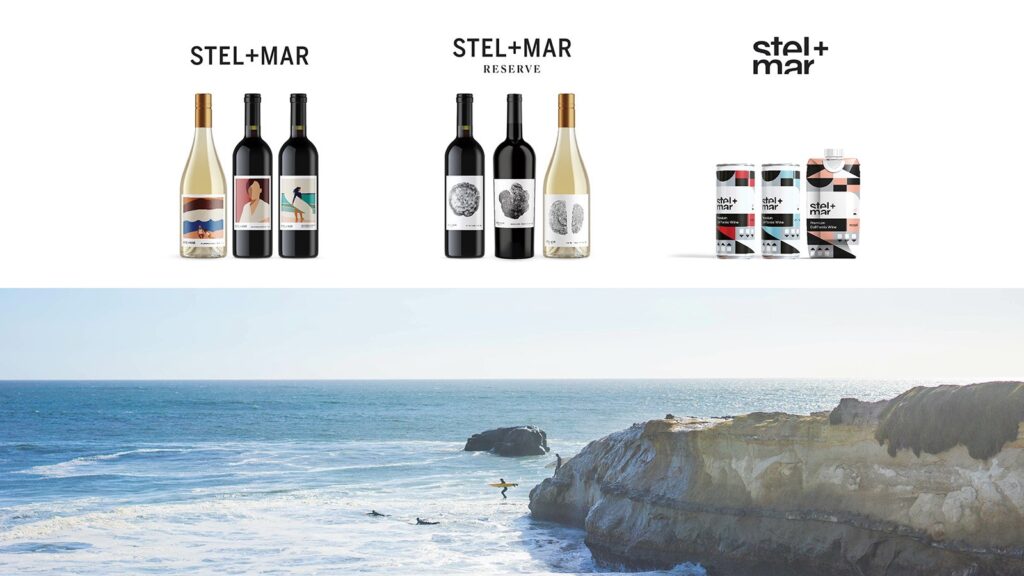
Justin Dumitrescu and Chris Noll, Founders of STEL+MAR.

Our wine brand is the result of two friends and their families coming together to make crowd-pleasing and award-winning California wines. The name is derived from their kids, Stella and Marcus, and a brand name was born. Our combination of amazing wine and label art has resonated with consumers around the world.

What is your background in wine?

We’ve been in the alcohol industry for several years starting with cider, which is similar to wine. We are both big wine lovers and have always wanted to get into wine.

How would you DESCRIBE your wine in a can?

Better than what’s in most bottles at similar values! Our wine in can is single varietal and single ava. Low sugar (less than 3g / L). We let the terroir speak for the wine—nothing added to the wine.

Each year we personally select the best lots from each harvest; we focus on wines that are single varietal, unadultered and above all, showcase the winemaker and wine region. We enter each year both optimistic and opportunistic; paying obsessive attention to the weather, the rain, cool nights, and the delicate harvest. Growing up in Canada and being driven by the changing seasons, we see vineyards in a similar light with their distinct cycle of growth, harvest and rest.

Our red is a 100% Zinfandel from the magnificent Lodi AVA.  A classic Lodi Red Zinfandel! A robust wine packed with ripe fruit (cherries, cassis, and blackberries) yet enough acidity to give it lift. The rich berry flavours are highlighted with subtle hints of chocolate and vanilla that do not overpower. Finished with ripe tannins. This medium-bodied Zinfandel pairs beautifully with lamb, grilled beef, and pizza.

Our white is a 100% Chardonnay from Mendocino. This beautiful Unoaked Chardonnay offers aromas of Anjou pear, nectarine, and green apple. The palate shows ripe orchard fruit and citrus flavors that are light and lively, backed by bright acidity. Vanilla minerality with some lingering toffee tones. This fruit-forward Chardonnay pairs beautifully with fish, grilled chicken, and sushi.

‘The Zinfandel is absolutely mind blowing! Spicy, black and red fruit combined with acidity. The wine lingers long and it must be said that having a high quality red canned is a hard job, but at STEL+MAR they did it!’

‘The unoaked Chardonnay does not smells like an unoaked….the vanilla and caramel gives a small nod to wood aging, but that is not technically the case. It is a wine with a good body which can be enjoyed ‘stand-alone’ or combined with lot’s of food, due to its gastronomic character’

Why are you in the canned wines industry?

We think canned wine is the next major innovation in wine. Similar to twist-off tops, it will take a few years for people to get past their inherent biases.

How do you see the future of canned wines?

Bright! Millennials will be quick to adopt canned wine followed by the older demographics. There’s no good reason why canned wine won’t represent 10-20% of the total wine market in 5 to 10 years.
We also package wines in tetra pack boxes and light glass bottles. We aim to make crowd-pleasing wine at good prices with beautiful label art, all packaged in environmentally-friendly packaging options.

Tetra pack boxes

Canned wines from NY!

In these series of interviews I will interview many enthusiastic people who are involved in the canned wine business.

With whom do I have the pleasure of speaking?

My name is Aimée Lasseigne New and I am the New York City Brand Ambassador for Lieb Cellars,which is a 22 hectares, certified sustainable, winery on the North Fork of Long Island, NY and also our second label Bridge Lane Wine which specializes in craft wine offered in bottles as well as alternative formats.

Aimée Lasseigne New

What is your background in wine?

I worked in fine wine retail for 14 years and have also served in restaurants.  I was selected twice to compete in the StarChefs Somm Slam at the International Chef Congress, have been a FICOFI guest sommelier, and my piece “The Struggle for Sweet” was selected as a placing entry for The Feiring Line Writing Mentorship Award. I am a graduate of Louisiana Scholars’ College, recognized as a Certified Sommelier by the Court of Master Sommeliers, and a Diploma Candidate of the Wine & Spirit Education Trust (WSET).  

As a freelance wine and spirits judge I have served on panels both locally and internationally in Paris, Beijing, Spain, Bulgaria, and Switzerland in addition to having visited vineyards across New York, Napa, Portugal, Bordeaux, Italy, and the Republic of Georgia.

How would you describe your wines in a can?

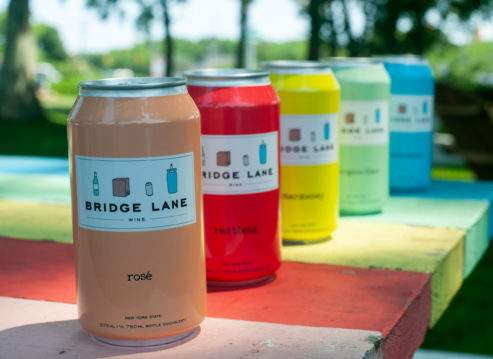
Bridge Lane is unique in that our wines are available in four sizes: 750ml bottles, 3L Bag-in-Box, 19.5L kegs, and 375ml cans.  We were the first in NY to offer wine in cans.

The canned wines range of Bridge Lane

Our rosé is the most popular.  It is dry, known for its crisp acidity and is Cabernet Franc based with notes of strawberry, peach, and watermelon. Our Chardonnay is unoaked with notes of lemon, pear and green apple.

If you don’t like Chardonnay, you will now! Great fruitiness and wonderful layers of aromas and what an aftertaste!

We have a rather unique wine – White Merlot which is actually a white wine made from Merlot grapes with no skin contact. There are notes of ripe honeydew melon and lime with an apple peel finish.

First time I tasted a White Merlot wine. Absolutely amazing and unique in his kind. Tropical fruit and little berries arise from the glass and the can. Without a doubt a great wine with potential in a can!

Our Sauvignon Blanc has freshly cut grass and floral aromas and a citrusy finish.

This is really what you would expect from a Sauvignon Blanc from this part of the world. Crispy, juicy and great acidity!

Our Red Blend is mainly made of Merlot with notes of black cherry and spicy cedar and spends 6 months in Hungarian Oak.

A BDX blend as it should be with a lot of ‘over sea’ freshness, which referring to the cooling ocean influence preserves the fresh acidity in the wine.The wine has got depth and notes of dark fruit and a balance between acidity and fruitiness. This is an example of a great red wine in a can!

We do have a 6th Bridge Lane wine, and it is available only in cans – our Bridge Lane Bubbles which was first released in 2020.  It is mostly made of Riesling with notes of tangerine, honey, and jasmine.  Unlike our other wines which are dry this wine has a little residual sugar to balance the zippy Riesling.

Why are you in the canned wines industry?

Our General Manager, Ami Opisso discussed this with me recently.  They had talked about cans in 2014 when they rebranded Bridge Lane and launched boxes and kegs because it was logical to include cans as a part of our alternative format focus, and as she said, “because we wanted to bring them to the beach” but she quickly realized that cans were going to require a lot more research and development than the other formats.  There were multiple barriers to entry.

A purchase of an entire truckload of cans from Ball Corp. was necessary, the shrink-sleeve process would occur in the Midwest, and there were no mobile canners in the Northeast who had ever canned wine before. 

She said it took her and Russell Hearn (our winemaker) two years to figure out the logistics.  Our rosé was introduced in a can in 2017 as a small batch to make sure it was viable, and our other wines followed in 2018.

How do you see the future of canned wines?

I see only increased growth potential.  I don’t have the exact figures in front of me, but the percentages of canned wine sales are constantly increasing at a rapid pace and are even starting to be explored in unexpected markets such as India.   

Yet in the US, still wines in cans are currently less than 1% of sales. This has room for improvement here and also globally as trends skew towards interests in packaging of products that are better on the environment and choosing quality over quantity as individual canned servings of premium wines may offer.

Do you wish to add something to this interview?

Yes, I appreciate that The Wine Can Guy focuses on global matchmaking in the premium canned wine category.  I thank you for sharing your vision and for having me here.  Our industry is truly lucky to have you as an energetic ally.

The Wine Can Guy

Meet Ben of Ben Wren – a canned wine from South Africa

In these series of interviews I will interview many enthusiastic people who are involved in the canned wine business.

WITH WHOM DO I HAVE THE PLEASURE OF SPEAKING?

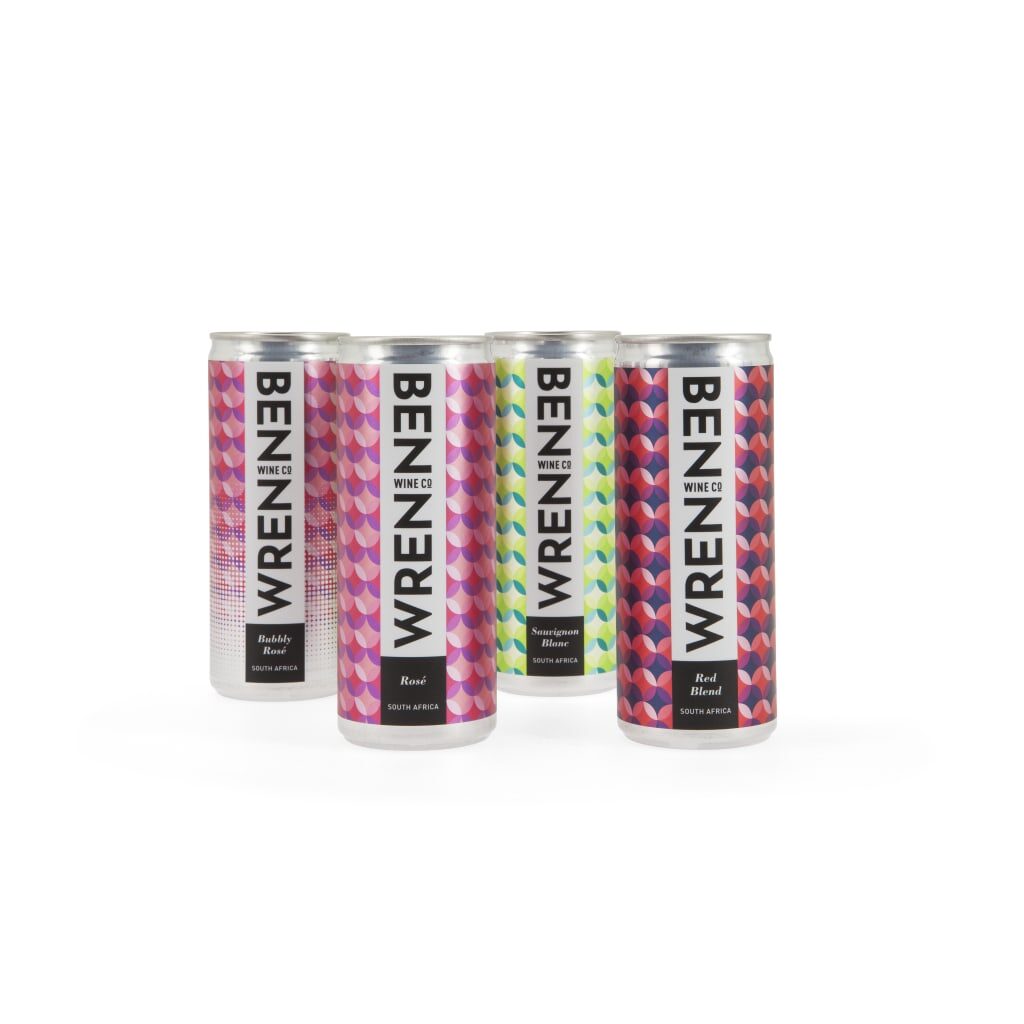
Ben Wren – founder of Ben Wren Wine from South Africa.

WHAT IS YOUR BACKGOUND IN WINE?

I have a background in advertising, we launched the wine as we saw an opportunity to market quality wine to millennials. So that’s when we create drinks for a target market, not make wine and pitch it out to consumers. We started with a Sauvignon Blanc and Red Blend high end 3L wine box 2 years ago.

But this was probably 1 year too early and didn’t get retail support. To solve the sampling problem we launched 250ml wine cans and they exploded in the market and have taken over from the box.

Geen alternatieve tekst opgegeven voor deze afbeelding

HOW WOULD YOU DESRIBE YOUR WINE IN A CAN?

Well I make a mouth filling Cabernet Sauvignon/Cinsault red blend, a delicious rose of Syrah & Viognier (French CÔTE-RÔTIE recipe!!), an amazing Chenin Blanc, a crisp Sauvignon Blanc and a Bubbly Rosé.

All our success has been built on three factors – great wine, great (award winning) packaging and a competitive price. There is not a better wine at our price point (and above ). Our wines are light and easy drinking. Structured but uncomplicated. They are designed to go in a cooler box and sit next to craft beer. Here in South Africa uncomplicated wines work better in a can and our Rosé by the way is award winning

WHY ARE YOU IN THE CANNED WINES INDUSTRY?

Because I love wine and like doing things differently! Nowadays it’s too easy launching a wine in a bottle – and frankly the market is flooded with good wine bottles with not enough retail support. What I also see in the market is that there is a disconnect between young drinkers and fine wine. My plan is to bring a new generation into the wine category.

‘‘If we’re being totally honest, this is a marriage of convenience. Premium estate wines nursed to life by an award-winning wine master, partnered with stunningly versatile, earth-friendly packaging’’

Geen alternatieve tekst opgegeven voor deze afbeelding

HOW DO YOU SEE THE FUTURE OF CANNED WINES?

In more mature markets the category has been defined. Entry level, mid-range certified wine, high end specialist wines. And therefore, particularly in the US, we’re seeing better wine being put in cans from top wine makers. Also the range of wines like organic, low alcohol and de-alcoholized wine in cans are growing and will be more visible.

ANY OTHER THINGS YOU LIKE TO ADD?

Yes! Next to my wines, I also have a Spritzer range. They are out selling the wines, they appeal to wider audience and more friendly because of the lower alcohol, low sugar and are 100% natural. Maybe we could do a separated article about this!? Yes would be great!

Beaujolais Cru in a can! Meet Miss Vicky

In these series of interviews I will interview many enthusiastic people who are involved in the canned wine business all over the world!

With whom do I have the pleasure of speaking?

With ‘Miss Vicky Wine’ also known as Anne-Victoire Monrozier a French wine expert and blogger with family roots in the Beaujolais for over 200 years!

What is your backgound in wine?

As I said before my family runs wineries in the Beaujolais for many year now. On my dad’s side it is in Fleurie at Château des Moriers in the Beaujolais Crus. My cousins are in the Beaujolais-Villages, in the southern part of the region at Domaine de Buis-Rond. I was born in Paris and all changed in my life when my father decided to take over the family vineyard in Fleurie in 2005. I was always part of the vineyard, spending most of my holidays… I’m making my holiday an everyday today.

How would you desribe your wine in a can?

I found traditional wine labels didn’t match my idea of wine. As I was first known as a wine blogger, I’ve transfer this on my products: personalized, aesthetic, easy to recognize and social. My Fleurie – Ô Joie canned wine can be called crunchy, fresh, with structure and full of red berries that make you happy with every sip you take.

Geen alternatieve tekst opgegeven voor deze afbeelding

Tasting notes of The Wine Can Guy

‘’Full of red fruit like cherry, raspberry, strawberry with some hints of cinnamon. An elegant red wine with soft tannins and a good balance’’ 

Why are you in the canned wines industry?

Cans are exciting, they make you think of wine in a different way, liberate you from the wine long history, the snobbism that can sometimes make you feel you have to be a connoisseur to open a bottle. I’m always ready to try something new and besides the innovative side, cans are really answering a need. Need for a smaller content, lighted weight, more practicality. 

How do you see the future of canned wines?

Cans will never replace the bottle, but they will grow because – as I was just saying – they are answering a need for smarter consumption, easier way to grasp a glass. The development or hard seltzer and beer in can will also help to ease the positive perception of canned wine, so will the multiplication of winemakers that will put artisan wines in a can. Maybe natural and organic winemakers will also adopt the trend, helping giving quality and craftmanship a better place in the market.

Meet Cool Vino – ‘welcome in the new normal’​

In these series of interviews I will interview many enthusiastic people who are involved in the canned wine business.

WITH WHOM DO I HAVE THE PLEASURE OF SPEAKING?

Hey Dennis! We have the pleasure of speaking with you! We are Carmen & Carolina founders of Cool Vino, The Spanish Rosé, a canned rosé wine with bubbles from Castilla La Mancha Spain.

WHAT IS YOUR BACKGROUND IN WINE?

Well 3 years ago we had no wine background except for the fact that we loved to drink it. We can say we are new to the wine scene but again the concept of canned wine is also new so we believe that we entered the canned wine market at the right time. Our goal is to introduce wine to younger generations in a less serious format so we created a great quality product that can be transported anywhere and that is easy to drink.

Geen alternatieve tekst opgegeven voor deze afbeelding

HOW WOULD YOU DESCRIBE YOUR WINE IN A CAN?

We created a brand that is visually very attractive, sexy and with an accent of femininity. The juice itself is fresh and fruity, no sugars added. The acidity highlights the freshness of the wine with a consistent body but without reaching the tannic notes of red wines. The soft and small CO2 bubbles that we have added to the wine make it more friendly and easier to drink. And let’s not forget about its bubble gum pink color. Let’s summarize this in millennial language: we created a great quality wine that is light to drink, cools fast, the can is 100% recyclable and can be consumed anytime and anywhere.

TASTING NOTES OF THE WINE CAN GUY

‘Great pinky color, with raspberry and strawberry, a real funky wine for any sunny outdoor event’’

WHY ARE YOU IN THE CANNED WINES INDUSTRY?

Carmen and myself are part of the millennial generation. We love to drink wine but we felt like drinking wine didn’t need to be so serious. The wine scene is very outdated. A big part of Millennials and the part of the legal drinking age Generation Z, see wine as a product that is expensive and that is more suited to an older generation. Not to mention that for many people wine is an acquired taste… Innovation does not mean breaking thousands of years of tradition on the contrary it’s all about adapting those traditions to younger generations in a language and form that they can understand and relate to. Now with covid the format makes even more sense.

At Cool Vino we are committed to environmental, economic and social sustainability. Our brand believes in 3 fundamental pillars, transparency, integrity and innovation. Transparency in showing the origin of our products, how we make them and who makes them possible. Integrity as we act ethically from the field to the commercialization of our products. We are honest, in the long term we seek the common good. Innovation by implementing the use of technological advances in all the processes of the production chain.

HOW DO YOU SEE THE FUTURE OF CANNED WINES?

We believe that they might just save the wine industry. The canned wine industry has made a commitment to social change. Like any other industry the wine industry needs to recognize that change is good and canned wines are here to rejuvenate this outdated hierarchical industry.

We will keep drinking wines in bottles but cans will reach new customers. The industry needs to be rejuvenated in the way we communicate with these younger generations and recognize their spending power. At the end of the day it’s good for the entire industry as a whole. We will be expanding our market in the US to other states this year and will launch Cool Vino in Spain this spring adding another Cool Vino SKU, The Spanish White with bubbles. Welcome to the new normal. Pop the can in your cooler or fridge, let it cool for 15 minutes, drop the glass, grab your can and enjoy Cool Vino.

Can-U – Portugal native canned wine!

In these series of interviews I will interview many enthusiastic people who are involved in the canned wine business.

WITH WHOM DO I HAVE THE PLEASURE OF SPEAKING?

My name is João Henriques and I am the co-founder of the Can-U brand based in Portugal. CAN-U is a brand of canned wine and sangria. This is an innovative concept that aims to bring quality, simplicity and practicality to all those who appreciate wine. CAN-U are Portuguese wines and sangria, uncomplicated and easy to drink, the better solution to bars, to terraces, to the beach, to take to parties, festivals and concerts, or to accompany a picnic, in a relaxed way. The can, still seen by some like an avant-garde idea, is a practical option for drinks that should be consumed young. CAN-U is for everybody. CAN-U is practical, easy to carry, easy to open and very easy to drink.

WHAT IS YOUR BACKGROUND IN WINE?

I like wines, but I am not professional. I did some training (wine introduction, level 1 and 2).

HOW WOULD YOU DESCRIBE YOUR WINE IN A CAN?

We describe our wines in a can like wines that could be enjoyed with a meal, but also in a relaxed way, as we can drink them in the beach, in swimming pool, in a festivals, picnics, concerts, etc. Our red is a blend of Aragonês & Syrah and is made by total destemming and control of fermentation temperature. The wine is clear with a garnet color and violet nuances. The wine has an intense nose with a lot of red fruits and strawberry jam. In the taste the wines shows these aroma’s as well, has a full-body and is balanced and persistent.

Our white is a blend of the native grapes from Portugal; Fernão Pires & Trincadeiras das Pratas. The wine is clear with a citrine color. The wine has an great nose with a lot of tropical and citric fruits. In the taste the wines shows these aroma’s as well, is very fresh, intense and balanced. Excellent to serve with fish and seafood, as well as an aperitif. I want to give you an inside in these native grapes from Portugal, which are great for canned wine! The Fernão Pires grape (also called Maria Gomes) produces floral white wines. They are fresh, fruity and aromatic, with blossom, acacia and spice. Wines to drink young, as an aperitif, with lightly spiced snacks or with fried fresh sardines.

Trincadeira das Pratas is a light-skinned grape variety mainly used in blended white wines, particularly the Estremadura, Ribatejo and Setubal wine regions. Its primary role is to bring perfume and delicate flavor into a blend. Trincadeira das Pratas vines bud and ripen early in the growing season, making them susceptible to spring frosts, but Portugal’s warm, sunny climate means this is rarely a concern.

TASTING NOTES OF THE WINE CAN GUY

‘When I tasted the red I was blown away by the complexity, the spiciness and the full body. Absolutely amazing. Especially as it is very difficult to have a good quality wine in a can, job well done!’

‘The white wines has a bit more body then expected, which I really well done. It is fresh and fruity and has a great bite for excellent food pairing!’

WHY ARE YOU IN THE CANNED WINES INDUSTRY?

As wines are one thing that we like, this was the way to have our own brand and the starting of our experience in the world of wines. We know this could be a good market in future, not to substitute the bottles, but as a complement.

HOW DO YOU SEE THE FUTURE OF CANNED WINES?

We think that canned wines will be a trend, because of the practicability that we can have with a can. We believe canned wine will have their place in the market once people change their way of thinking. Once we try it we become fans. We would like to tell people not to judge canned wines before they try it. It won’t be the end of bottled wines, it’ll be the beginning of canned wines. Two different products, two different concepts.

Andra – BE BOLD. BE FREE

In these series of interviews I will interview many enthusiastic people who are involved in the canned wine business.

WITH WHOM DO I HAVE THE PLEASURE OF SPEAKING?

Adam Lovell and I am an entrepreneur in the canned wine segment of the wine industry. Originally, I am from New Zealand but for the last 4 years I have been living and working in Spain & Portugal and it is here that I have created my company and products.

WHAT IS YOUR BACKGOUND IN WINE?

As a teenager working in restaurants, I became interested in wine. I was lucky enough, as I went through school and university, to work in a number of restaurants with some rather extensive wine lists. This gave me an excellent basis of knowledge which I then sought to extend when I left university by going to work in some of the vineyards and wineries in the region I grew up in. I worked in a few places at home and then came to work in Europe. I did a vintage in France before deciding to try my luck in Spain. I was able to work with a few wineries in some different regions and learn a lot in that time and that led me to noticing a gap in the market with canned wine which I was eager to explore.

HOW WOULD YOU DESRIBE YOUR WINE IN A CAN?

The wine in a can I have created is called Andra. I have created this product with the intention of bringing quality wine to consumers in a way that excites, engages and inspires. In particular, I have decided to create something for women as I see very little in the drinks industry that is made especially with women in mind and figured this would be a fun and enjoyable market sector in which to create something cool. The wine itself is some great wine from the Valencia region. A rosé made 100% from Bobal and a white wine 100% from Macabeo. The wines are soft, well-rounded but still crisp, with nice fruit forward notes that make for very enjoyable drinking. And of course, coming from the can, they are kept fresh and vibrant! This is the first product line I have created of what, I hope, to be a fair few more. Watch this space!

TASTING NOTES OF THE WINE CAN GUY – ROSE

‘Fresh, dry and with aromas of young little red fruit like raspberry, strawberry and a twist if herbs…..like Provence! Well done and a joy to drink’’.

Geen alternatieve tekst opgegeven voor deze afbeelding

WHY ARE YOU IN THE CANNED WINES INDUSTRY?

I was drawn to the canned wine industry as, after a number of years working with wine, I became very bored with the traditional wine marketing. I find it very often to be unengaging and rather self-absorbed, always talking about the quality and features of the product and putting little consideration into the actual experience that they are seeking to create. For this reason, I notice that a lot of people, younger generations especially, are not interested in the wine they are purchasing and despite liking the taste, see little to no value in digging any deeper. Why? Because there is nothing that really communicates with them to entice them to look further. The wine they drink is then a part of the background as opposed to being something that contributes something to the experience. A personal mission I have been developing is to find a way to bring quality wine to consumers in a more accessible and engaging way and it is through this format that I have found a great new way to do just that. Wine can be fun and carefree too, y’know.

HOW DO YOU SEE THE FUTURE OF CANNED WINES?

A lot of people in the industry seem to be up in arms about the use of cans and its sort of blasphemy against the qualitative values of the world of wine and their beloved bottles. Again though, I think this viewpoint is rather self-centered and fails to realize the magnitude of wine consumers or potential consumers who are not swayed by this in the same way and would prefer an easier, more convenient and more sustainable way to consume their wine. For the wine enthusiasts, their cultures and traditions will persist but the canned wine world should open up wine consumption to far greater numbers, thus growing the size of the industry as a whole. This may cause a large shift of format among the entry level ranges as producers adapt to accommodate this new preference in the market – also, making it more sustainable as a whole – but when it comes to the more intricate and traditional side of wine, I believe there are still positives. As more people are brought into wine consumption with this easily accessible format there should also be an increase in the consumption of this higher quality wine too as more people are gently persuaded into the market and then start to explore more.

I am super excited and grateful to be putting something engaging, creative and sustainable out into the world of wine and I look forward to all of the fantastic adventures and great people I encounter as the project grows. Thank you Dennis for your time and the opportunity to share my ideas and opinions.

𝙉𝙀𝙒 𝙉𝙊𝙍𝙈𝘼𝙇 𝙄𝙉 𝙏𝙃𝙀 𝙒𝙄𝙉𝙀 𝘽𝙐𝙎𝙄𝙉𝙀𝙎𝙎 – SOMMELIER Magazine (GastroPress) – co-author

Some time ago I was asked by Lubos Bárta (Chief editor E-SOMMELIER Magazine (GastroPress Ltd.), if I wanted to participate in an international publication. As the topic is so important I publish my part again – for the whole publication click on this link.

”𝙉𝙀𝙒 𝙉𝙊𝙍𝙈𝘼𝙇 𝙄𝙉 𝙏𝙃𝙀 𝙒𝙄𝙉𝙀 𝘽𝙐𝙎𝙄𝙉𝙀𝙎𝙎 (𝙤𝙧 𝙃𝙤𝙬 𝙏𝙤 𝙎𝙪𝙧𝙫𝙞𝙫𝙚 𝘾𝙤𝙫𝙞𝙙 𝙁𝙧𝙤𝙢 𝘼𝙣 𝙀𝙘𝙤𝙣𝙤𝙢𝙞𝙘 𝙋𝙚𝙧𝙨𝙥𝙚𝙘𝙩𝙞𝙫𝙚 𝙒𝙝𝙞𝙡𝙚 𝙃𝙤𝙡𝙙𝙞𝙣𝙜 𝙊𝙣𝙩𝙤 𝙔𝙤𝙪𝙧 𝘿𝙞𝙜𝙣𝙞𝙩𝙮 𝘼𝙣𝙙 𝙃𝙤𝙬 𝘾𝙖𝙣 𝙏𝙝𝙞𝙨 𝘾𝙤𝙧𝙤𝙣𝙖 𝘾𝙧𝙞𝙨𝙞𝙨 𝘽𝙚 𝙏𝙪𝙧𝙣𝙚𝙙 𝙄𝙣𝙩𝙤 𝘼𝙣 𝙊𝙥𝙥𝙤𝙧𝙩𝙪𝙣𝙞𝙩𝙮)

Will wine be sold in cans or plastic containers in small individual portions?

Yes, certainly without any doubt and this has already been the case for several years in a lot of countries around the world. 

Recent research of the British research firm Wine Intelligence shows that the acceptance of canned wine has grown greatly in the United States, the United Kingdom, Canada and even Sweden. In the current Covid crisis consumers appear to be more open to alternative packaging in wine than ever before. Smaller packages are becoming more popular for multiple reasons. The new generation of wine drinkers is into the experience of drinking quality wine. They want to drink wine with friends, anytime, anyplace. But it is too simple to connect the ‘non-bottle’ packaging only to young, hip and modern wine drinkers. No, other ‘categories’ of more traditional wine consumers are also part of this development. Consider the worldwide increase in obesity, heart and vascular disease and cancer, which all contribute to the growing desire to drink less wine but higher quality in the minds of a lot of consumers. The innovation of the can of wine responds to all these wishes. I also think the ‘mainstream’ wine world should not see it as a substitute for a bottle; it is purely convenient packaging and that how is must be accepted.Geen alternatieve tekst opgegeven voor deze afbeelding

Will the customer require a different package, factory-packed individual portions for one or two glasses in the current epidemiological situation?

I definitely think consumers will have a demand for ‘single serve’ packages in the current epidemiological situation. As I mentioned before this current pandemic opens new perspectives and sometimes forces producers and consumers alternative packaging in wine than ever before.

But is the wine can really that new and contemporary?

Let me take you briefly into the history of wine in a can. The first experiments with canned wine paralleled the introduction of the first beer cans in 1935 in the United States. These were not the ‘tab’ cans that we are used to these days; these were flat-top steel cans that required an opener, often referred to as a “church key,” to punch holes in the top. Was it Chardonnay or Cabernet Sauvignon at that time? No, they contained Muscatel and other wine related drinks like canned Port, Sherry and Tokay. So no light, sparkling, refreshing wines; these wines containing about 20% alcohol. In the 1940s a new kind of can came on the market. These cans were opened in the same manner as beer bottles and it was hoped they would provide an easier transition than flat-top cans. The first wine canned outside the United States may have been from Australia. About the same time a French steel can of Bordeaux Superieur appeared on the market. The first extended marketing of white wine in cans came about in the late 1970s courtesy of producers in Australia. Venezuela and Argentina followed with unusual canned wines based on red wine of Spain with citrus fruit juices added – like the wine spritzers, coolers and seltzers we have nowadays!

Geen alternatieve tekst opgegeven voor deze afbeelding

In 1981 aluminum cans were introduced in England, specifically a French vin de table specially selected for the can. Within one year, a redesigned tall 250 ml can, was introduced and wines were imported in bulk to be canned in England or in cans expressly designed and filled for the producer. It wasn’t long before every major supermarket chain in England had a complete line of imported wine in cans bearing their logo. Also the Italian wine industry jumped into the market in 1983 with red, white and rosé table wine as well as Vino Frizzante Bianco and Rosso. Innovative Australian vintners focused on canned wines and sold 30,000 cans of Cabernet Shiraz in Australia in 1998. Then they started to develop and patent the ‘Vinsafe canning technology,” which assures stability of premium varietal wines and a shelf life of at least five years. Their 250 ml. cans are distributed in Asia, Europe, Canada, New Zealand and Australia. 

But what about today’s perspective and the near future of canned wines? Is it a trend that will pass or will this form of wine packaging get its own place in the marketplace? The market is growing at a rapid rate.

To quote some figures from the US market, it is the fastest growing wine segment with a growth percentage of 400% over the previous 4 four years.

So, why are canned wines booming in countries as the United Kingdom, South Africa, Italy and the United States? This is because you can take a can of wine anywhere (to the park, any outdoor event or on a boat trip), it will not break in your backpack like some small bottles may do, it also cools faster than a bottle in your fridge, so you’re ready to go in no time! Another reason is that it’s a so called “single serve.” From a 250 ml wine can you will have two glasses of wine, so no need to open a whole bottle of wine! At the end of the day it also reduces the CO2 footprint, due to the use of high quality aluminum and therefore is extremely friendly to the environment. But that’s not all. If you want to drink less wine but don’t want to compromise on quality, choose canned wines, because the quality is the same as in the bottle. You can get almost every type of wine nowadays. Think of Prosecco, Bordeaux blends, Corbières, Beaujolais cru, Gruner Veltliner, Grenacha, Pinot Noir, Pinot Blanc, Muscadet, Riesling, Sauvignon Blanc, Nebbiolo, Dolcetto and many more! What about the benefit of eliminating leftovers of your open bottle of wine or you don’t want to open a bottle of wine on Sunday evening, even when you’re eager to have some lovely wine in your glass? Canned wines will do the trick.

Quality marks and international wine competitions from all over the world ensure that consumers in the ‘bottled’ wine world are able to find their way around the unclear and overcrowded supermarket shelves or in the boutique wine shops. 

Canned wines also have had their own leading competition for the last few years now. The International Canned Wine Competition (ICWC) based in California sees a growing number of entries every year, as well as growth in the quality of the wines.

They judge the wines on quality in different categories including several varieties of white and red grapes, several blends, rosé wines, sparkling wines (non-carbonated) and carbonated wines. Other categories are the wine spritzers, coolers and seltzers, which are basically wine based light alcoholic drinks of sparkling water and fruit. Theexpansion of such institutions helps to contribute to the correct image.

Other ‘mainstream’ competitions are also allowing canned wines, but mostly pour them into bottles and don’t focus on another benefit of canned wines, the 360° label printing options, the great achievements of graphic designers and modern artists. I have seen labels with great pictures, with relief and texture, and other excellent designs, reminiscent of modern painting: unique collector’s items on their own! Within the ICWC judges also award design awards for package design for series and individual cans. This gives an additional dimension to the product and also shows the added value and identity for the wine consumer.

Not surprisingly this part of the wine industry is growing rapidly today, and not only in the ‘home market’ the US. I experience this in my daily activities which focus on linking parties such as wine producers, can producers, mobile canning firms, labelers and all kinds of entrepreneurs who are interested in entering the market.

The interest is there from within the wine world itself, which can contribute to the elimination of losses due to Covid. It stimulates the spirit of the innovative entrepreneur and fits seamlessly with the demands of the contemporary market. Perception and imaging are where the challenge lies for all parties in this growth market! A recent development which will boost the canned wine industry is the 2020 approval of the Alcohol and Tobacco Tax and Trade Bureau (TTB) of 250 ml cans in the US. On the European mainland the trend is to charge a deposit on cans, like the development for PET bottles, due to the big problems with trash disposal. This will only stimulate the market, an environmental and reasonable market which will use the welfare of the planet as a serious unique selling point, giving credit where credit is due. What’s wrong with that?

And what about the future?

My personal opinion is that this wine segment will be available in many countries over the coming years. It will not replace the bottle and not all kinds of wines will be canned. One of the attributes of canned wines is the oxygen free package; wines which do not benefit from this aspect will not be canned successfully. 

Since the market is still in the early stages, the categories will become further defined: entry level; mid-range certified wine, high end specialist wines, etc. Therefore, particularly in the US, we’re seeing better wine being put in cans from top wine makers.

Also, the range of wines like organic, low alcohol and de-alcoholized wine in cans is growing and will be more visible. The ‘less but better’ thoughts within the wine drinker generation will become more and more important, as will the call for sustainability.

The established wine producers will embrace this innovative and multipurpose packaging product and more wine will become available in a can.

Will bag-in-boxes come (back) to fame?

The pandemic will open (and has already opened) new manners of entrepreneurship and re-introduced people to this way of packaging wine. I doubt this will lead to the re-introduction of the bag-in-box. From the very beginning the focus of bag-in-box wines was wine with an affordable price tag, but with less emphasis on quality. The main difference with canned wines is that you see the rise of premium, high quality craft wines.Geen alternatieve tekst opgegeven voor deze afbeelding

More and more winegrowers make their wines available in multiple packages (bottles, cans, bag in box and kegs). A great example of this is Bridge Lane Wine, based in New York, USA. However as with canned wines it’s all about the packages (when the same wine is in there of course) so if you have a party with forty people you will of course not buy cans, but get a few bag-in-boxes or even a nine liter keg! Of all the new innovative packages of wine, the cans look to be the most flexible and ‘future fit’ to the growing demand of the worldwide market.


Tagged : /

Canned Wine Company – premium wine in a can!

In these series of interviews I will interview many enthusiastic people who are involved in the canned wine business.

WITH WHOM DO I HAVE THE PLEASURE OF SPEAKING?

Geen alternatieve tekst opgegeven voor deze afbeelding

Simon Rollings, CEO & Founder of Canned Wine Company.

WHAT IS YOUR BACKGOUND IN WINE?

I was originality educated as a professional in supply chain management, operations, innovation and performance marketing. But like many others I was caught by the ‘wine bug’ and driven by my previous work experiences with food and drink start-ups like Hello Fresh.

I first launched Canned Wine Co. in summer 2019 together with wine buyer Ben Franks. Who is passionate about finding the next big thing and focuses on introducing new, truly unique wines.

Geen alternatieve tekst opgegeven voor deze afbeelding

HOW WOULD YOU DESRIBE YOUR WINES IN A CAN?

Our focus is on sourcing fantastic quality wines from some of Europe’s top producers. It is our aim to showcase the best of unusual varieties, not the same wines you can find everywhere. We source single vintage and single varietal wines that excel in cans. For example take our Grüner of Niederösterreich in north-east Austria. It’s a juicy white wine and a fantastic introduction to just how good Grüner Veltliner can be.

TASTING NOTES The Americans also affectionately call this grape Groovy and Groovy it is! The look and feel of this can really reflects the content. It’s modern, unique, wonderful branding. Great greenish color with flavors of fresh citrus, typical white pepper, refreshing lemons and a light creaminess. Definite a high quality wines with pleasant fresh acidity and a character of his own.’’

Geen alternatieve tekst opgegeven voor deze afbeelding

WHY ARE YOU IN THE CANNED WINES INDUSTRY?

We want to remove the barriers in the traditional wine market that stop people from buying better wines. Providing high quality wines in a portable 250ml format gives more people the opportunity to try exciting wines without having to spend more. We want to encourage people to drink less but better and increase customer confidence to try something new. We also aim to incorporate sustainability. From sustainable viticulture at the wineries we source from, to transportation, packaging and recycling. ‘‘We only work with smaller independent wineries to source the very best wines we can. Each wine is a limited run by nature, all single vintage and single variety.Geen alternatieve tekst opgegeven voor deze afbeelding

HOW DO YOU SEE THE FUTURE OF CANNED WINES?

Ultimately, I think we are moving towards a similar reality as the ‘bottle market’. A diversification from high-end to basic canned wines. The ‘less but better’ thoughts within the wine drinker generation will become more and more important, as will the call for sustainability. The established wine producers will embrace this innovative and multipurpose packaging and more wine will come available in a can.

MULTI AWARDED WINES! Their design of the cans and the quality of the wines are rewarded with medals from several international wine competitions.

Tagged : /